First published 13/04/2015, Updated 14/02/2024
In 2013 and 2014 archaeologists from ULAS carried out archaeological monitoring during construction of Leicester’s new Jubilee Square. The site, at St Nicholas Place, was at the historic heart of the Roman city and later medieval borough.
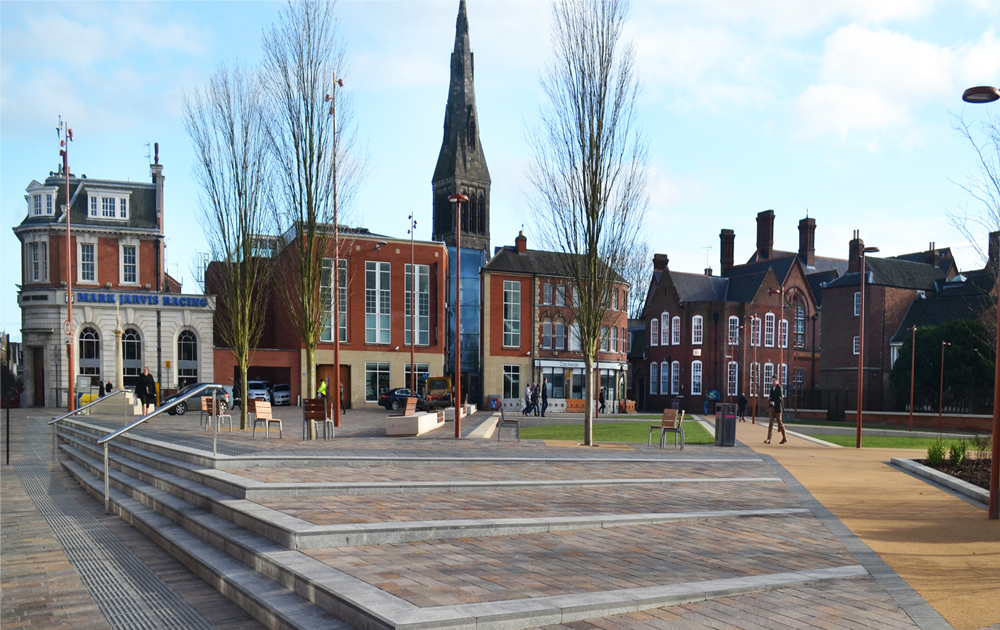
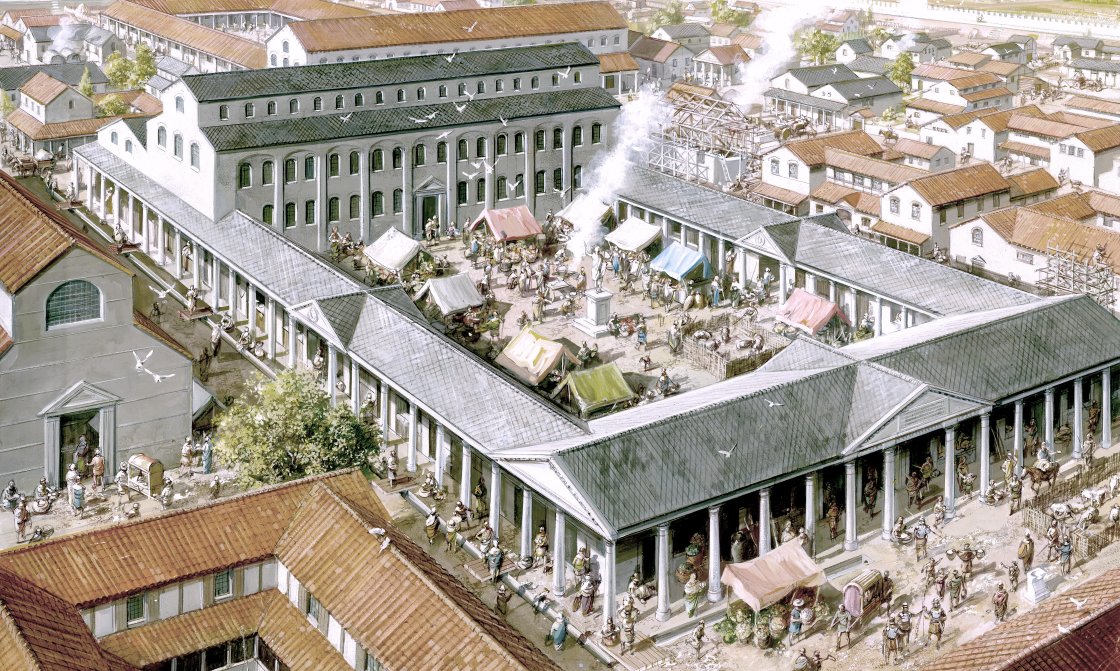
In the Roman period much of the site was occupied by the southern and eastern ranges of one of town’s most important public buildings, the mid-2nd century forum and basilica (the Roman town’s shopping centre and town hall). The city’s principle east to west street, the decumanus maximus also crossed the site, linking the Fosse Way as it entered the town through its east and west gates.
Anglo-Saxon occupation was recorded nearby and in the medieval period the area was crossed by a number of important thoroughfares including the High Street (today Highcross Street) and Swinesmarket (today the High Street); their junction being the site of the borough’s Wednesday market and the 16th century High Cross.
The recent monitoring observed groundworks within the area of new open space, including the digging of new tree planting pits, foundations for new walling, paving and lawns and the diversion of services.
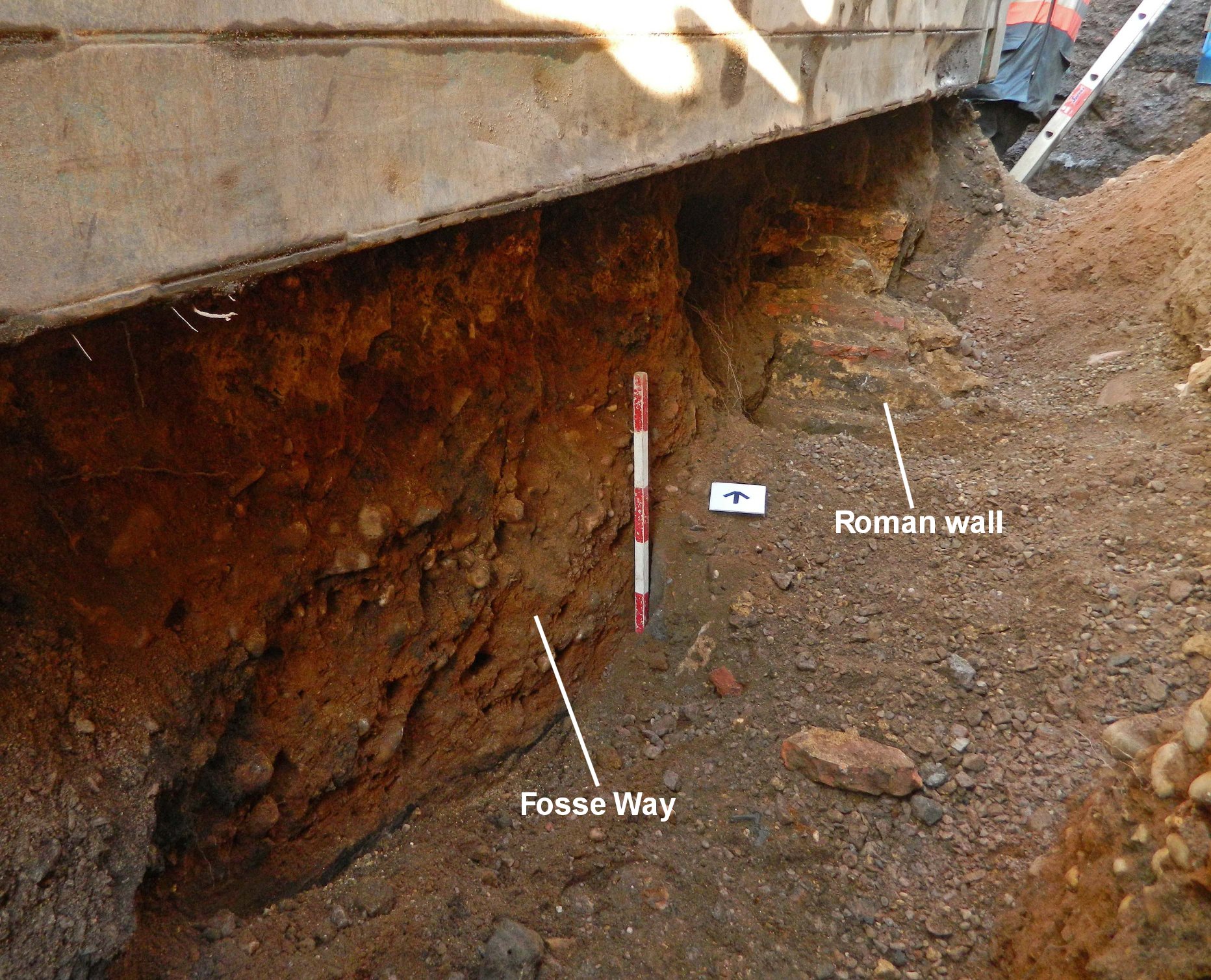
Activity along the former Highcross Street/Applegate frontage was largely destroyed by modern cellaring. However, archaeological deposits had survived better in other areas. Substantial mortared stone walls just to the north of Wygston’s House may be early plot boundaries at right angles to the medieval High Street. Whilst to the west of Wygston’s House, archaeology included metalling for the decumanus street (the Fosse Way) as it crossed through the town immediately south of the forum. The upper level of the street was 1.6m below modern ground level. It was 9m wide and constructed from cemented (iron-panned) sands and gravels with some larger rounded cobbles. These had been laid as a series of cambered surfaces totalling 0.75m thick. Late 1st to early 2nd century pottery was recovered from some of the material.
To either side of the street, parallel wall-lines and roadside ditches were exposed. To the north substantial walling of a type similar to that of the Jewry Wall, and therefore suggestive of public works, may be part of the forum precinct wall on the southern side of Insula XXII. The wall was 0.7m thick and still survived to a height of 0.8m. It was constructed from courses of granite rubble separated by tiled levelling courses.
To the south of the street was the north-west corner of a stone building with associated floor make-ups, including a possible flagstone floor. Pottery was predominately of late 2nd to early 3rd century date and included a disproportionate amount of mortaria, which might suggest that the building had a commercial rather than a domestic function.
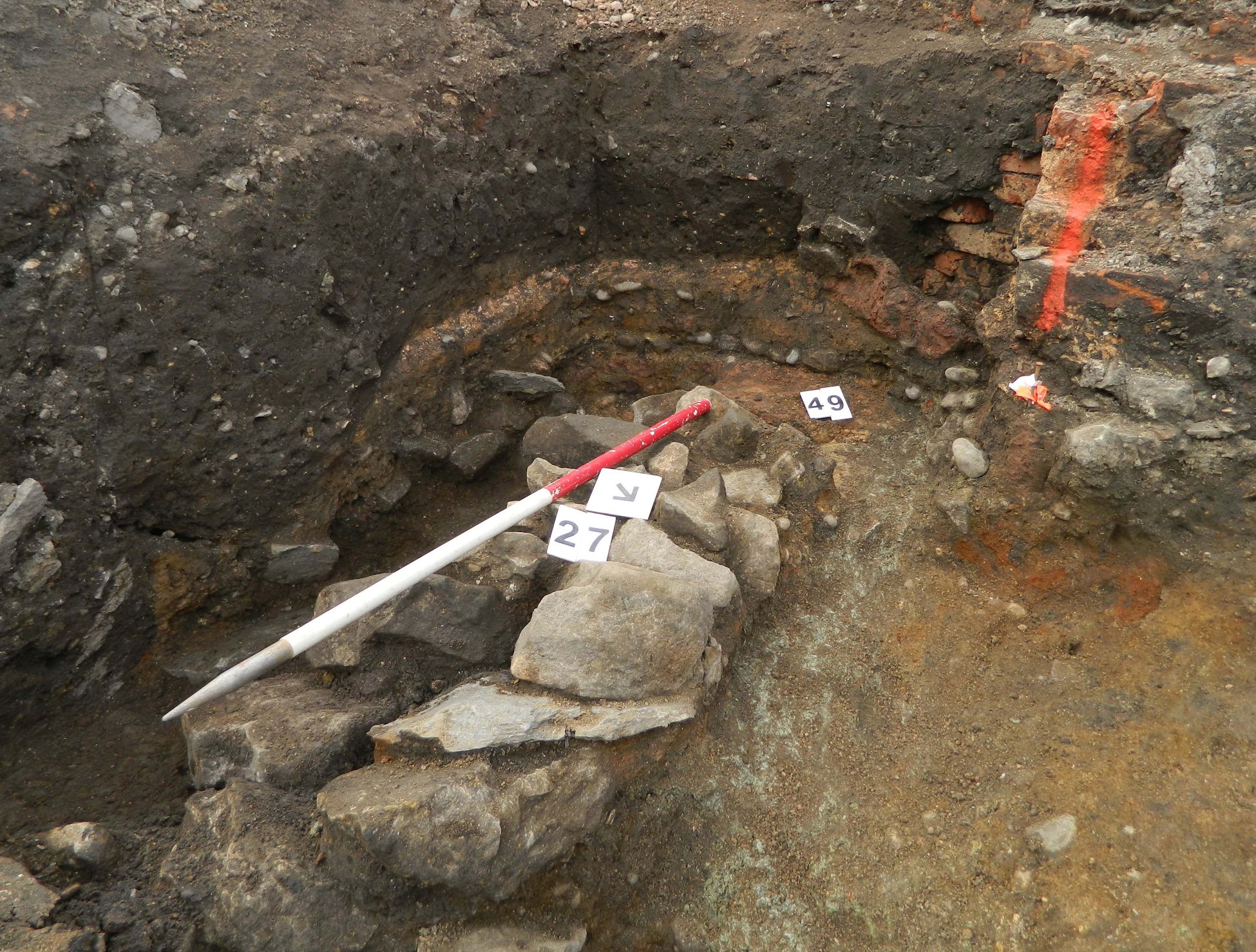
Sealing the Roman activity in places was a ‘dark earth’ of Saxon or later date. Medieval activity included pits which had dug into the Roman levels. Most of these had sterile fills and had probably been dug to quarry Roman materials. Pottery indicated that they were of 12th-13th century date. One pit contained a rich assemblage of refuse including bones, plant remains and small faecal concretions, which indicated that human sewage was being deposited there. Food items included free threshing wheat, barley and hazelnut, fish bones, sheep/goat, cattle, pig and domestic fowl.
Other activity included metalled surfaces, most likely evidence of Hotgate, a medieval street crossing the site. Between the street surfaces, soils mixed with occupation material (including pottery of 10th-11th century date and animal bones which were gnawed by dogs), suggest that the street was somewhat insanitary despite it being an important thoroughfare through the medieval town.
Later activity included stone and brick boundary walls and buildings, some reusing and reworking Roman materials. Two wells were also found, one stone-lined and the other of brick construction.
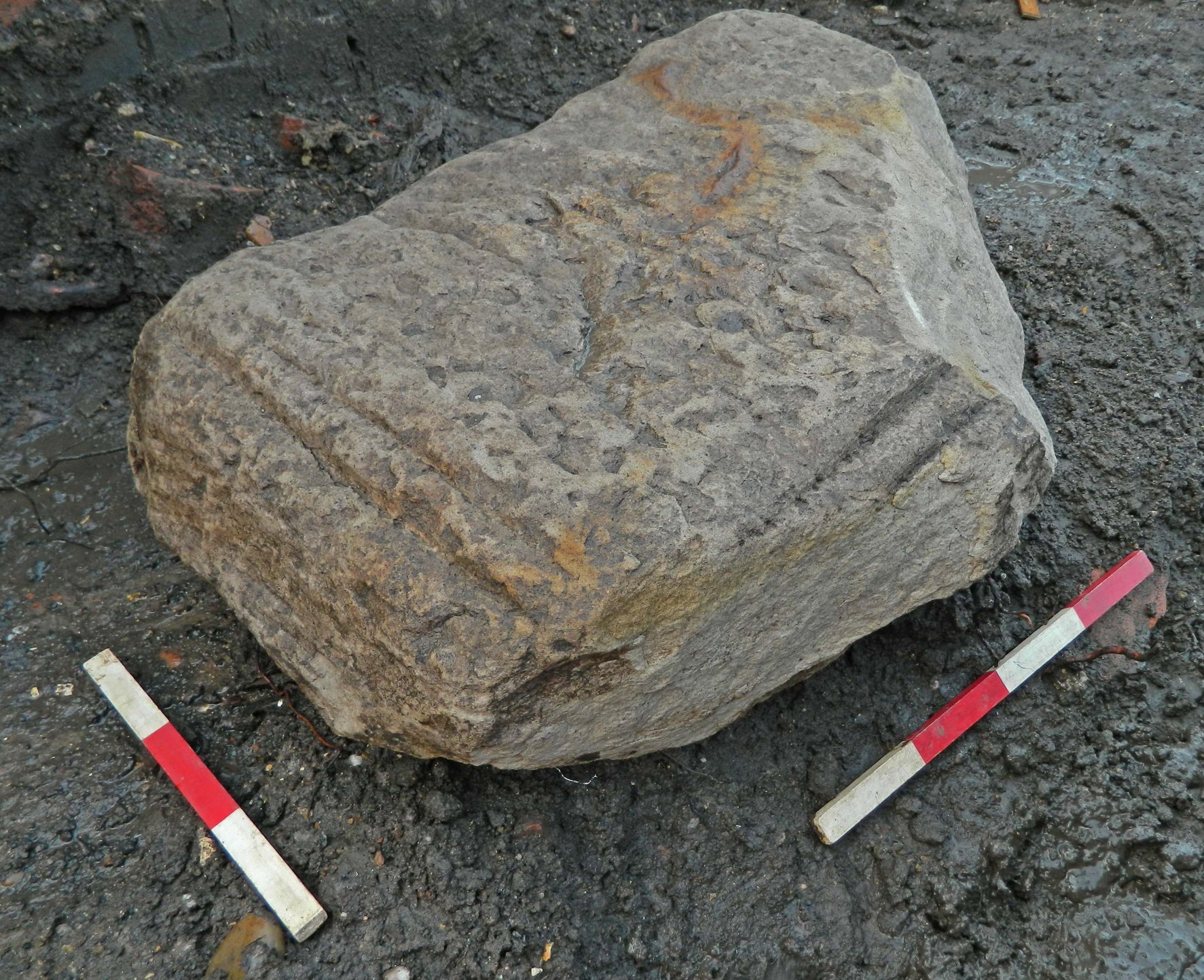
Two fragments of Roman worked stone were recovered from residual contexts, including a finely worked cornice fragment, perhaps from a pediment, although traces of moulding on three sides might suggest it was the base for an altar or statue. Part of a column drum was also recovered. Both were carved from Millstone Grit, probably transported to Leicester from Melbourne in South Derbyshire.
Find out more:
Read the full excavation report on the Archaeological Data Service here
 ULAS News