
During the excavations at Leicester Cathedral, a total of 5,540 sherds of Roman pottery were recovered dating from the beginning of Roman Leicester during the 1st century, through to the 4th century and the end of the Roman town. The pottery has all been assessed to determine how it can contribute to our understanding of what was happening at the site during the Roman period, and how it’s use changed through later periods of time. In our latest blog, our Roman pottery specialist Elizabeth Johnson explains what’s involved and what she has been finding.
Firstly, the sherds from each context were separated into broad fabric types, such as grey ware, white ware, colour-coated ware, mortaria, amphorae etc, and quantified by counting and weighing the sherds of each fabric type. Each sherd was then more closely examined to look for traces of decoration and to determine the vessel form (the shape, for example jar, bowl, dish, cup) where possible. Evidence for burning, sooting or surface abrasion was also noted. This gives us information about what types of vessels were being used, how they were used and where they were made.
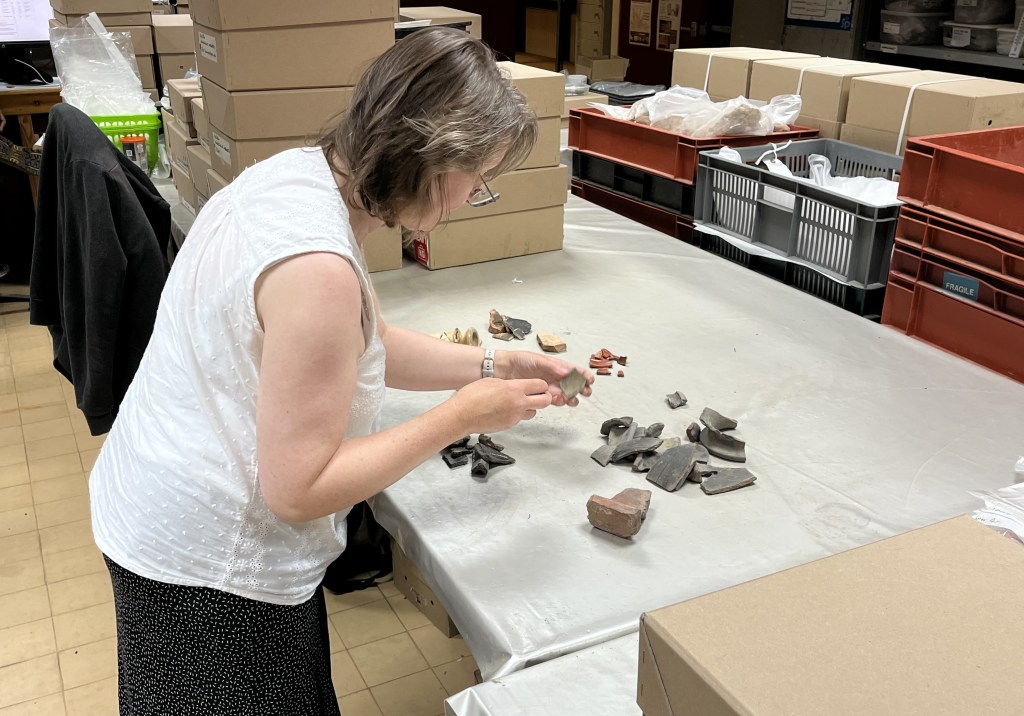
Another important element of the pottery assessment is dating the material. By looking at the range of fabric types, forms and decorative styles together, we can provide a “spot date” for each context, which helps the Excavation Director construct the stratigraphic phasing for the site. The “spot date” is generally based on the latest datable pottery in the context, and is given as a range of time within which the material could date, for example early to mid-2nd century.
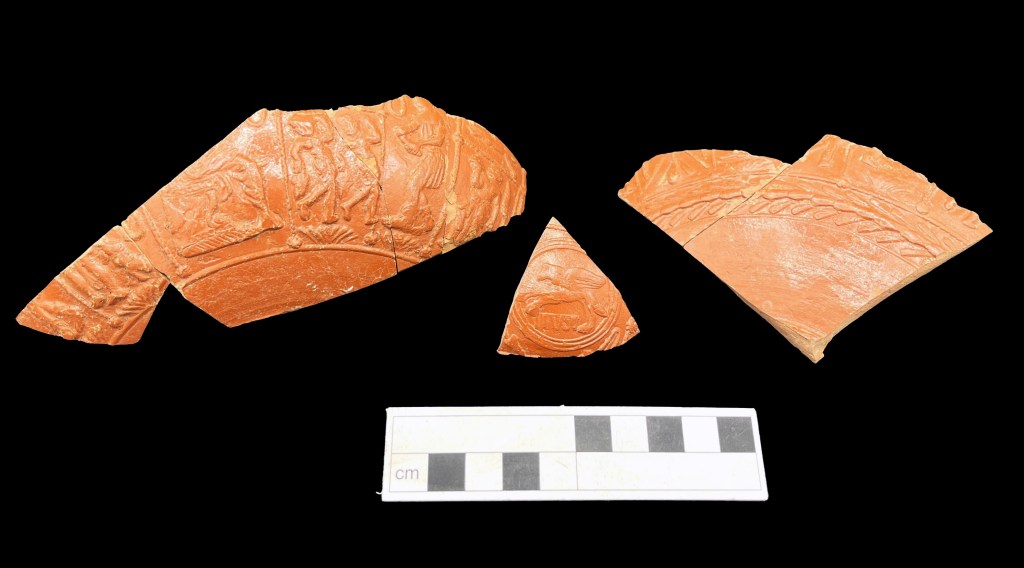
The assessment has revealed a wide range of pottery was being used in Roman Leicester, including imported samian fine wares. Samian was imported from Gaul (modern France) during the 1st and 2nd centuries up until the early part of the 3rd century, and provided Roman Britain with a range of bowls, dishes and cups for use as table wares. Most of the samian ware from the Cathedral dates to the 2nd century, including these decorated bowls and plain ware cup. The central medallion with the gryphon compares to the work of a known potter Cinnamus, and dates to c.AD 140-160.
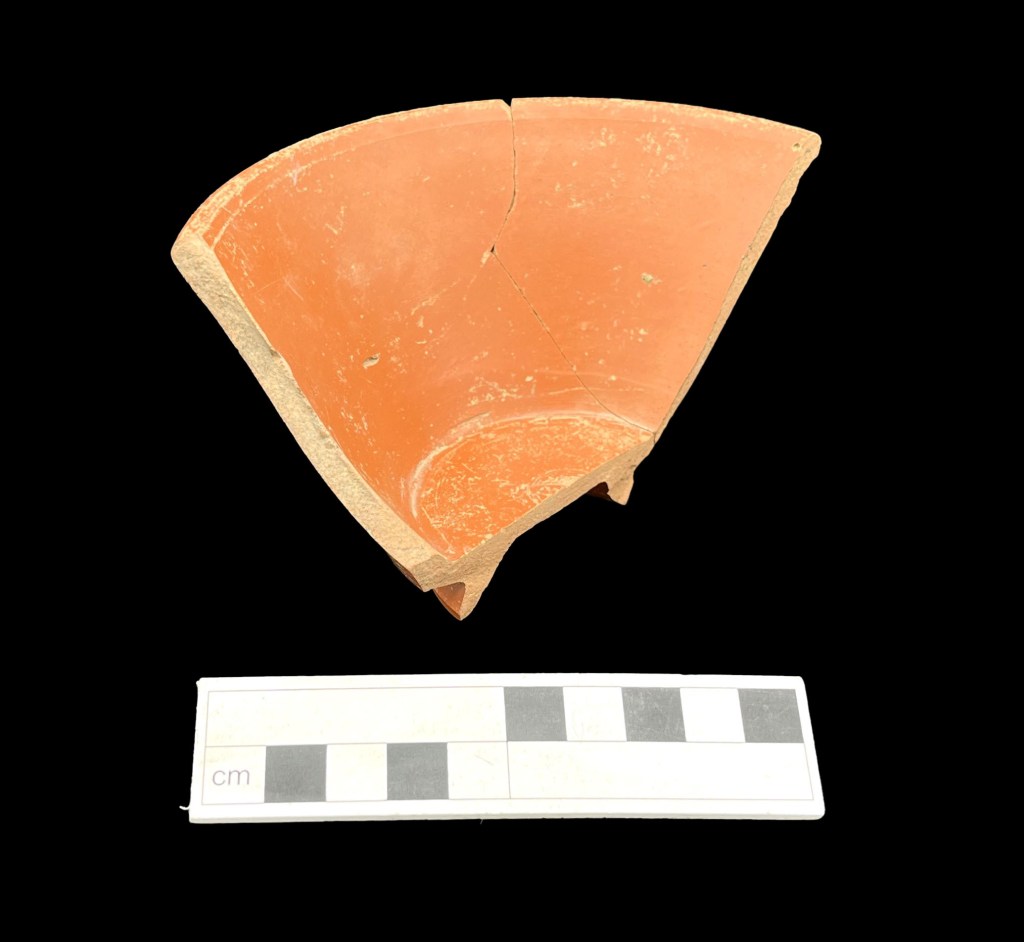
As well as lots of jars, bowls, flagons and drinking beakers we would expect to find on a Roman site in Leicester, there have been some unusual vessels including the rim from a dolium/seria and a Gaulish mortarium. Dolia/seria are huge storage vessels, so large they are often buried in the ground for support. This example is made in soft pink-grogged ware, which comes from the Milton Keynes/Buckinghamshire area and dates to the 3rd or 4th century. Dolia/seria are very rare in Leicester, so it is exciting to find one at the Cathedral!
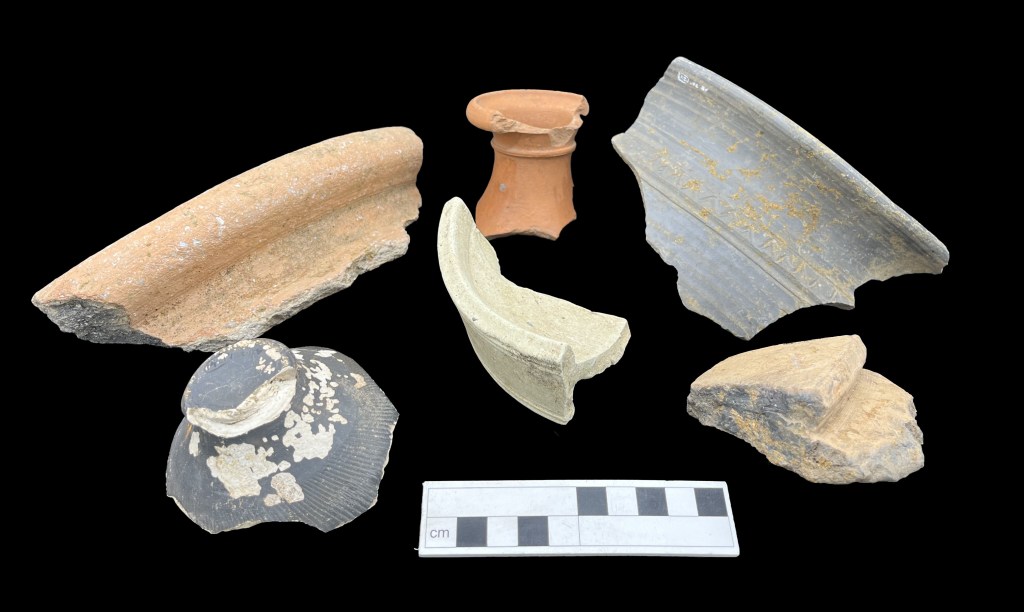

Mortaria are a common type of vessel used during the Roman period in Britain, which change shape and size over time. They are bowls with rough grits in the base used for grinding things up, similar to how a modern-day pestle and mortar would be used. The larger vessels are thought to have been used in food preparation, whilst smaller ones could have been used for cosmetics or medicines. The example illustrated is an import from Gaul, dating from the late 1st century to the middle of the 2nd century. Most of the mortaria found in Leicester are from British sources such as Mancetter-Hartshill or the Nene Valley, so finding an imported vessel is very interesting.
The orange flagon rim in the image is an oxidised ware flagon from the Much Hadham potteries in Hertfordshire, dating to the 3rd or 4th century, whilst the colour-coated ware beaker base is from the Nene Valley and dates to the late 2nd or 3rd century.
The range of pottery recovered from the Cathedral shows how cosmopolitan Leicester was and how vibrant the market place would have been. There are imported wares from Gaul, Spain and Germany along with a variety of wares from Romano-British industries from as close as Mancetter-Hartshill in Warwickshire, down to the Black Burnished ware industry of Dorset.
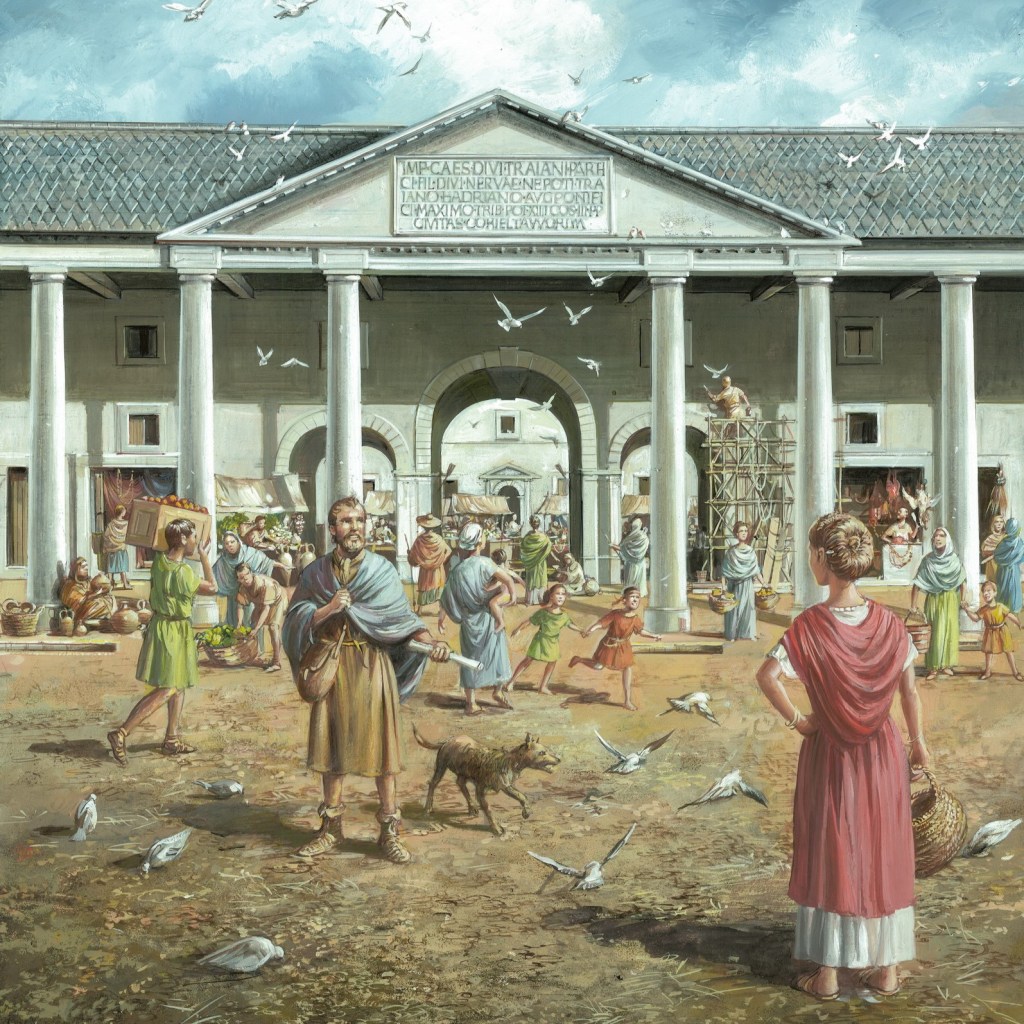
The next stage of analysis work will involve looking in more detail at the range of vessel types and patterns of traded wares, and working with other specialist colleagues analysing faunal and other environmental remains. This will give us insight into how people were preparing and consuming food and the economy of the town, helping us build up a detailed picture of everyday life in Roman Leicester.
The Leicester Cathedral Revealed project has been made possible thanks to the National Lottery Heritage Fund and National Lottery players. Find out more about the project at https://leicestercathedral.org/
 ULAS News
Did you find any Rustic Ware?
Hi, the assemblage has only had a preliminary assessment so far, but includes the following fabrics: Amphorae, Black Burnished ware, Black Burnished ware 2, Colour-coated wares, Shell-tempered wares, Derbyshire ware, Grey wares, Mica dusted ware, Mixed-gritted wares, Mortaria, Oxidised wares, Pompeian red ware, Samian wares, Early Roman sandy wares, White-slipped wares, White wares, Grog-tempered wares
Hope that helps.