Blog by John Thomas.
On 25 January 2025, a new exhibit celebrating identity, memory and community opens at Charnwood Museum, inspired by the amazing Bronze Age Cossington Necklace. The necklace was found by ULAS archaeologists in 1999. To coincide with the exhibition, ULAS Deputy Director John Thomas explores the Bronze Age setting of the discovery.
Use and re-use of three Bronze Age round barrows at Cossington, Leicestershire
Between 1999 and 2001, a proposed extension to a quarry at Cossington in north Leicestershire gave archaeologists a chance to fully investigate a Bronze Age barrow cemetery. The site was previously known from aerial photographs which showed evidence of a circular enclosure, later identified as Barrow 2, and archaeologists had already excavated two barrows in the 1970s. But now the monuments faced destruction from quarrying and planning conditions required the rest of the site to be fully excavated. Excavation by ULAS duly revealed the remains of a third Bronze Age barrow along with a lot of associated later activity.
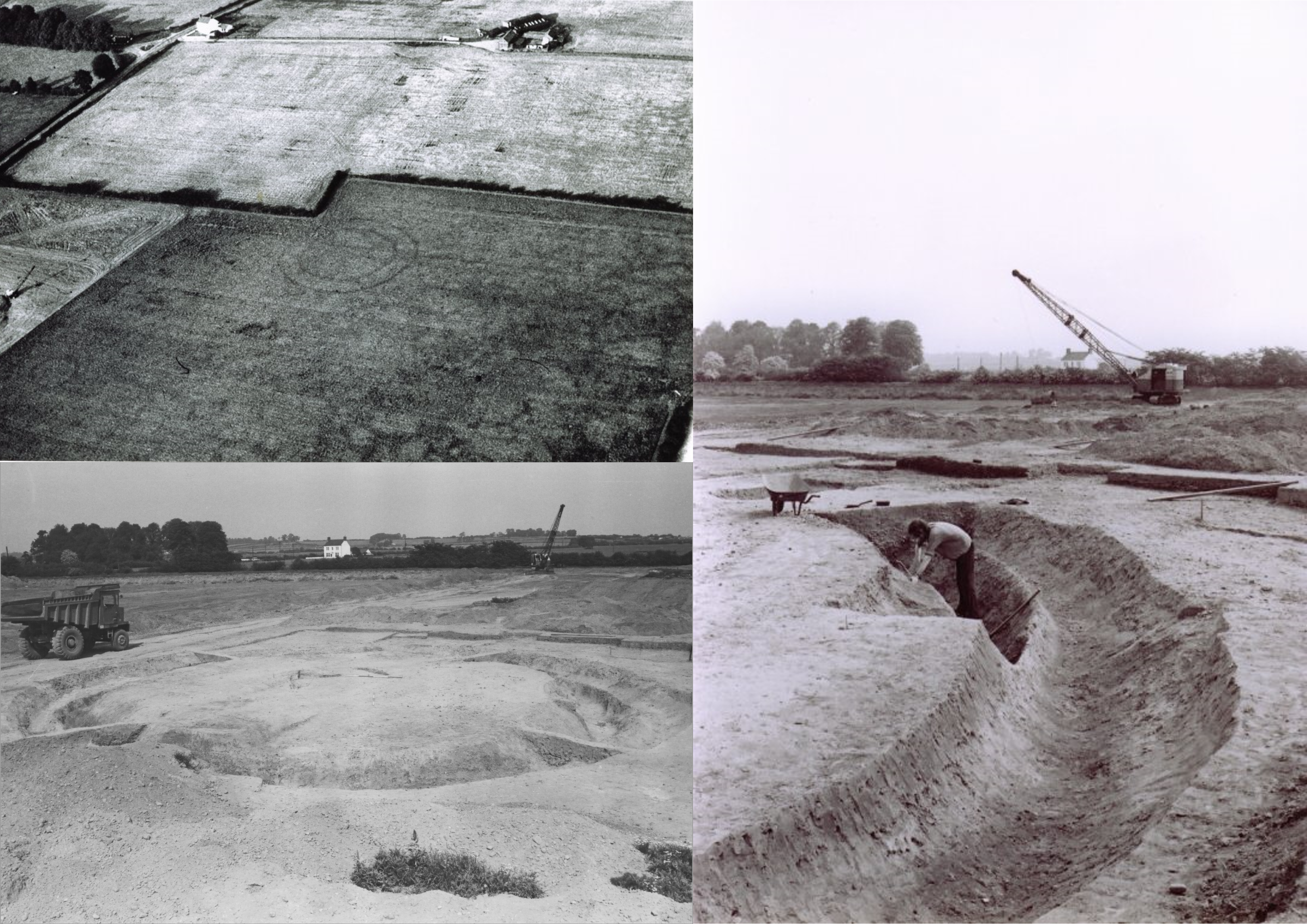
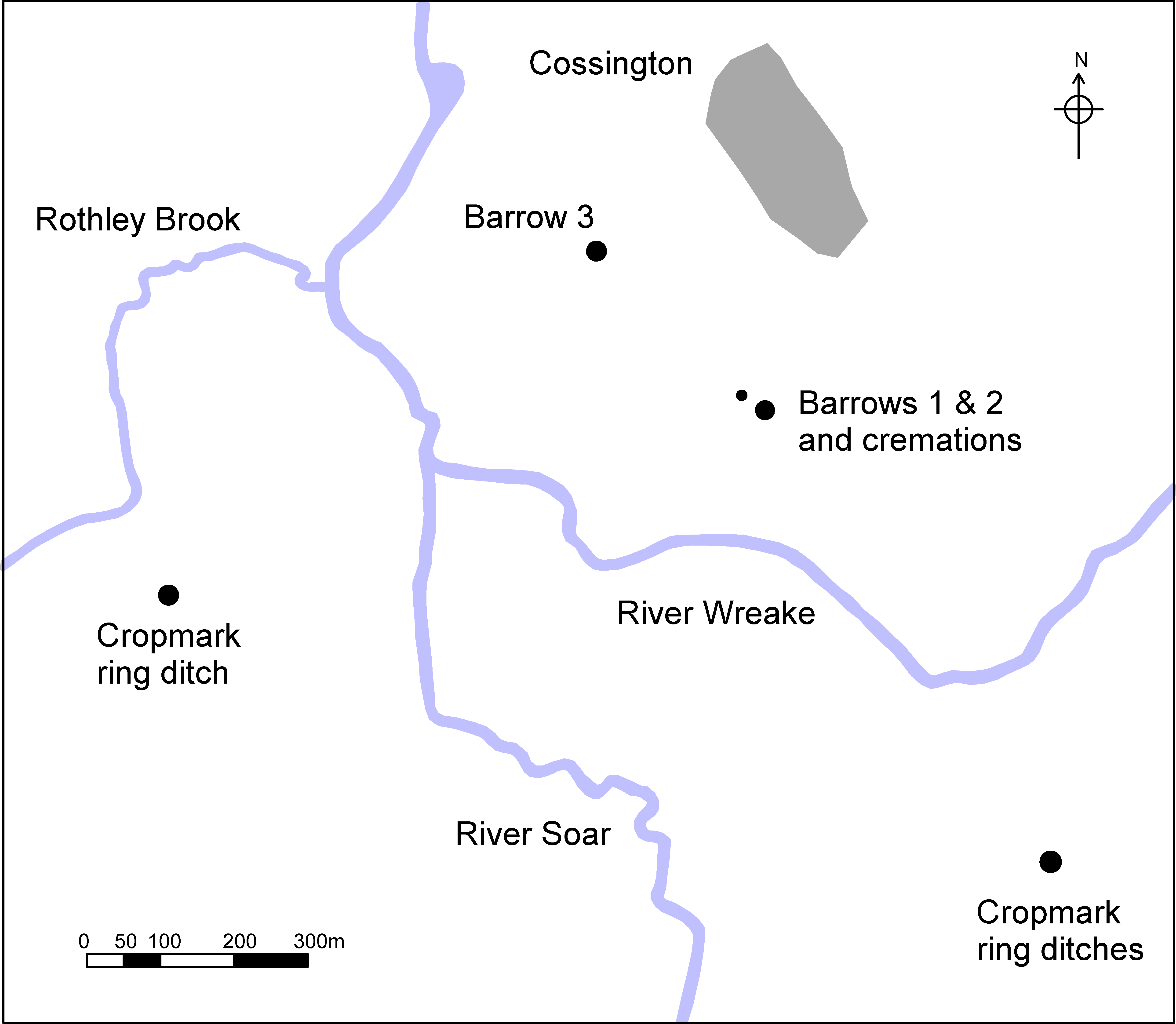
It is thought that the three ancient monuments were once part of a small barrow cemetery located at the confluence of the Rivers Soar and Wreake. The results of the work have shown how the three barrows were used repeatedly, creating a long history and providing a remarkable insight into how these burial monuments were used by local communities living around Cossington.
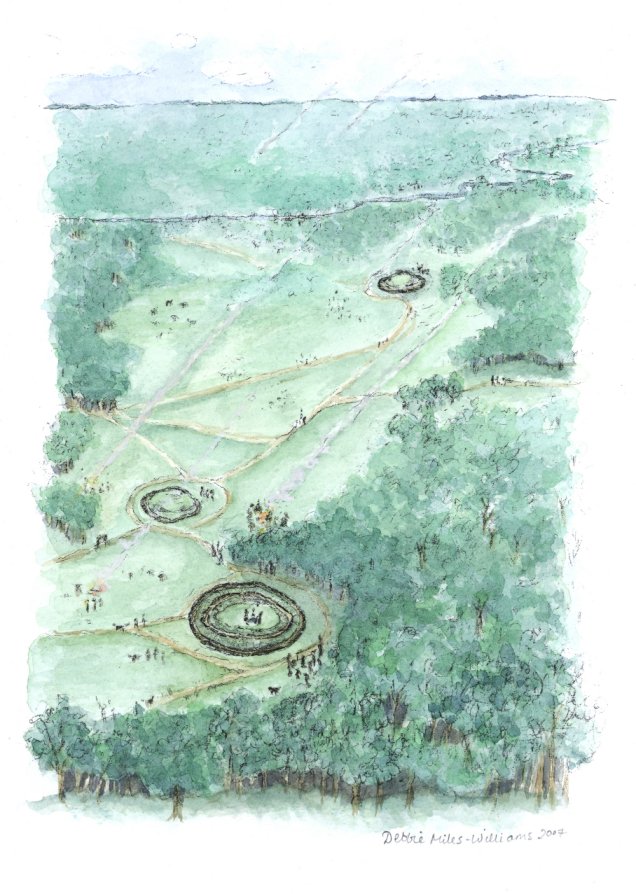
An old channel of the River Soar once crossed Cossington Quarry, silting up during the late Neolithic period. In it were buried waterlogged deposits which could tell us about the environment at the time. Samples of pollen, plant and insect remains from these layers have allowed archaeologists to reconstruct the contemporary landscape. Pollen showed that the area had been wooded with trees such as alder, lime, oak and elm. Plant evidence also showed that there were areas of clearance where the barrows were built, probably in the early Bronze Age.
The barrow builders
There is very little evidence for early Bronze Age settlement in Leicestershire. Scatters of flint tools, found during field-walking, offer the only hint of settlement close to the barrows. The Neolithic period sees the first settled agriculture in Britain but it is thought that even in the early Bronze Age people were still fairly mobile, mixing hunting and gathering with herding and limited cultivation. This spot, at the confluence of the rivers, was perhaps a meeting place where groups came together at certain times of the year, in particular when it was necessary to bury one of their dead.
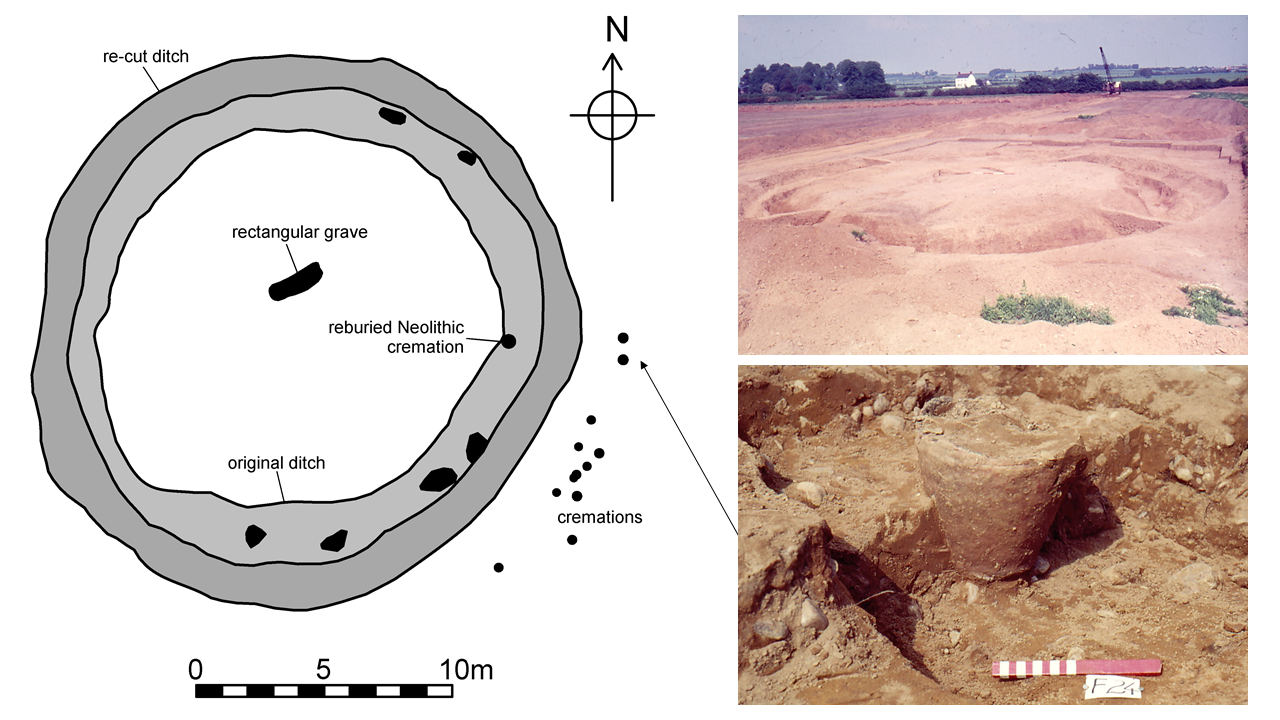
Barrow 1 originated as a 16m wide circular ditch which was cut to encircle a burial in a rectangular grave lying slightly off centre. At some point the ditch was filled in and a slightly larger one dug. Eleven cremations aligned on the south-eastern edge of this later ditch. Surprisingly, an earlier Neolithic cremation was found in the ditch fill. It must have been disturbed by the work and was carefully reburied, showing a respect for unknown ancestors.
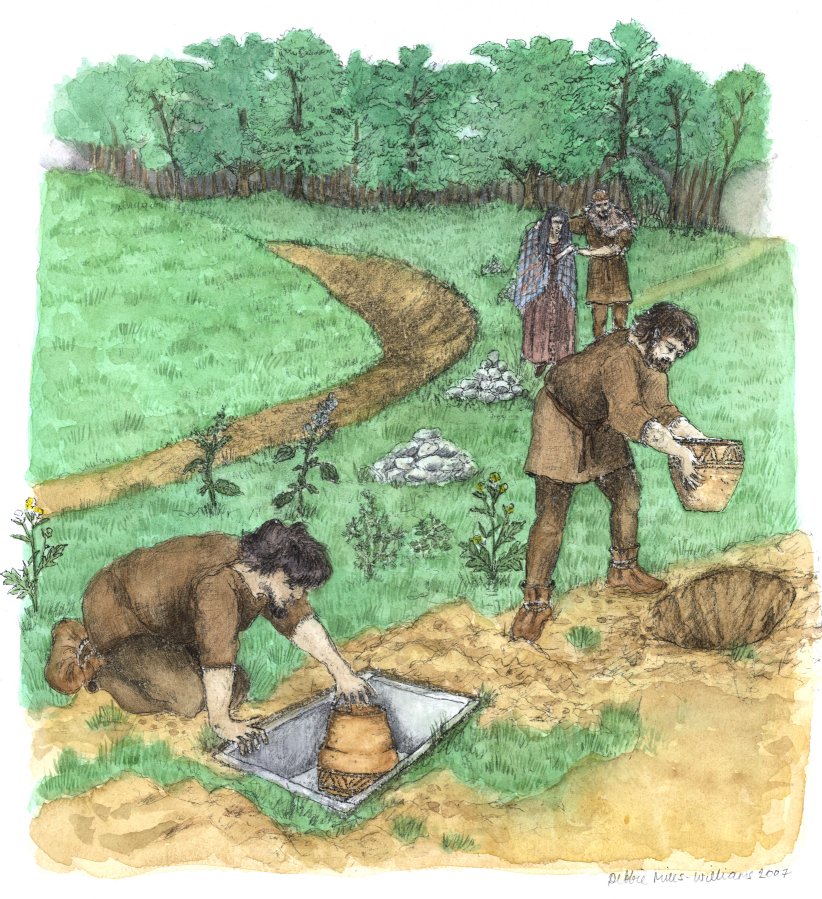
The Bronze Age cremation cemetery adjacent to Barrow 1. Artwork by Debbie Miles
Barrow 2 was larger and more elaborate, consisting of two concentric ditches 35m and 50m wide respectively. Several people were laid to rest here. The earliest appears to be a cremation of a young adult, probably male, buried in a stone packed pit (a) with broken early Bronze Age Beaker pottery, which may have been viewed as heirlooms. Six other features which appear to have contained both cremations and burials occur within the ditch in two loose clusters. Close to the centre of the barrow was the burial of a child about eight years old (b), buried with a group of objects to take to the afterlife. These included a finely-crafted flint knife which lay close to the head, as well as two more flint knives and a carved stone bowl by the feet. A food vessel and cup were placed at the side and a second food vessel was found upright in a shall pit nearby (c), perhaps deliberately placed in association with the burial.

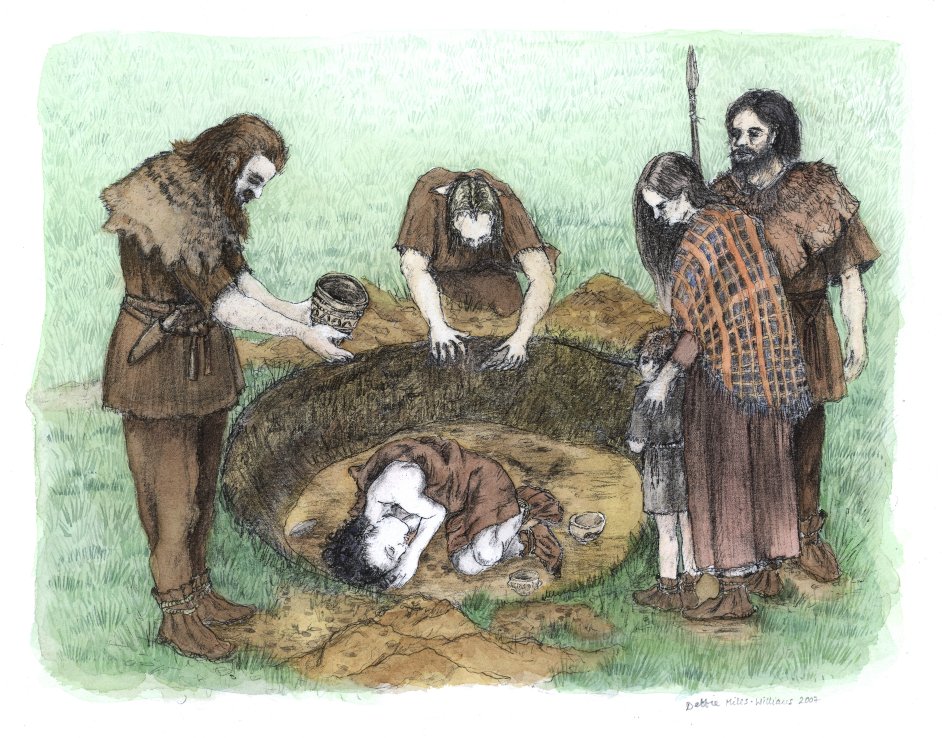
Burial of a child at Barrow 2. Artwork by Debbie Miles
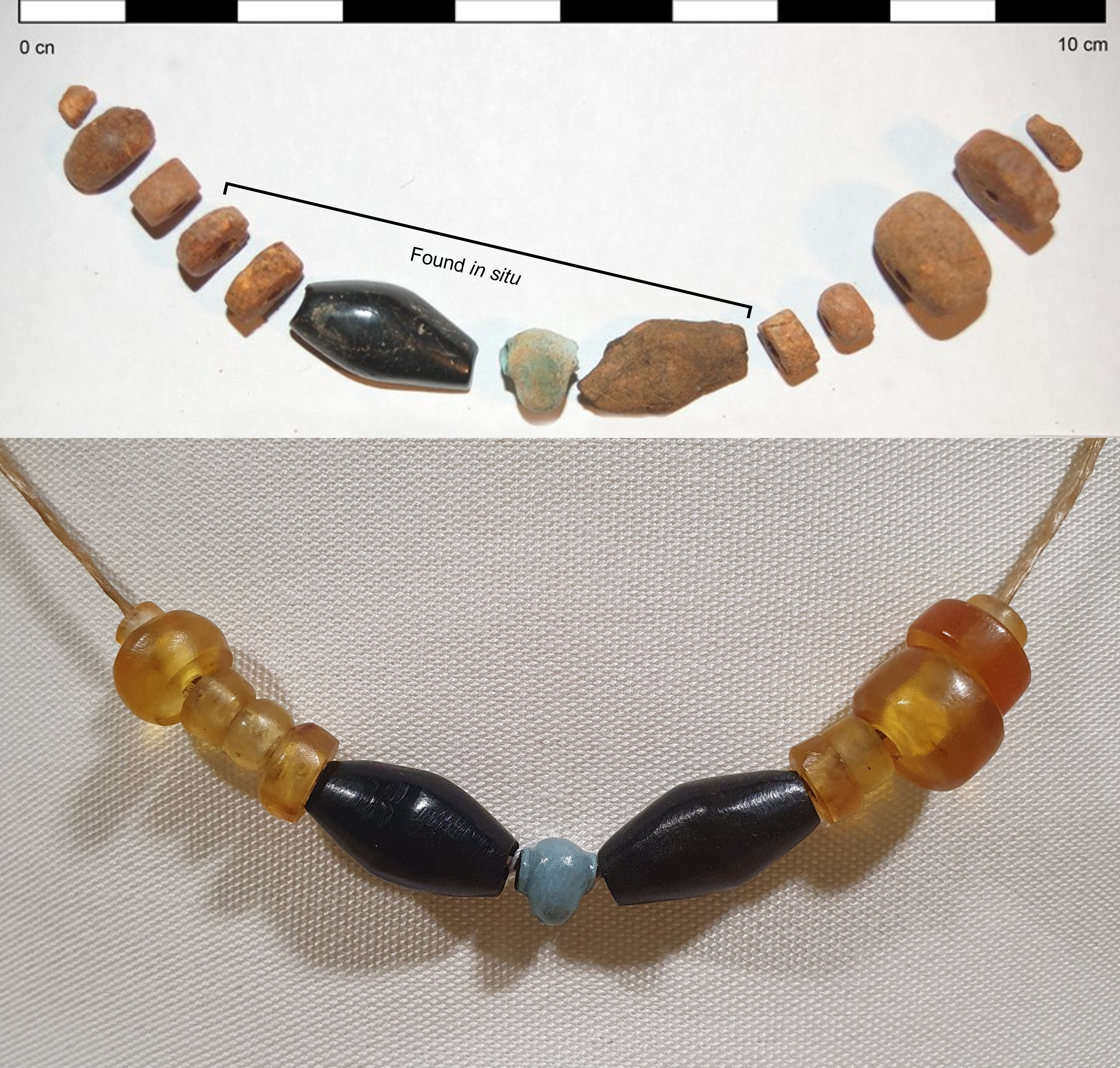
Barrow 3 was a ditch and mound some 25m in diameter. Importantly, the earthen mound had survived as a low earthwork. As a result, evidence of a long history of use and re-use had been preserved. This barrow appears not to have been initially constructed for a burial, rather it was perhaps some sort of cenotaph monument, may be a marker for a sacred place? Much later, a possible female burial was inserted on the edge of the monument. We cannot be sure of the person’s sex as acid soils had destroyed what remained of the bones. Objects buried with the person, a finely-crafted flint blade and a composite bead necklace have survived and may indicate it was a woman.
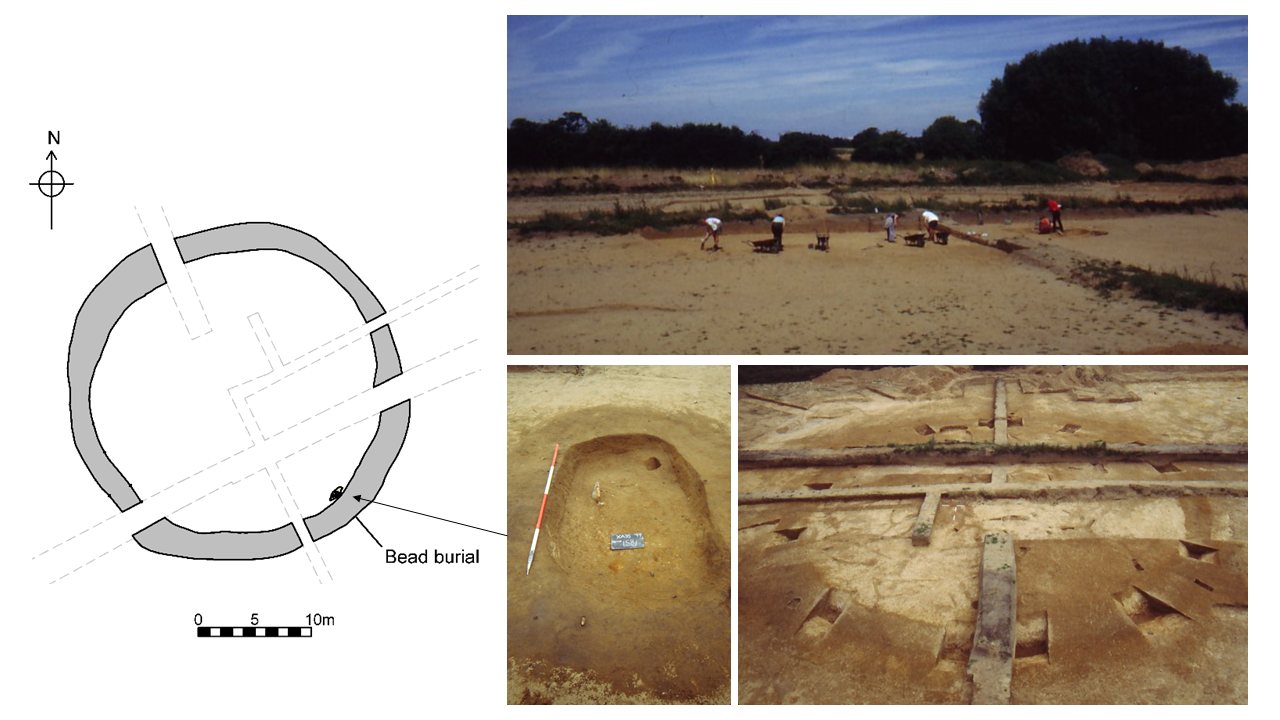
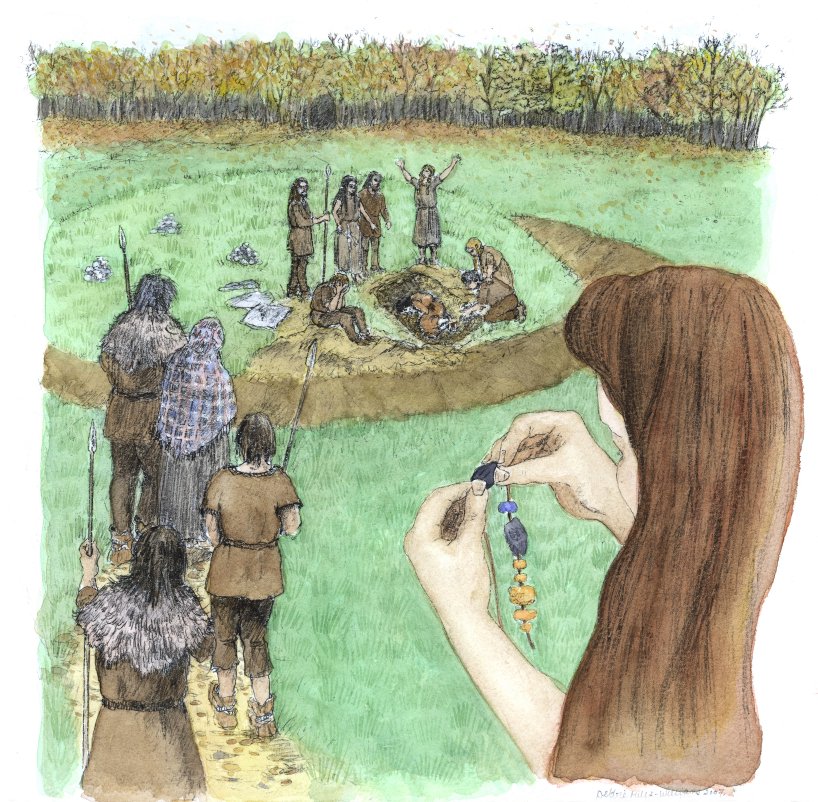
Burial of a woman at Barrow 3. Artwork by Debbie Miles
Bead necklaces were high-status items and the Cossington necklace, broadly dated to c.1750-1450 BC, is extremely rare. The materials that combine to make the necklace – Whity jet, Kimmeridge shale, Baltic amber and faience – come from widely dispersed sources, confirming long distance trade routes.
Re-use of sacred places
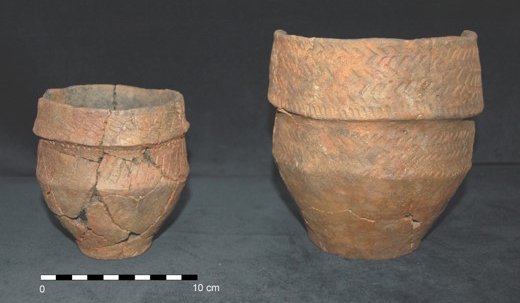
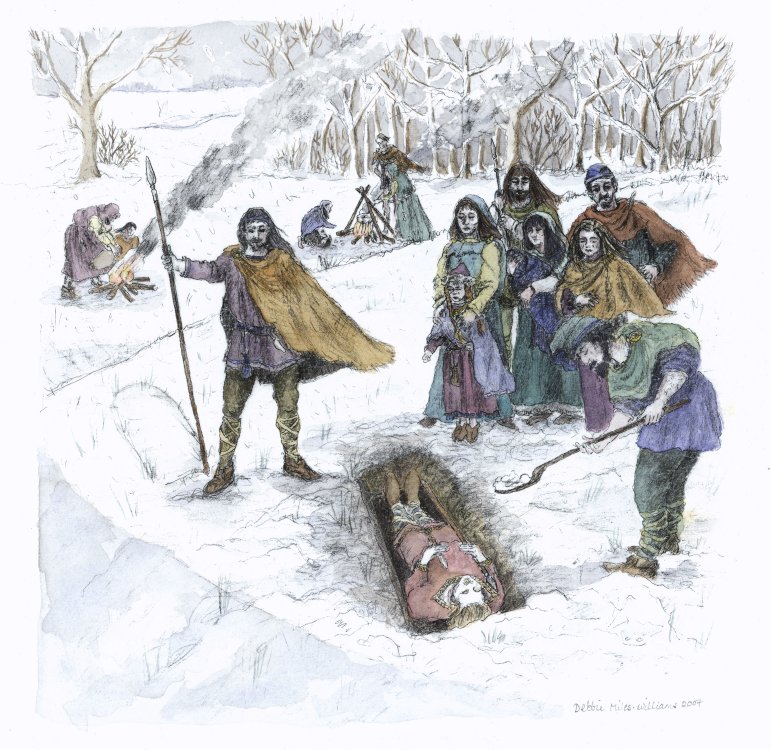
The Cossington cemetery clearly shows the importance of remembering the ancestors in the Bronze Age. Yet long after their period of use, the barrows appear to have continued to have great significance for local people; perhaps as special landmarks or as recognised sacred places. Even at the very end of the early Bronze Age, a small cremation cemetery was established on the south-eastern edge of Barrow 1. Some burials were placed in inverted urns, others in stone cists, pits with stones, and one in an upright urn. It is clear from the position of the cremations that the users of this small cemetery wished to be associated with people that had been buried there earlier. Barrow 2 had also been re-used, three Collared urns being deposits, at least one accompanying a burial of an adult cremation placed in the ground between 1880-1630 cal BC a short distance north of the central cremation.
After Barrow 3 had stopped being used for burial (1) it was apparently still a favoured place to meet. Hundreds of waste flakes and cores dating to the late Bronze Age were found during the excavation of the barrow mound (2). These were the remains of flint-knapping activities centred on the earthwork. It is uncertain if the late Bronze Age inhabitants had any memory of what Barrow 3 had once been used for but it was evidently seen as a special place in the landscape, if only as a convenient meeting point.
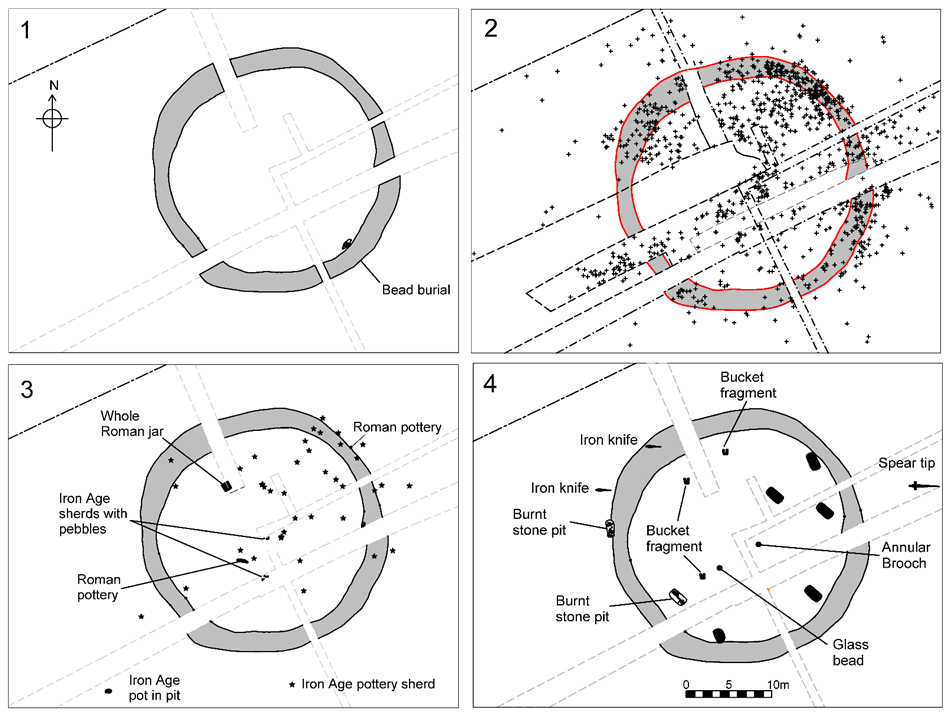
During the Iron Age (3) a small settlement formed around the remains of Barrow 3. We know that at least one roundhouse and several square enclosures existed close to the barrow. The ancient mound of Barrow 3 must have been an important landmark in the fairly flat local landscape. The Iron Age farmers may not have had any knowledge of the barrow’s original use and meaning but they may have imagined that it contained the ancestral spirits of the land. Several pottery vessels were discovered in the mound’s soil, deliberately placed there in the Iron Age. More pots were placed in the mound during the Roman period. Did these pots originally contain offerings to the ancestors?
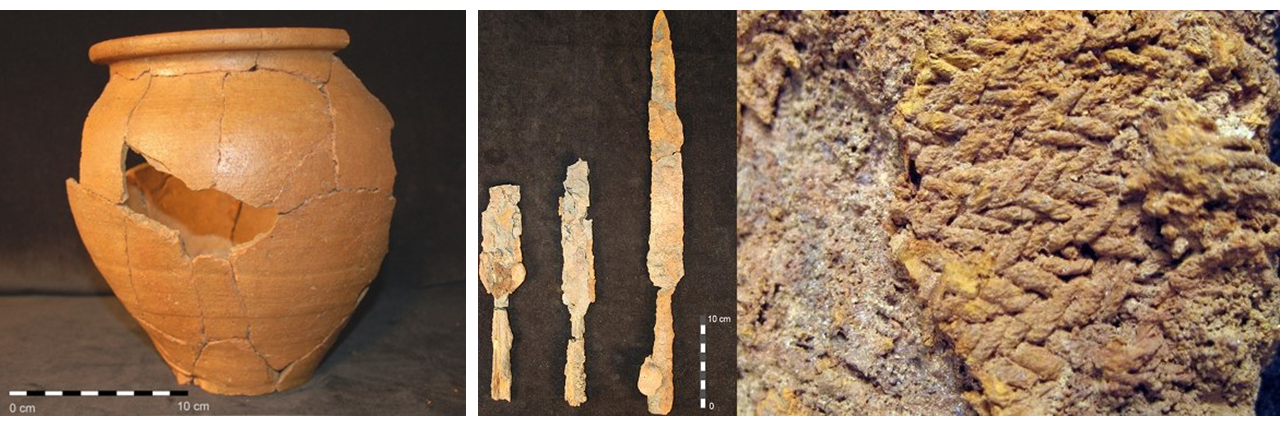
Finally, in the early Anglo-Saxon period (4), Barrow 3 became the focus for a small inhumation cemetery and nearby settlement. Pits, ditches and a sunken-featured building containing pottery and loom-weights showed evidence of domestic activity to the north of the barrow. The barrow mound contained at least five burials. Again, the acidic soils had destroyed all evidence of the bodies but the metalwork – spears, knives, brooches and bucket fittings – that they had been buried with survived. Anglo-Saxon re-use of round barrows is a fairly common occurrence but Cossington was the first confirmed example from Leicestershire. By placing their dead in the barrow remains, local Anglo-Saxons may have made a connection with the ancestors. Doing so would enable them to make a claim to be the ‘ancestor’s’ successors, creating a sense of place in the landscape.
The new exhibition, ‘My Jewellery, My Story’ runs from 25 January – 15 June 2025 at Charnwood Museum, Loughborough (Winter opening hours: Wednesday-Saturday 10am – 3pm).
https://www.charnwoodmuseum.co.uk/
Find out more:
Thomas, J. A. (2007). Three Bronze Age Round Barrows at Cossington: A History of Use and Re-use. Transactions of the Leicestershire Archaeological and Historical Society 81. Vol 81, Leicester: Leicestershire Archaeological & Historical Society. pp. 35-63. FREE access at https://doi.org/10.5284/1108316
Thomas, J. A. (2008). Monument, Memory and Myth. Use and Re-use of Three Bronze Age Barrows at Cossington, Leicestershire. Leicester Archaeology Monograph 14. Available to buy at https://shop.le.ac.uk/product-catalogue/books-and-gifts/leicester-archaeology-monographs/monument-memory-and-myth
 ULAS News