A Year to Remember
As 2025 draws to a close, we thought we’d pause to reflect on a busy year. From uncovering secrets buried for millennia to celebrating our 30th anniversary, this year has showcased the very best of archaeology, storytelling, and community engagement. Join us as we journey through the highlights of a year that blended groundbreaking research with exciting outreach.
Big Digs, Big Discoveries
Our excavation teams have been at the heart of the action, working tirelessly across Leicestershire, Warwickshire, and beyond. Four major projects defined the year:
Wanlip: Where Saxons Meet Romans
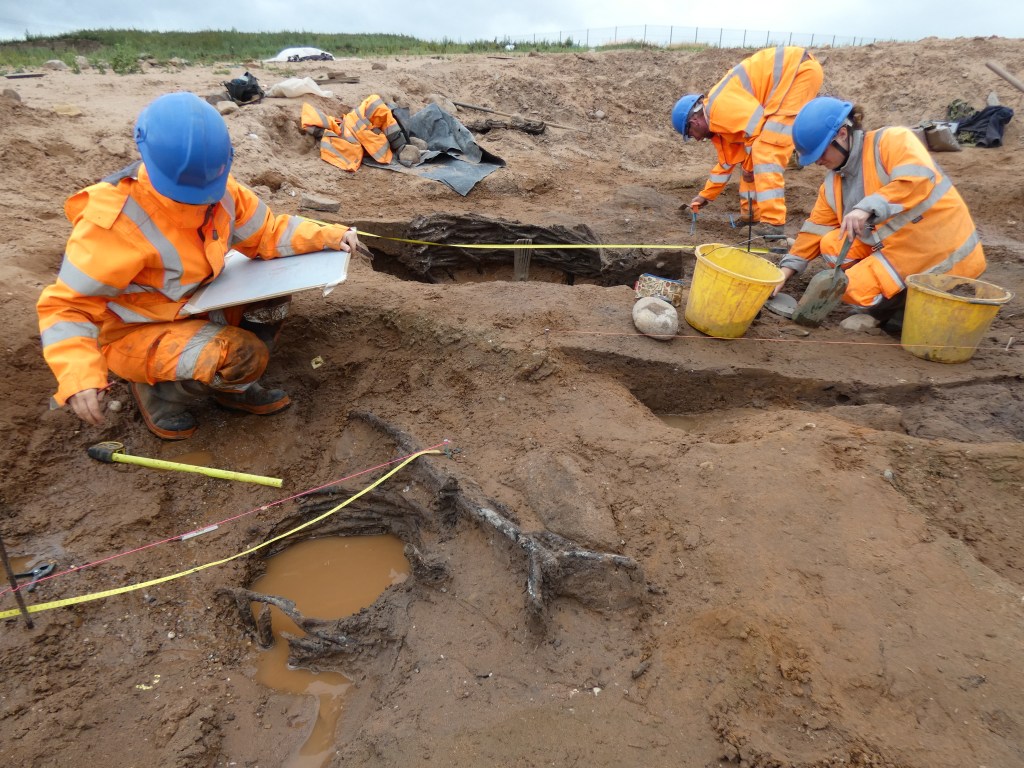
After nearly 11 months of fieldwork, work for the redevelopment of the Wanlip Sewage Treatment Works has revealed a tapestry of human history and water management. Anglo-Saxon sunken-featured buildings (SFBs) dotted the crest of the hill, while Roman enclosures sprawled across its southern slopes. The site surprised us with waterlogged pits preserving wooden artefacts—a rare Saxon shovel fragment, a wooden bowl, and even a leather shoe. These finds offer a glimpse into everyday life 1,500 years ago and will keep our specialists busy well into 2026.
Catch up with our Christmas seminar on YouTube to find out more about the site.
Cossington: Life Around the Pond
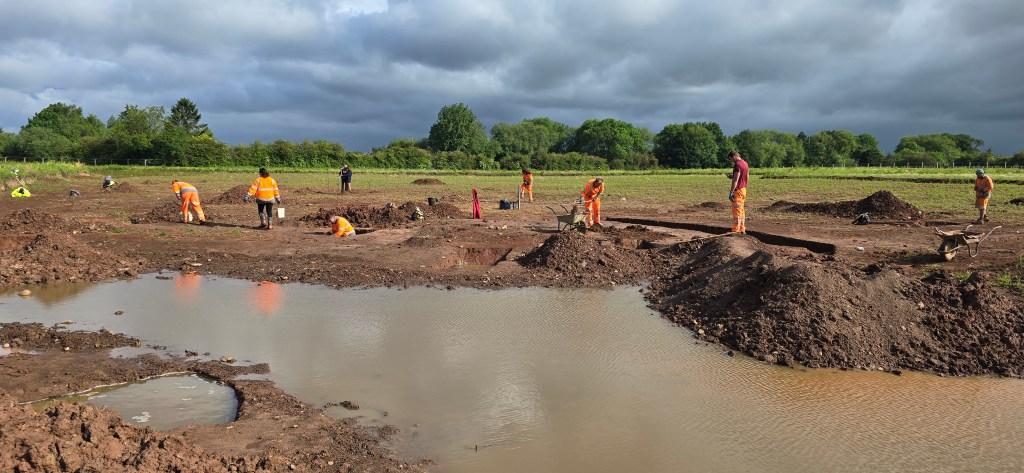
At Humble Lane, Cossington, our team battled mud and winter floods to uncover a multi-period landscape. From Neolithic flints to Iron Age pit alignments and Roman livestock pens, the site tells a story of adaptation and continuity. A central pond, still functional after 2,000 years, hints at its role in farming and perhaps ritual practices. Environmental samples promise to reveal even more about ancient diets and land use.
Cawston: A Village Through Time
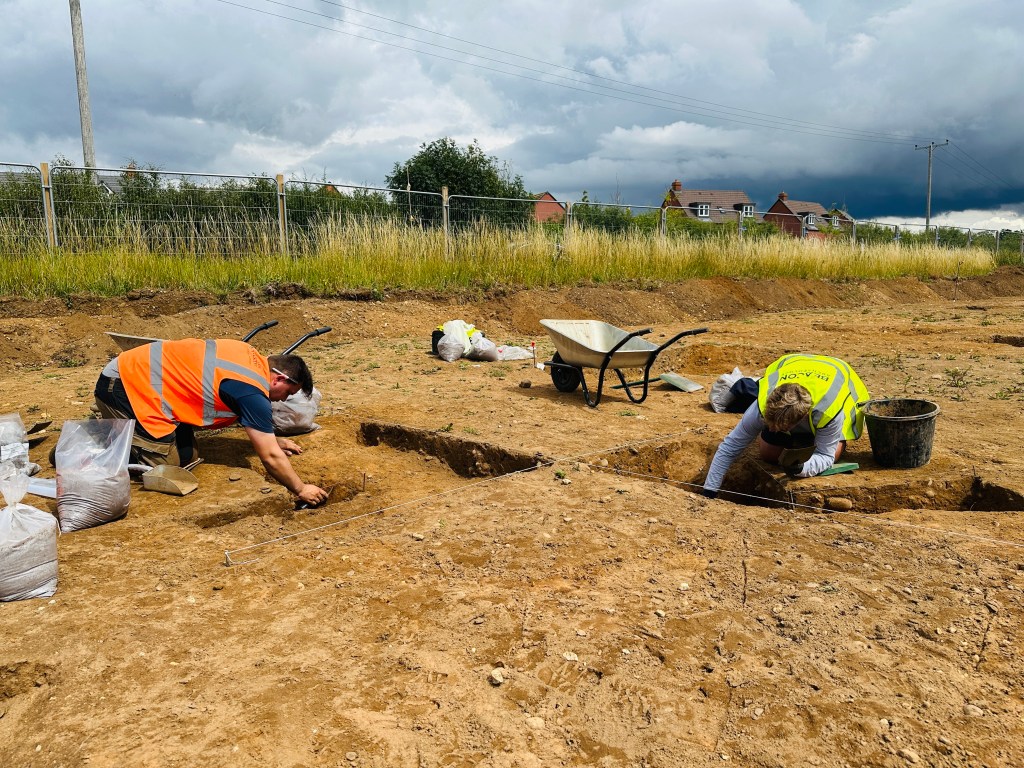
What began as a medieval village excavation soon expanded into a multi-phase site with Roman wells, Anglo-Saxon houses, and prehistoric traces. Among the standout finds: a honeysuckle rope preserved at the base of a Roman well and a jet ring from an Anglo-Saxon building. This site exemplifies the complexity—and thrill—of archaeological discovery.
Leicester Market: Headlines and History
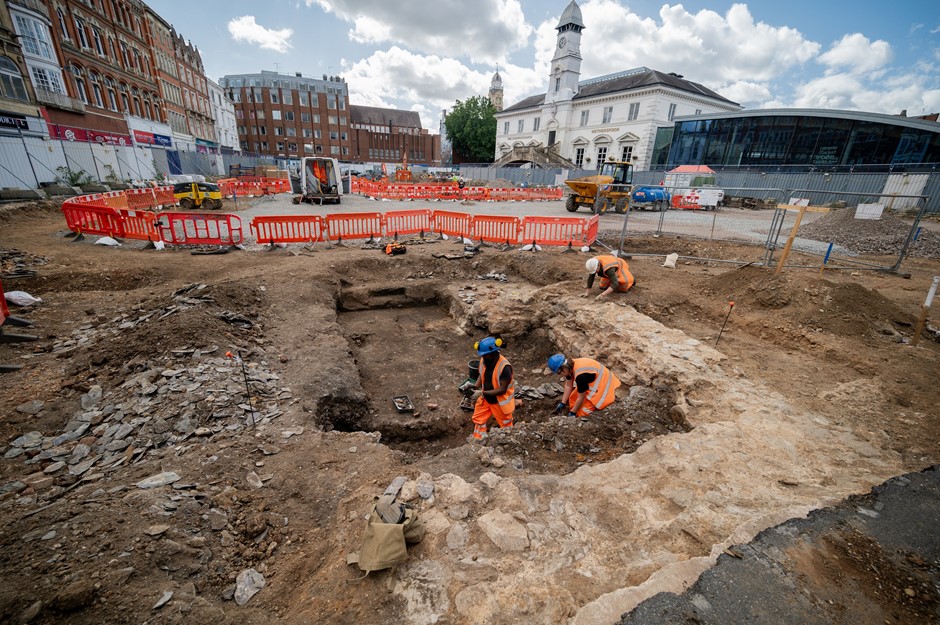
Few projects captured public imagination like Leicester Market. Beneath the bustling heart of the city, our team uncovered Roman domestic housing, medieval market surfaces, and dozens of post-holes marking former market stalls. The star of the show? The Gainsborough Chamber—a civic building first recorded in 1533, complete with a subterranean room once described as “a most vile prison.” This discovery made national and international headlines, reminding us that archaeology isn’t just about the past—it’s about the stories that connect us to it.
Training Tomorrow’s Archaeologists

Education remained central to our partnership with the University’s School of Heritage and Culture.
- At Loddington, 35 students explored medieval and post-medieval village life, uncovering cobbled yards and structural remains. Their enthusiasm was infectious, and the open day drew over 100 visitors. Find out more about the project here.
- At Irchester, students investigated Roman streets and buildings while welcoming school groups for hands-on activities. The season culminated in Roman Fest, a free event that attracted 5,000 visitors—a testament to the power of archaeology to inspire.
From Soil to Story: Lab Innovations
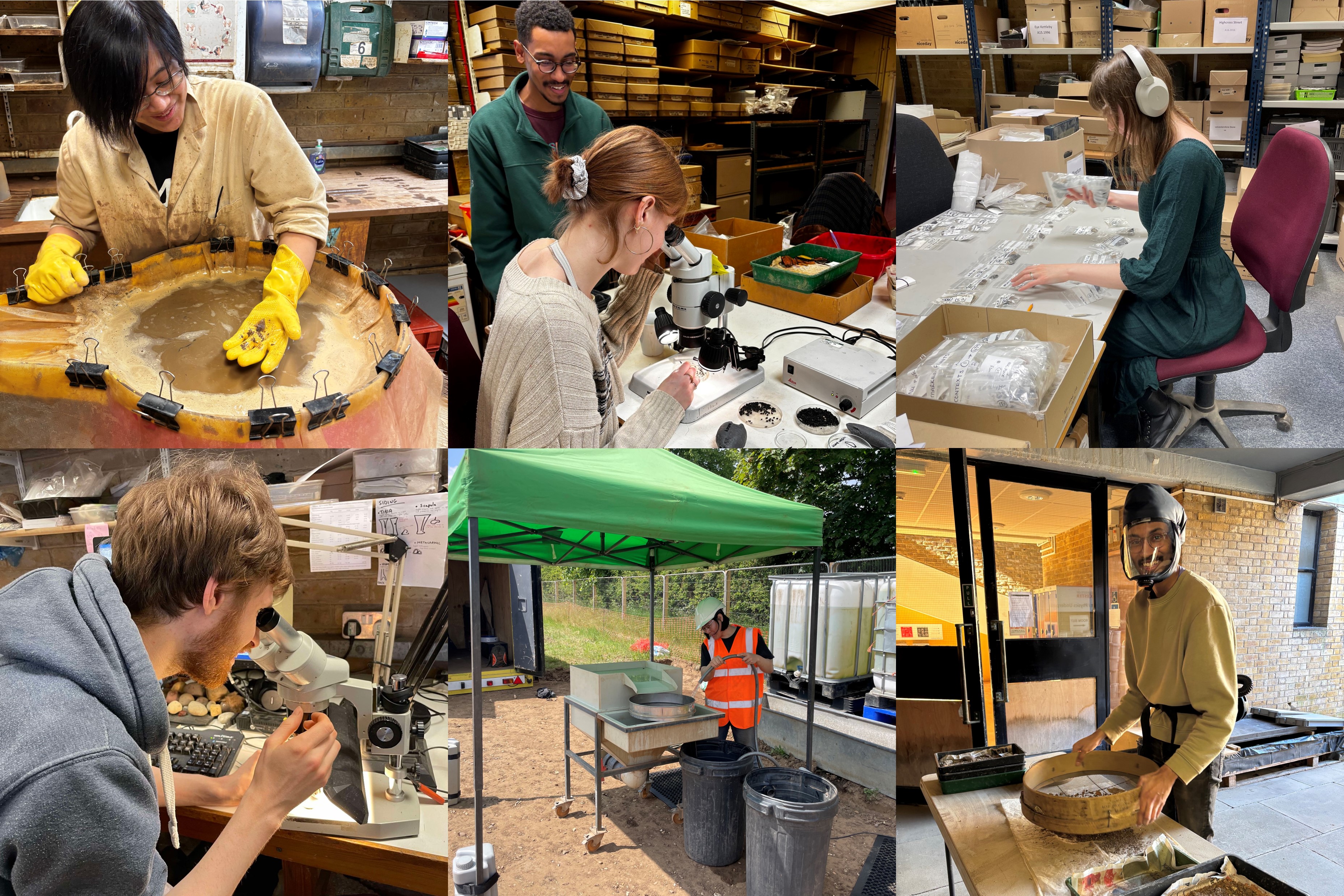
Behind every excavation lies the meticulous work of our finds lab. This year, the lab team faced an influx of waterlogged wood—over 300 pieces from Wanlip alone. New conservation tanks were built, and flotation technology got a boost, streamlining environmental sample processing. These innovations not only speed up analysis but also enhance collaboration between field and lab teams.
Celebrating 30 Years of ULAS
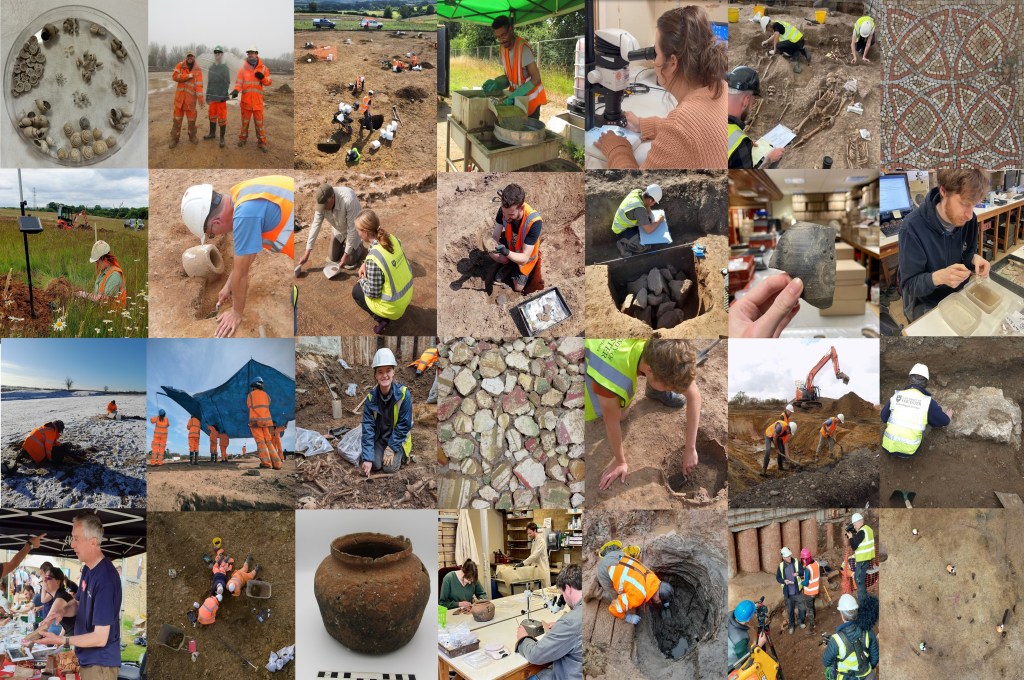
July marked a major milestone: ULAS turned 30! From our early days to becoming a nationally recognized archaeological service, we’ve grown through partnerships, research, and public engagement. Current Archaeology featured us in a celebratory article, highlighting our journey and impact. The anniversary reminds us that while methods evolve, our core mission—uncovering and sharing the past—remains unchanged.
Bringing Archaeology to Life
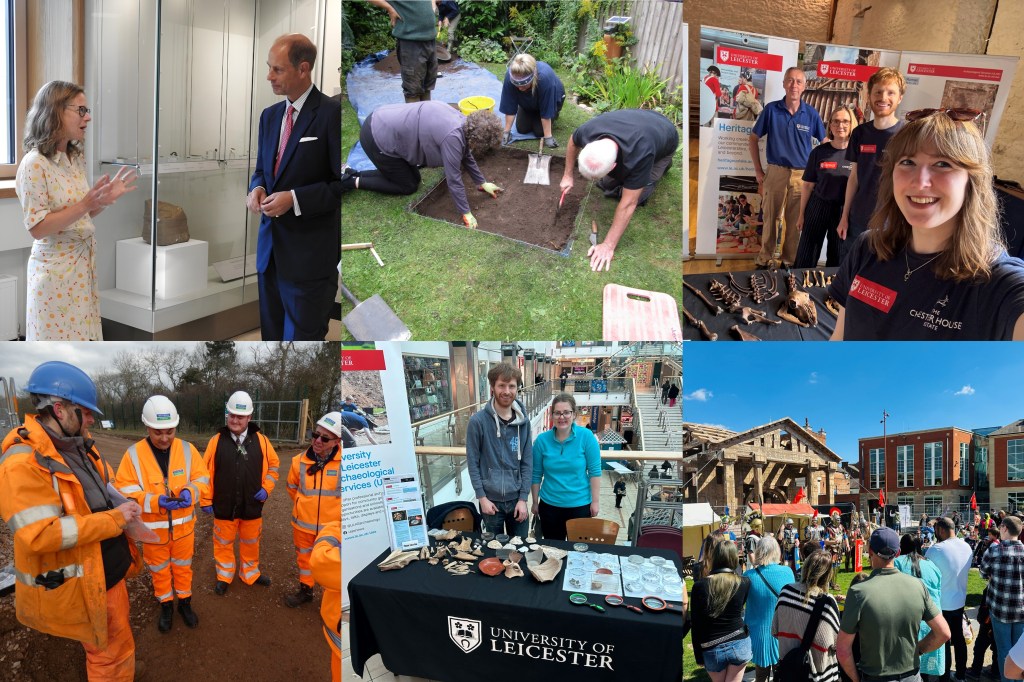
Outreach was a cornerstone of 2025.
- ULAS staff provided talks, guided walks and family archaeology days for the Festival of Archaeology, which hosted over 100 events across Leicestershire and Rutland, engaging 8,000 participants.
- The Jewry Wall Museum reopened with immersive displays and interactive experiences, showcasing Roman Leicester like never before. Many finds made by ULAS over the past 30 years feature in the new exhibit and staff have been integral to the development of the displays.
- The Leicester Cathedral Heritage and Learning Centre also opened its doors, blending archaeology with art and education, including a display of finds and artwork inspired by our archaeological excavations. During the official opening, ULAS staff were present and had the opportunity to talk to HRH Prince Edward about our work.
- Our discoveries at Leicester Market even made global headlines, thanks to the unearthing of Roman houses, medieval market surfaces, and the infamous “vile dungeon” of the Gainsborough Chamber.
Awards, Accolades, and Academic Achievements
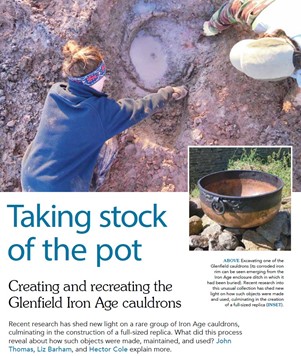
ULAS is nominated for Current Archaeology’s Research Project of the Year for our work on the Glenfield Iron Age cauldrons—a project that combined cutting-edge analysis with craftsmanship to create a stunning replica now on display.
Meanwhile, the University of Leicester ranked in the Top 40 globally for Archaeology, reflecting the strength of our teaching and research. Congratulations also to our Environmental Supervisor Will Johnson-Moss, who began his PhD on medieval horses, and to our team members who published papers on Roman mosaics and historic diets.
People Power
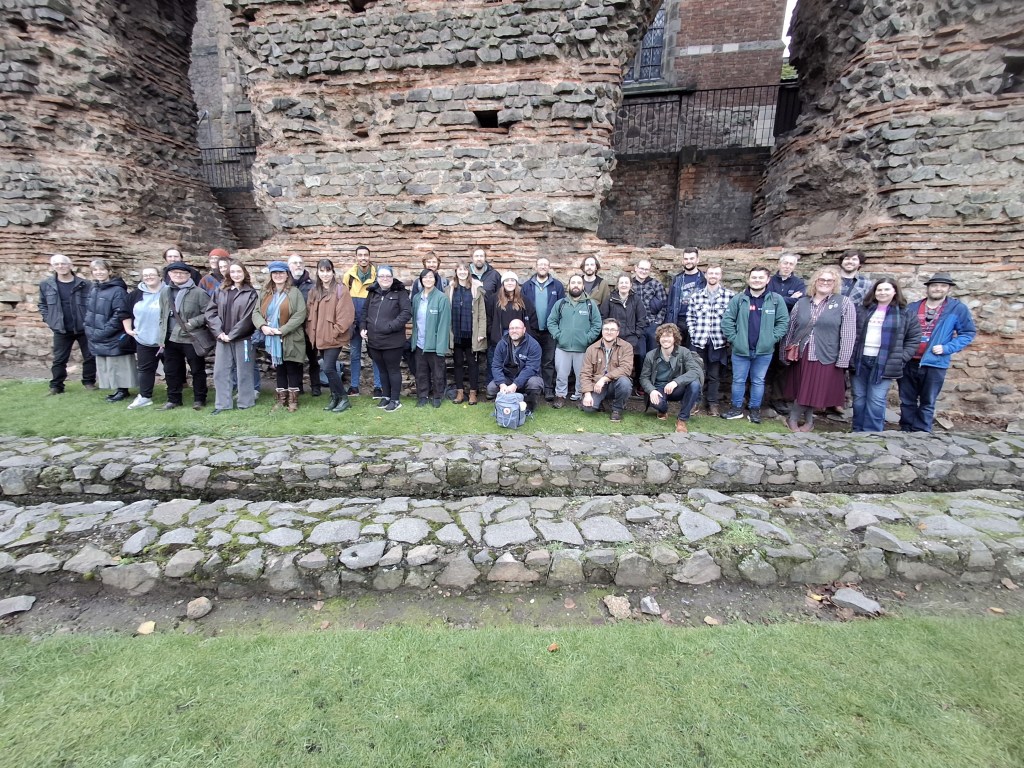
None of this would be possible without our incredible team. This year we welcomed new faces and bid farewell to colleagues moving on to exciting new ventures. To everyone who wielded a trowel, sorted a sample, or shared a story—thank you for making 2025 unforgettable.
Looking Ahead
As we step into 2026, plans are already underway for new excavations, research projects, and outreach events. Expect more discoveries, more stories, and more opportunities to connect with the past. Whether you’re a client, student, volunteer, or heritage enthusiast, we invite you to join us on this journey.
Archaeology is more than digging—it’s about connecting people with their history. In 2025, ULAS did just that, from muddy trenches to museum galleries. Here’s to another year of discovery, collaboration, and inspiration.
Merry Christmas and a Happy New Year! Join us for the next chapter in 2026!
 ULAS News