Charnwood Forest is about to reveal some of its best‑kept secrets. This spring, residents from Newtown Linford are being invited to take part in a community archaeology dig designed to uncover the hidden histories beneath their own gardens and village spaces.
Led by Professor Carenza Lewis (University of Lincoln and Time Team) and archaeologists from University of Leicester Archaeological Services (ULAS), volunteers will help excavate up to 30 test pits in the village, offering a rare chance to explore how Newtown Linford, and Charnwood Forest itself, have evolved over centuries.
The dig, organised by the Charnwood Forest Geopark and funded by the National Lottery Heritage Fund, combines archaeological research with hands‑on learning, community connection, and plenty of muddy fun. From local drop‑in meetings to excavation weekends and find‑sorting sessions, the initiative opens the door for people of all ages and abilities to get involved in real archaeological discovery.
The FAQs below answer the most common questions about how the dig works, who can take part, and what to expect from this unique opportunity to uncover the stories beneath your feet. If you have any other questions please contact us via dig.charnwood@leicester.ac.uk.
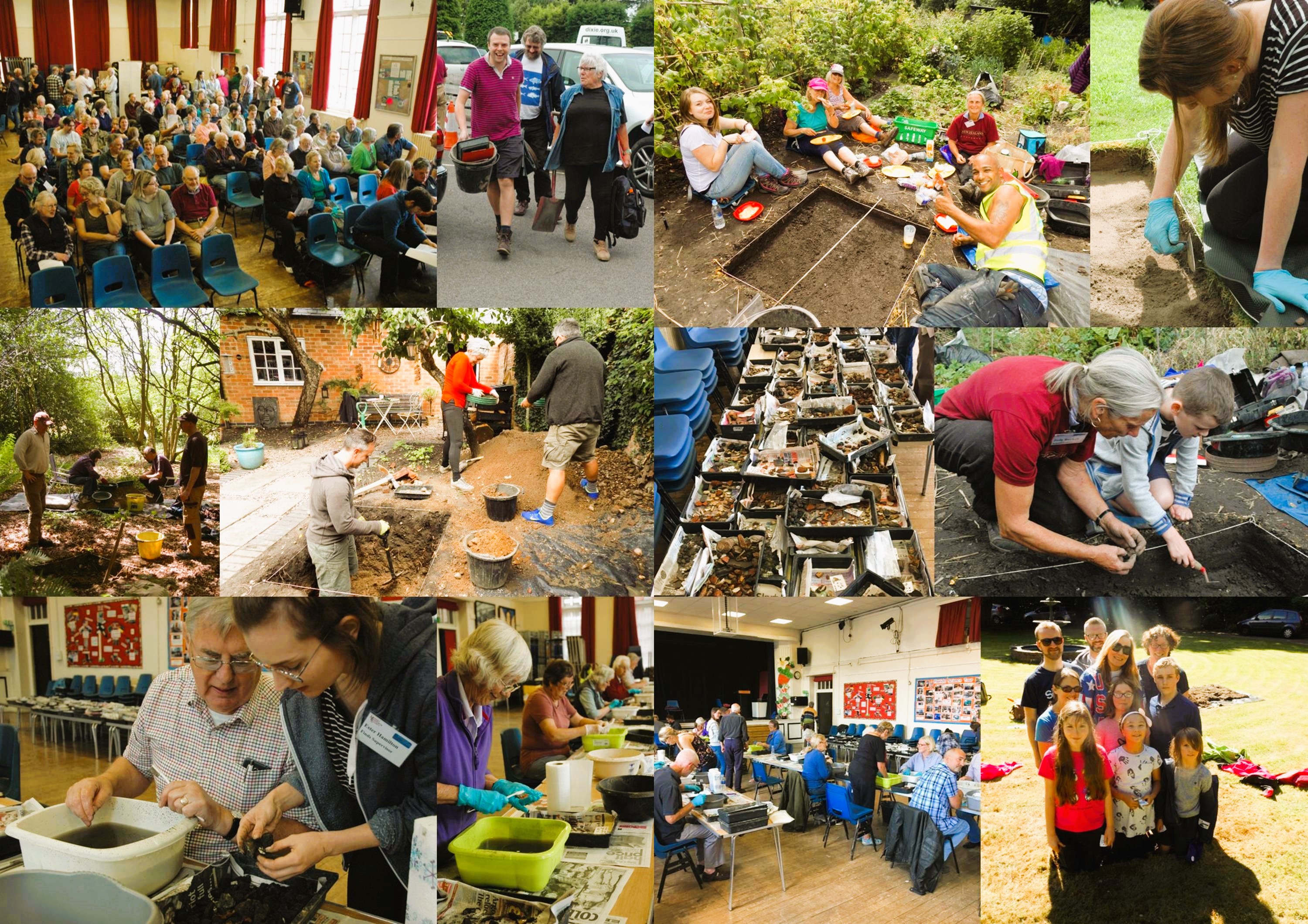
Why are we exploring villages in Charnwood Forest?
Our understanding of settlement in Charnwood is quite limited, especially from the end of the Roman period up until the Domesday survey in 1086, and we want to get a better understanding of when and how settlements appear in the forest and how they developed up to the modern day.
Previous community test‑pit excavations carried out with the Charnwood Roots Project between 2014 and 2016 in Anstey, Whitwick and Rothley uncovered thousands of artefacts spanning from the Mesolithic to the modern period, offering new insights into how these Charnwood Forest villages developed over time.
Across 89 test pits and with more than 450 volunteers taking part, the project showed that while prehistoric, Roman and post‑medieval finds were broadly in line with expectations, medieval pottery was unexpectedly scarce, suggesting that earlier settlement in Charnwood may have differed from other parts of Leicestershire.
The project highlighted the need for more test‑pitting in other forest villages to answer new questions emerging from the data.
We want to learn about what life was like for the people living in Charnwood in the past. How did they live their lives? What did they do for work and leisure? Did the population grow or shrink, and how would this have changed life in the village? We also want to look for evidence for earlier activity – Prehistoric and Roman finds showing us a continuity of activity across time.
If you would like to find out more about the results of the Charnwood Roots Project you can read this article https://doi.org/10.5284/1107414
Where will the digs take place?
The digs will take place in the four villages of Newtown Linford, Stanton under Bardon, and Woodhouse and Woodhouse Eaves.
When will we be digging in Newtown Linford?
The Woodhouse and Woodhouse Eaves test pitting weekend will be on 2nd-3rd May 2026.
Why do we want to dig in Newtown Linford?
Our knowledge of the origins of Newtown Linford is currently hampered by a lack of documentary evidence. The settlement is not recorded in the Domesday record of 1086, with the earliest reference for ‘Lindeneford’ in 1280 and ‘Neuton’ in 1325. The origins of ‘Neuton’ are believed to be tied to the eviction of villagers from the Bradgate estate. However, the origins of the earlier ‘Lindeneford’ are not understood.
Evidence of prehistoric activity is generally limited to findspots of Palaeolithic and Mesolithic flint tools recovered from Bradgate Park, potentially the site of a prehistoric hunting ground. Earthworks in the wider landscape point to field systems and enclosure, but have not been tested. Roman archaeology is limited, with a Dolphin brooch recovered to the west of the village. Evidence for Medieval activity is more common, with findspots of a bronze fitting dating from the 8th-9th century and multiple undated coins. Dendrochronology dates the timbers used in the construction of buildings on Main Street to the mid-15th century. A potential Medieval road near All Saints Church may represent the original course of Groby Lane.
Post-medieval development is more apparent and suggests a continuation in settlement character. Evident changes include the extension of the settlement along Main Street, and the incorporation of some field systems into the Bradgate estate. Modern development has been limited, primarily linked to development along Bradgate Road and Markfield Lane and Groby Lane, which means that there has been minimal archaeological investigation. LiDAR aerial reinforces this point by demonstrating the survival of historical field systems and earthworks around the village. In this way, the village hasn’t seen a drastic change in its original (as we currently understand it) character and test pitting will provide a fantastic opportunity to challenge and improve on our knowledge.
What do we want to do?
We want to recruit homeowners in Newtown Linford who are willing to offer a small area of their gardens for the excavation of an archaeological test pit.
An archaeological test pit is a small (1 metre x 1 metre) trench dug systematically in a series of 10cm thick layers to a maximum depth of approximately 1m. Each layer is carefully recorded, and the soil is sieved to recover archaeological artefacts which can tell us something about how the site was used in the past.
Test-pits can be dug quickly and their small size makes them ideal for investigating gardens and built-up areas like village centres. Digging groups of test pits across the two villages will allow us to say something about the way in which Newtown Linford has changed over time.
At the end of the weekend all test-pits area backfilled with the soil dug from them, and the turf is replaced.
Where can a test pit go?
Test pits are best located in undisturbed garden soil – ideally a grassed area. Back gardens are favoured for this as they are generally less disturbed, but front gardens can be just as useful. Before the test pitting begins, an archaeologist will visit all the prospective sites with the home owners to discuss the best location.
If you want to host a test pit but you are not sure if your garden is suitable, please contact us via the project email dig.charnwood@leicester.ac.uk.
I don’t have a garden / I don’t live in Newtown Linford, can I still take part?
Yes! The dig is open to everyone of all ages and abilities, including people from the village and those from further afield. If diggers would like to dig a test in their own garden, we manage the teams to accommodate this. Diggers are also free to host a test pit and dig somewhere else!
Digging a test pit usually involves a team of 4-5 people. You do not need any previous archaeological experience and we aim to have a mixture of experience in each team, so that at least one person has been on a previous test pitting project. A team of professional archaeologists will also be supervising group of test pits over the weekend, maintaining contact with each team throughout the day and helping to resolve any problems.
I want to host a test pit, but I’m not going to be in. Is this a problem?
This is not normally a problem. If you are happy for a team of diggers to access your garden whilst you are away you can still host a test pit. Access to the garden is required, and we would request that home owners leave their gate open for the duration of the weekend. This allows test pit diggers to come and go with minimal disruption.
Are there jobs which don’t involve digging?
Yes! The test pitting weekend is a big project which involves volunteers in many different roles. Test pitting is comparable to a couple of days of heavy gardening. As well as excavation (de-turfing, digging the test pit and backfilling) we want to recruit volunteers to sieve the soil for artefacts, record the test pits, collect finds from test pits, wash finds and provide general support to the different teams. There are lots of opportunities to help out beyond digging a hole.
Where do I sign up?
If you would like to host a test pit or volunteer to take part in the dig at Newtown Linford, please contact us via any of the following methods:
Contact us: dig.charnwood@leicester.ac.uk
Register: https://forms.office.com/e/j86rFBNHxC
 ULAS News