Blog by Harriet Coulton.
Today is International Women’s Day; a moment to reflect on and advance our shared goal of a gender‑equal world that is diverse, equitable, inclusive, and free of bias and discrimination. This year, we asked archaeologists across ULAS, from field teams to post-excavation specialists and managers, to share their experiences and perceptions of gender in commercial archaeology. Our aim was to assess and reflect upon our gender conceptualisation as a company and find areas in which we can make positive changes. Archaeologist Harriet Coulton explores the results.

Thirty-one colleagues of all genders took part in our survey. They work on windswept sites, in finds processing rooms, at microscopes, in archives and offices. Some are at the very start of their careers, others have more than 20 years of experience. This range is important, because experiences can differ significantly between muddy trenches and office desks. Of the people who took part, 55% identified as male, 42% as female and 3% as non-binary. Together, their responses offer something both honest and hopeful – a profession that has changed significantly and continues to change for the better.
What are the aims and goals of International Women’s Day and how do ULAS achieve them?
ULAS staff were asked whether they think our previous digital content achieved the International Women’s Day aims:
- To celebrate women’s achievements
- To encourage plans to make positive changes in the workplace
- To foster solidarity between all genders
- To raise awareness of gender issues
It was evident that there is some room for improvement. It appears that our social media coverage struggles to foster solidarity between all genders, despite a majority of people believing that our social media presence is not biased towards any particular gender (94% of respondents). Perhaps this is specific to the field of commercial archaeology, since our social media posts usually do not focus so much on people, but rather highlight the incredible sites that we work on, and the fascinating artefacts that we find!
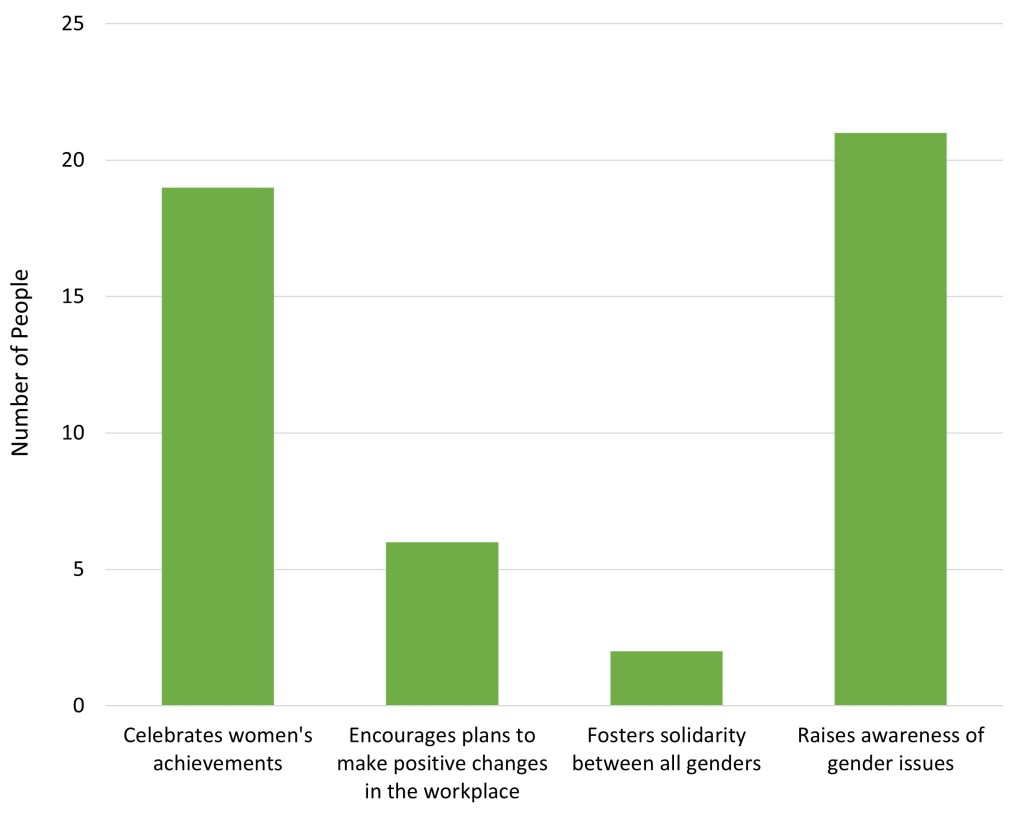
Whilst we should always be looking for ways to create positive change within the workplace, we should also be proud of the things that we are doing well. Most staff believe that our social media posts celebrate women’s achievements within archaeology, and raises awareness of gender issues.
Discrimination within Commercial Archaeology
Staff were asked whether they have ever been treated differently at work because of their gender. Overwhelmingly, 90% of female respondents said they have been treated negatively on site (compared to 6% of males who have reported being treated negatively)*. Most of the time this discrimination comes from people outside of commercial archaeology, such as clients and contractors (57%). When asked to elaborate, ULAS staff reported that in the past they have been subjected to casual sexism, such as assumptions about their physical strength, being underestimated, and contractors being surprised that there are women on site. Whilst these examples are subtle, they accumulate and shape the daily working lives of our female staff.
* Data from participants who identified as non‑binary were reviewed; however, due to the comparatively smaller quantity of responses, these data have been omitted from the final comparison of male and female datasets.
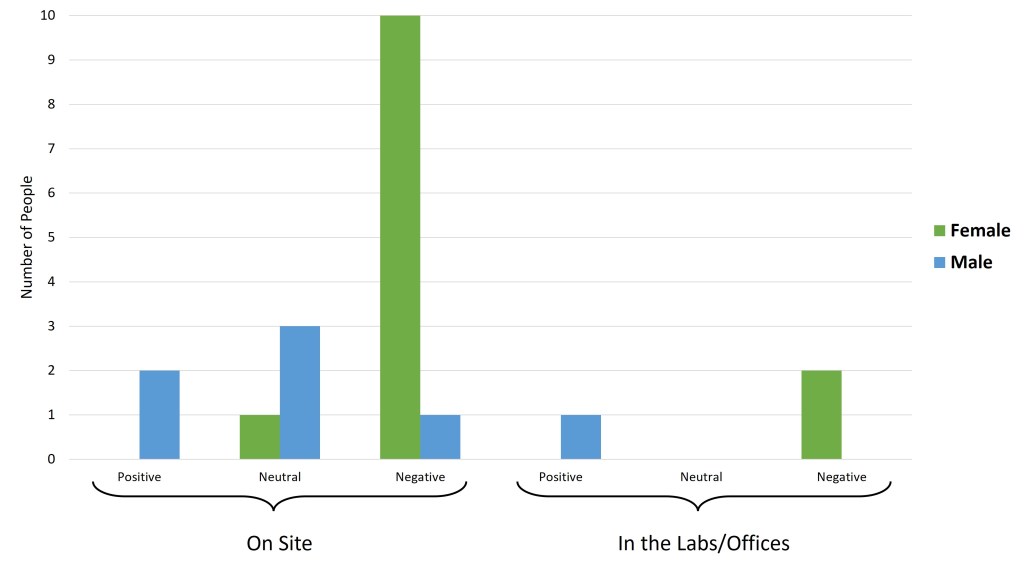
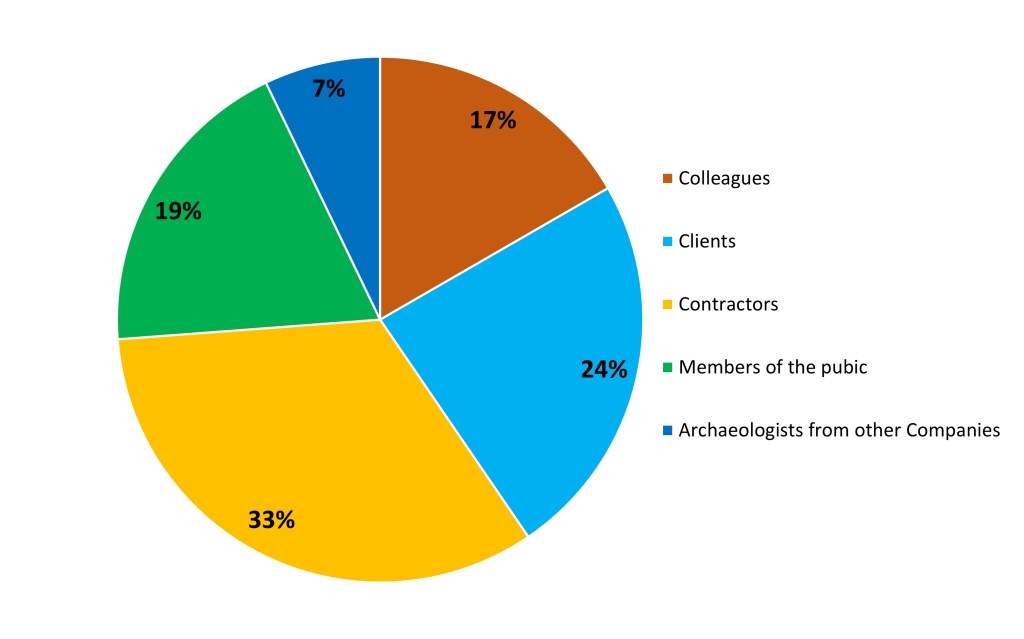
It is important to note that not all experiences were negative. Some reported neutral experiences or no gender-based difference at all. Some males have reported experiencing positive discrimination on site, or no discrimination. This could be a reason that some people do not believe that sexism can be an issue in the workplace. The hope is that these insights into our perceptions of gender will foster more solidarity between all on site. Only by understanding the challenges that women face within archaeology, can we mobilise and implement positive changes. Maybe this is just a small change – a few male respondents said that they direct any client and contractor straight to the female lead, when the client may be mistaken about who is in charge. Whilst women on site are a normal occurrence for archaeologists, some contractors are (still) not used to it!
Within the labs/offices, only 7% of people reported that they have been treated negatively due to their gender. This contrast between site and lab/office contexts suggests something broader about workplace culture. Field environments often involve interaction with external contractors and the public. Office environments tend to be more internally structured, with established teams and policies. It may be that progress in formal workplace equality is being felt most strongly in those internal settings, and that the gender gap is narrower – a positive sign.
Interestingly, when asked if they think that women might be at an advantage or disadvantage on site, some male respondents said “advantage” or “a bit of both”, whilst women overwhelmingly think that they are at a disadvantage on site. These results give some insight into a discrepancy between “perception vs reality”. Whilst most staff said that they believe International Women’s Day is important (76%), and most comments are positive and in support of equality, it’s possible that some people are unaware of the day-to-day challenges that women face in the workplace. So how do we merge perception and reality?
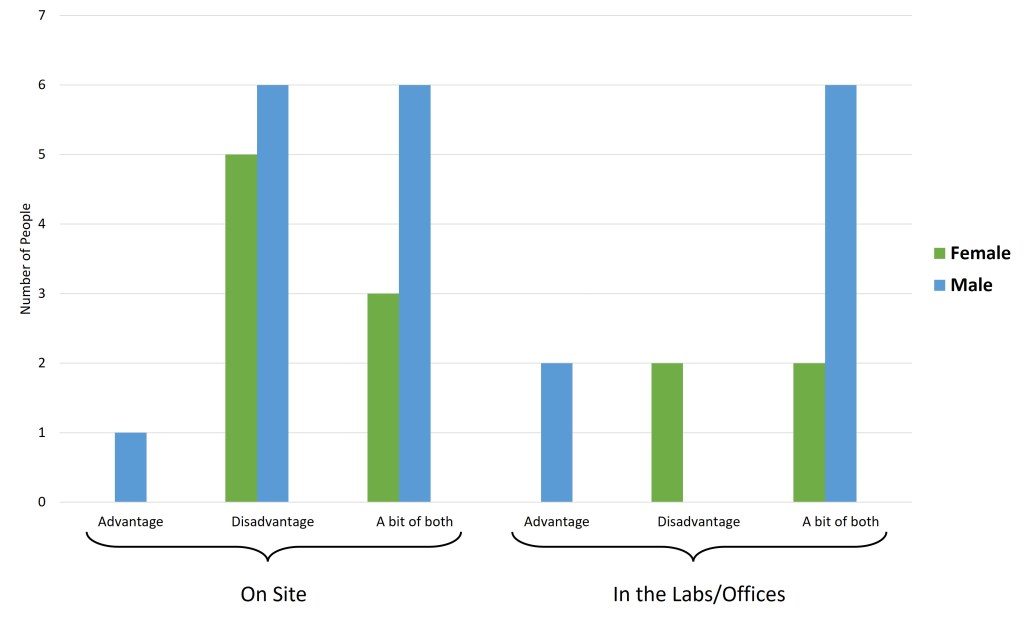
On site, disadvantage is a clear concern. Indoors, the picture is more ambiguous, with uncertainty being the most common answer. That uncertainty may reflect real progress. When inequality is obvious, people tend to identify it clearly. When it becomes less visible, experiences become more individual and nuanced.
Looking to the future, how does ULAS achieve the aims and goals of International Women’s Day?
Encouragingly, many respondents who have worked in commercial archaeology for longer have said that the workplace has changed drastically over time, often for the better. There have been improvements in welfare facilities on site, more mixed-gender teams, and increased awareness of equality issues. For early-career archaeologists at ULAS, the profession they have entered into is already more inclusive than it was 20+ years ago. That progress deserves to be recognised and celebrated, whilst we continue working on it.
When asked what advice they would give to a woman new to commercial archaeology, the responses were insightful and empowering. Most people advised that women should expect and demand professionalism; be confident and believe in their own abilities, and if things don’t work out, don’t be afraid to speak up and advocate for themselves. Notably, some people said they would give the same advice regardless of gender. That in itself reflects a culture increasingly focussed on fairness.
Finally, we asked how ULAS can bring about positive change, and how we can meet the aims of International Women’s Day. Suggestions included continuing to feature women regularly within our social media posts, listening carefully to the needs of everyone and implementing solutions, and implementing an internal mentoring scheme, where more experienced staff can pass on their knowledge to early-career archaeologists, and are given the time to do so.
This survey has revealed a profession in transition. There are clear signs of progress in some areas, whilst some site-based experiences remind us that gender still plays a big part in how some archaeologists are treated, particularly by people outside of the immediate team. We celebrate the achievements of our wonderful women at ULAS, and remember that we make up a team of intelligent and strong women, men and non-binary people. Only by working together can we build a profession where gender no longer shapes opportunity or experience, and we continue to strive for that every day.
Some advice for anyone new to commercial archaeology, from the staff at ULAS
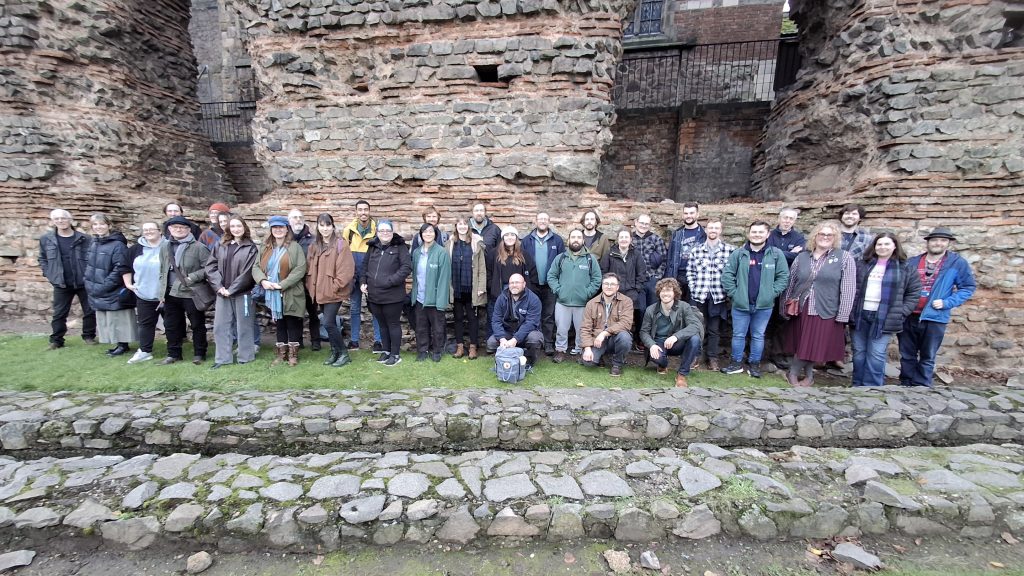
Be yourself. Be proud of your work. Build your professional community with individuals whom respect and support you. As long as you do your best, no one can fault you for your work. And if/when you encounter workplace sexism and other prejudice – speak up!
Same advice I would give anyone – be confident in your own abilities, be open to learning and don’t be afraid to speak up if you think you are not being treated fairly – most of all have fun, it’s a great job you are entering!
Act professionally and do your job. Don’t assume you will be treated differently. Although there will be some occasions where other people in the workplace might talk to you in a way you don’t always like, try to distinguish between those who mean to belittle you (who should not be tolerated) and those who actually mean to be nice or don’t realise that the world has moved on a bit. It’s sometimes worth being the bigger person and not immediately taking offence but rather working to persuade people. Try not to take everything to heart.
Be professional and expect to be treated professionally. Learn how to communicate well with different types of people – you will achieve much more by being able to explain things in a clear, positive way than by arguing or ignoring things.
I’d like to think those that work in archaeology will treat women newcomers fairly and equally but there will still be those contractors and site workers who haven’t yet adjusted to the 21st century. This might be a bit of a surprise for someone entering the workplace for the first time and, unfortunately, they should be aware of this type of problem. Hopefully though now there are support and reporting mechanisms in place so it should in no way deter anyone from commercial archaeology. I’d stress the importance of not putting up with this sort of behaviour at all. For any gender I’d also suggest that.
 ULAS News