Blog by Mathew Morris.
Today we mark the 80th anniversary of VE Day. It is a reminder that history is not just about the distant past, it also has a tangible connection with living memory. Our archaeological work is also not solely devoted to ancient remains, and over the past decades we have been involved in several projects which have recorded aspects of Leicester’s Second World War civil defences before they were lost.
By the end of the First World War, with Zeppelin raids reaching all parts of the United Kingdom, it was apparent that the English Channel was no longer the shield it once was and large-scale bombing of cities would be a real threat in future conflicts.
At the outbreak of the Second Word War in September 1939 the city of Leicester began providing civilian air-raid shelters, with the majority being built in the early months of 1940. Many of Leicester’s schools had their own shelters, which also doubled for civilian use during night time raids.
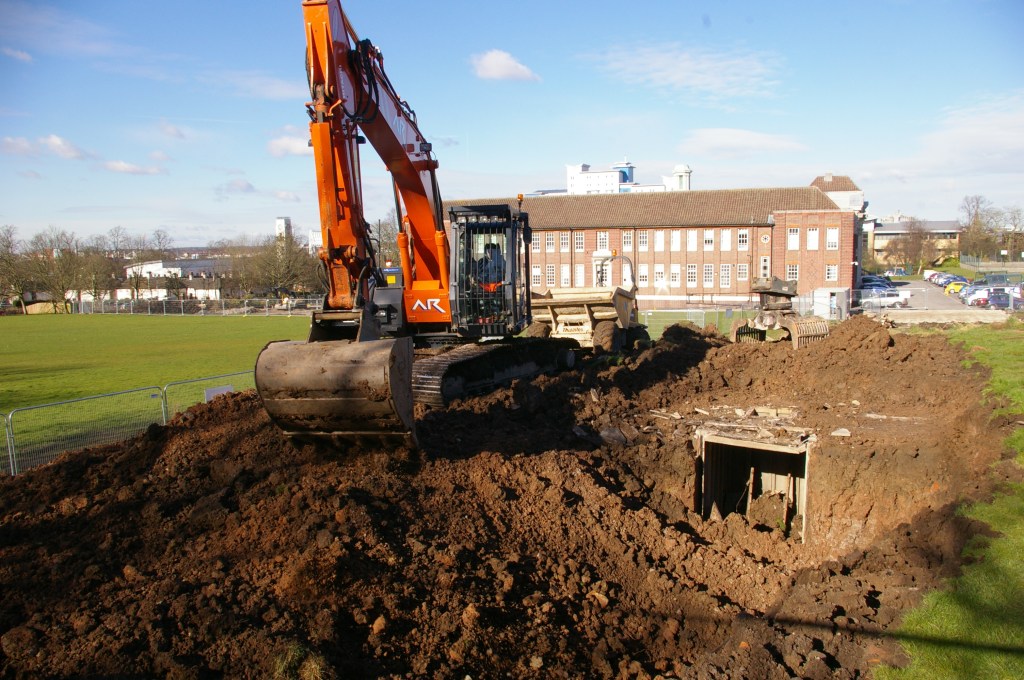
ULAS has recorded a number of these shelters before they were demolished, including in 2011 the Wyggeston Boys School shelter on Victoria Park Road (sited where the Victoria Park Health Centre now stands), in 2013 the Wyggeston Girls School shelter on the corner of University Road and Regents Road, and more recently in 2022 six smaller shelters at the former Southfields Drive Infants School and The Newry Junior School.
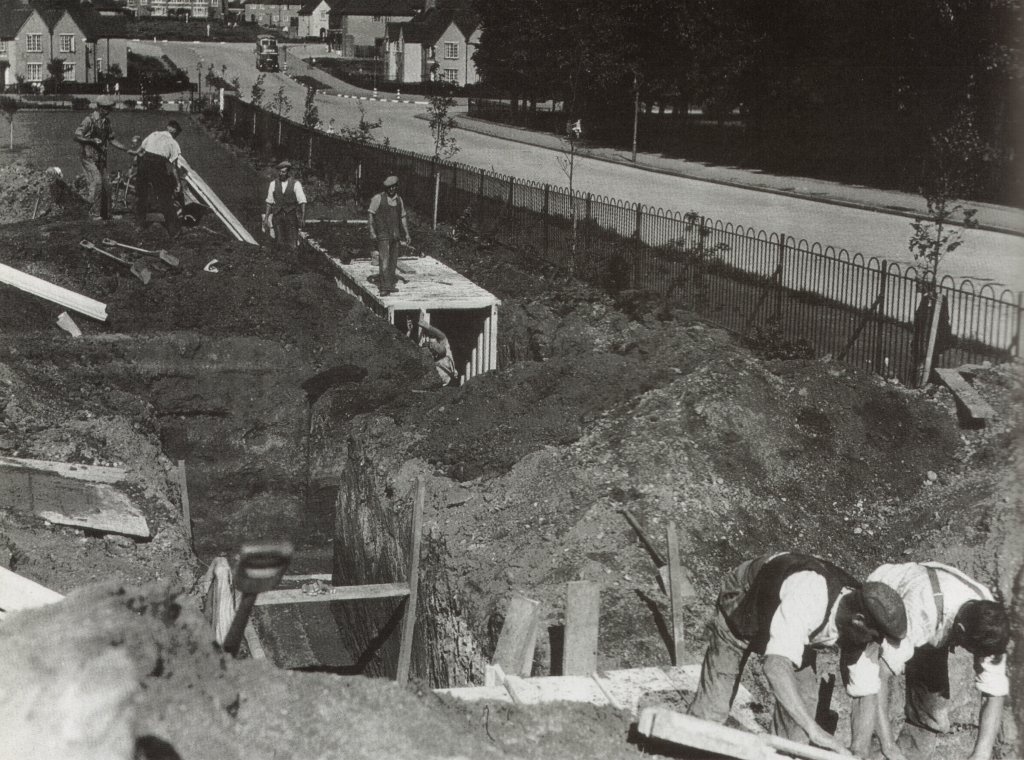
These were all constructed in a similar manner, using a cut and cover method and a pre-fabricated modular design. Five-foot wide trenches (1.5m) were hand or machine-dug and then lined with pre-cast concrete panels slotted together using a simple tongue and groove system and sometimes sealed with tar. Concrete spacers, set at regular intervals along the floor and the pre-cast concrete roof prevented the wall panels slumping inwards, and earth was replaced on top.
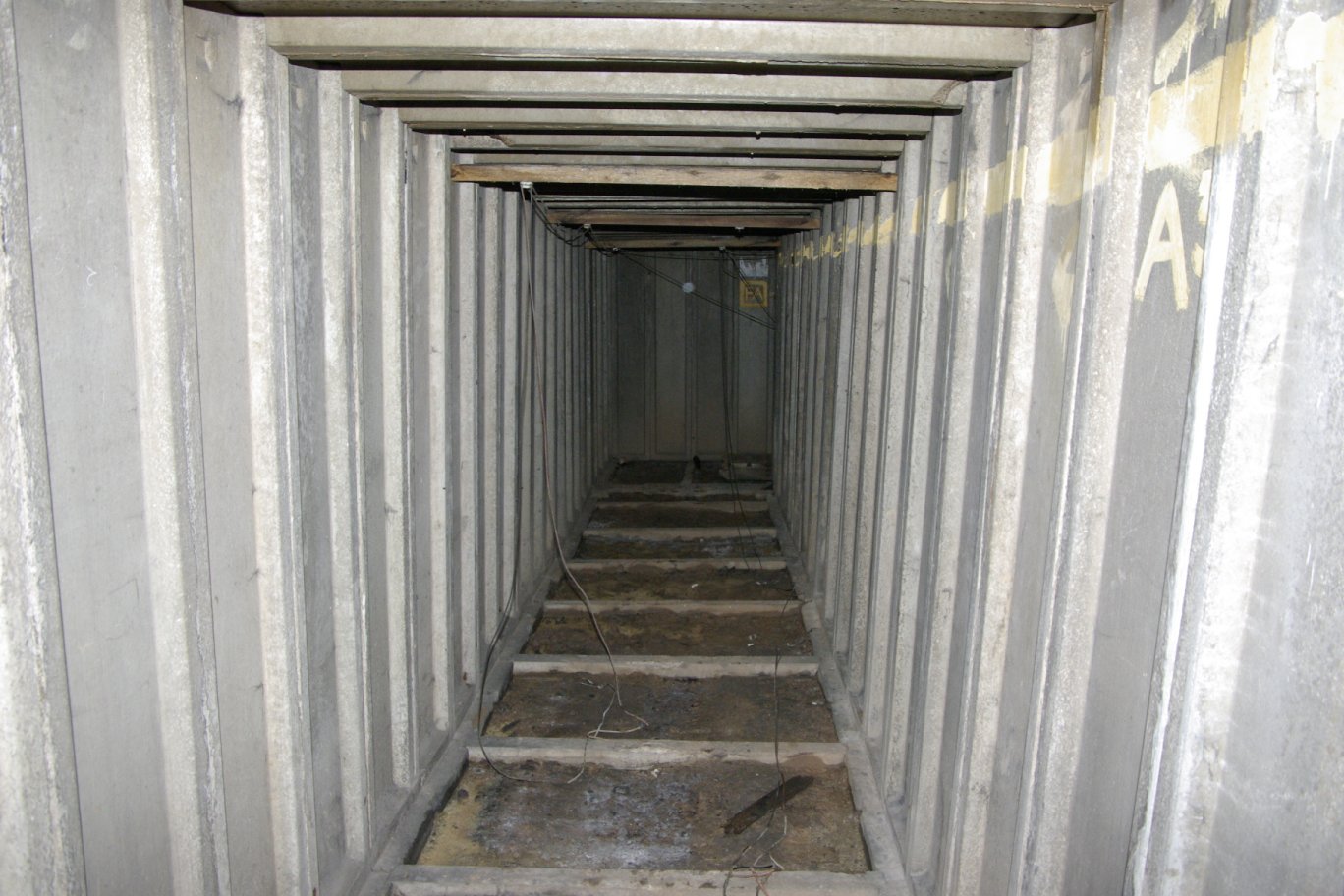
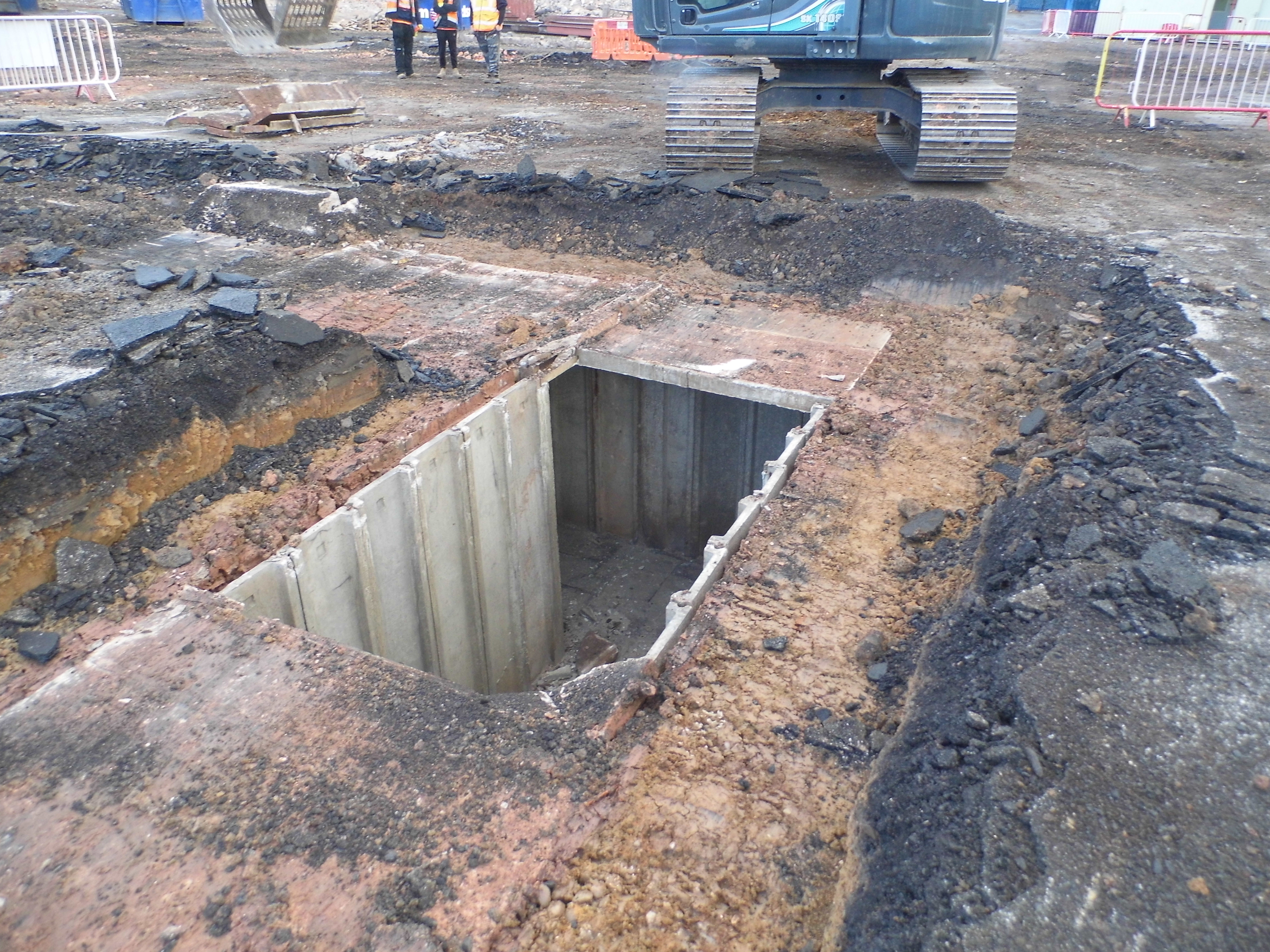
Left: Tunnel A in the Wyggeston Girls School shelter. Right: One of the shelters at Southfields Drive Infants School. Both used the same cut and cover method and pre-fabricated concrete panels. The Wyggeston shelter had an earth floor whilst the Southfields shelter had a concrete slab floor.
Such shelters were not dug deep under the ground and the soil cover was surprisingly shallow, with a depth between 0.3m and 0.6m (1-2 ft). This meant that they were not effective under a direct hit, although they did offer blast protection from near misses. However, their shallow depth did speed up construction and could, if the worst happened, make rescue easier.
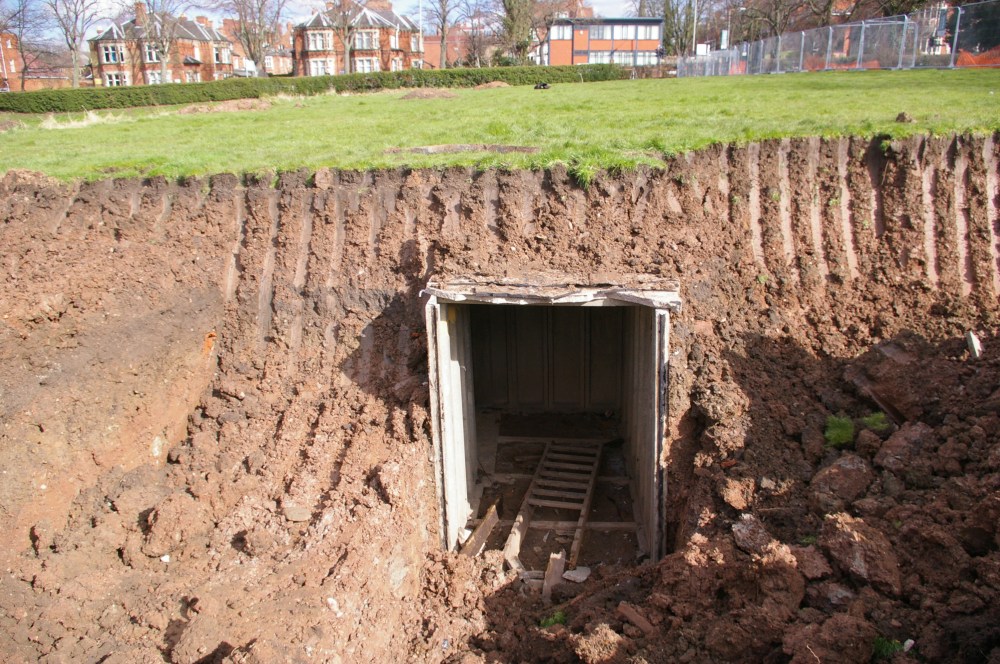
At the Wyggeston Boys School and at the Southfields and The Newry schools, the shelters were all accessed via at least one set of cast concrete steps. At the Wyggeston Girl’s Shelter, seven ground-level entrances provided access, all protected by timber and earth-filled blast walls (gabions).
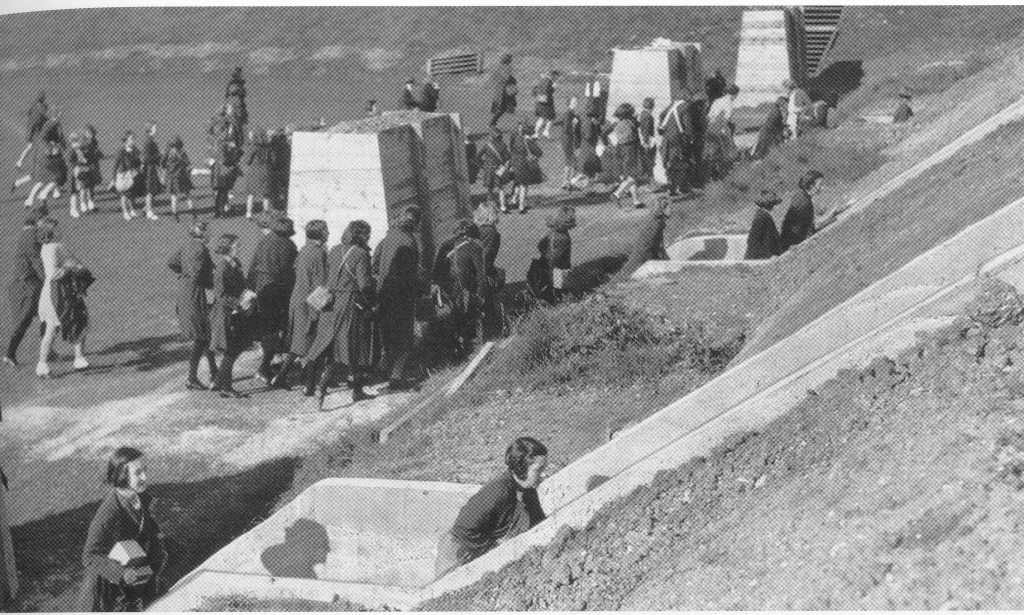
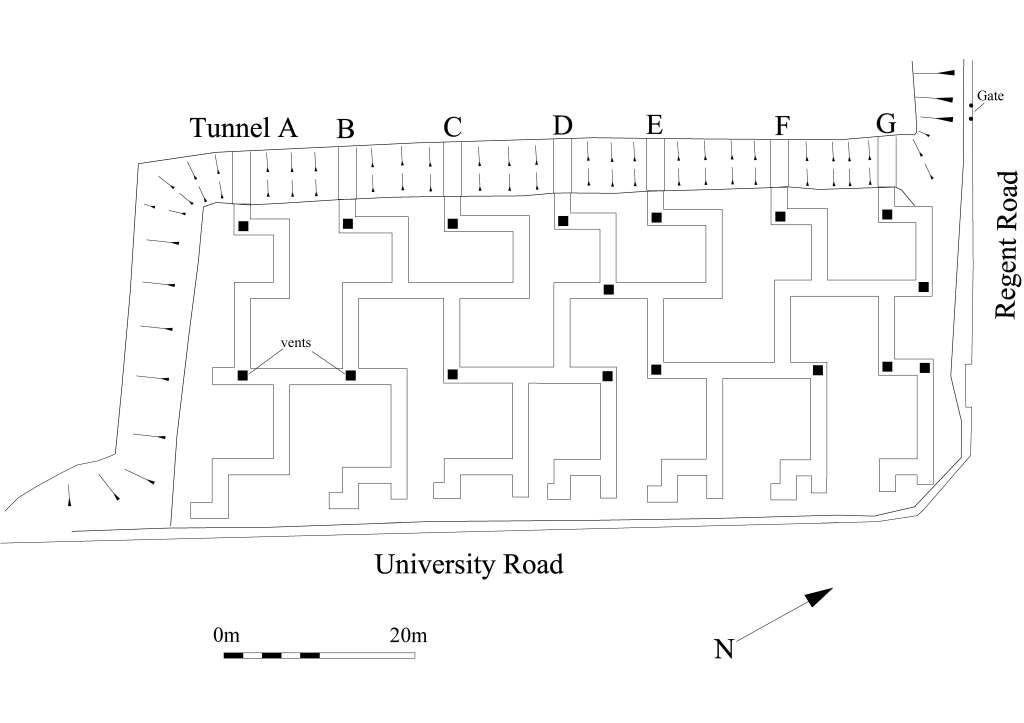
These gave access to a labyrinth of zig-zagging tunnels which were designed to minimise the blast effect which would otherwise rip along a straight corridor. The shelters ranged in size, with the Wyggeston Girls School Shelter a warren of seven interconnected tunnels totalling over 400m in length whilst the smallest tunnel at Southfields Drive Infants School was just 25m long.
Drainage and ventilation problems
The shelters were typically earth-floored or paved with concrete slabs and drainage was a major issue. By November 1940 it was apparent that a number of the shelters throughout the city were liable to flooding and lacked even basic levels of sanitation, rendering them almost uninhabitable until they were retrofitted. The clearest evidence of this was recorded in the minutes of the Civil Defence Committee, with tenders being received as early as June 1940 for ‘the laying of stoneware and galvanised iron piping in connection with the installation of electric pumps in those trench shelters which are subject to flooding.’
The minutes also contain a record of an injury caused to a Miss M.E Atkins, who on March 1st 1940 tripped over a 3inch hose connecting the shelter on Victoria Park with a gully for the purpose of pumping. Miss Atkins claimed £21 in loss of earnings and for the expense of medieval treatment but given that the incident happened in broad daylight, the council was inclined to contest the claim.
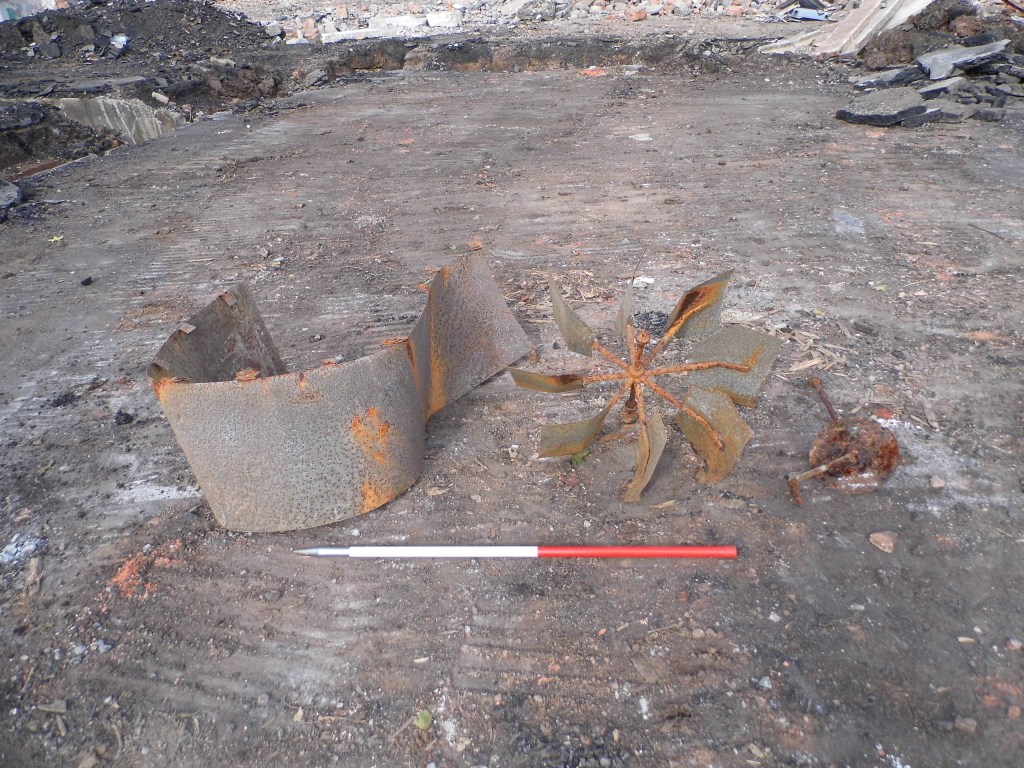
Air circulation was also a big problem, and the tunnels were fitted with regularly spaced ventilation shafts equipped with large hand-operated paddle-like fans. They had hand cranks attached to a bicycle pedal, and chain and gear mechanism, several of which were found in the tunnels during their recording. A variety of wooden and metal ladders were also found near to the ventilators which might suggest that the shafts could also be used as emergency escape routes should the entrances become blocked.

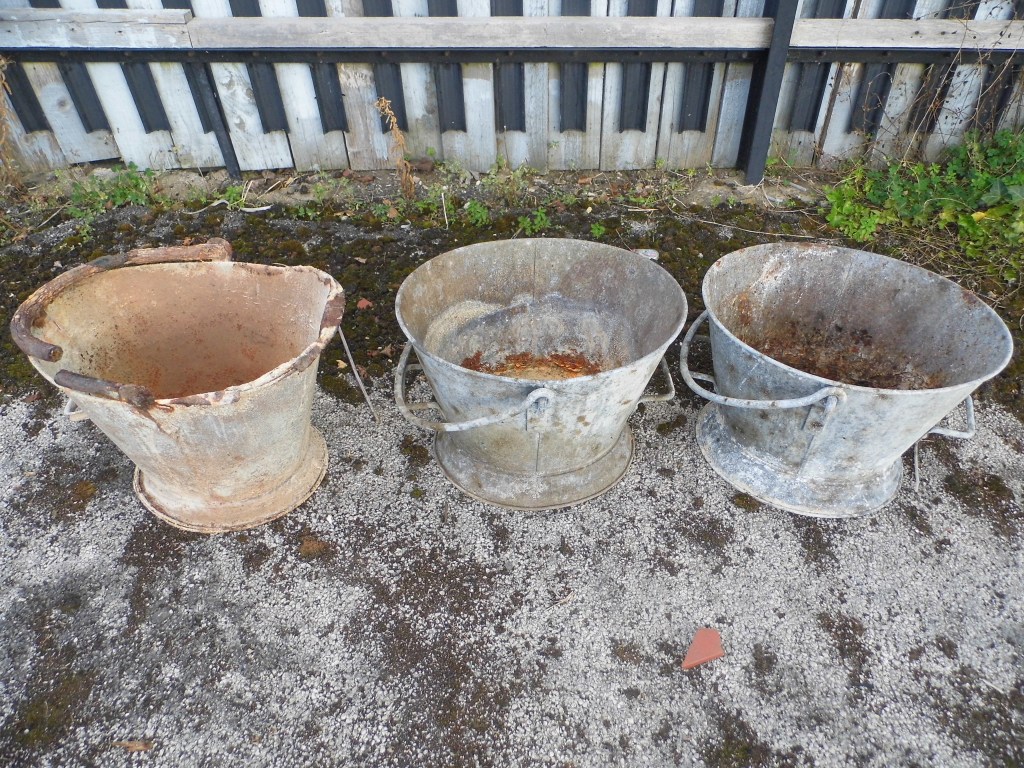
Simple electrical cable systems with Bakelite fittings ran along the roof of each tunnel and appeared to be the remains of lighting systems although no bulbs remained. A number of galvanised steel buckets were also noted, some with perforated covers, and were likely used as slop or soil buckets. No evidence of any form of seating was seen but records indicate that the shelters were fitted with wooden benches along the walls.
Life in the shelter
One anonymous alumni of Wyggeston Girls School recalled that the siren only sounding once during the school day, but numerous drills were carried out. She described the air-raid shelter favourably: ‘We filed out to the trenches under the “hump” with great enjoyment and no fear and sat on wooden slatted benches in the narrow tunnels. The shelters were roomy and as we were never in them for any length of time it all seemed a great adventure.’ Others no doubt had very different feelings about being in such crowded claustrophobic spaces.
Boredom and fear must have been prevalent and are reflected in many graffiti drawings on the walls of the shelters, including names, drawings, games and simple scrawls. Most appeared to be drawn in pencil, many no doubt by bored children either taking part in a drill or during an actual air raid. Caricatures of Adolf Hitler, swastikas, images of the blitz and aeroplanes bearing German crosses can all be dated to the Second Word War.
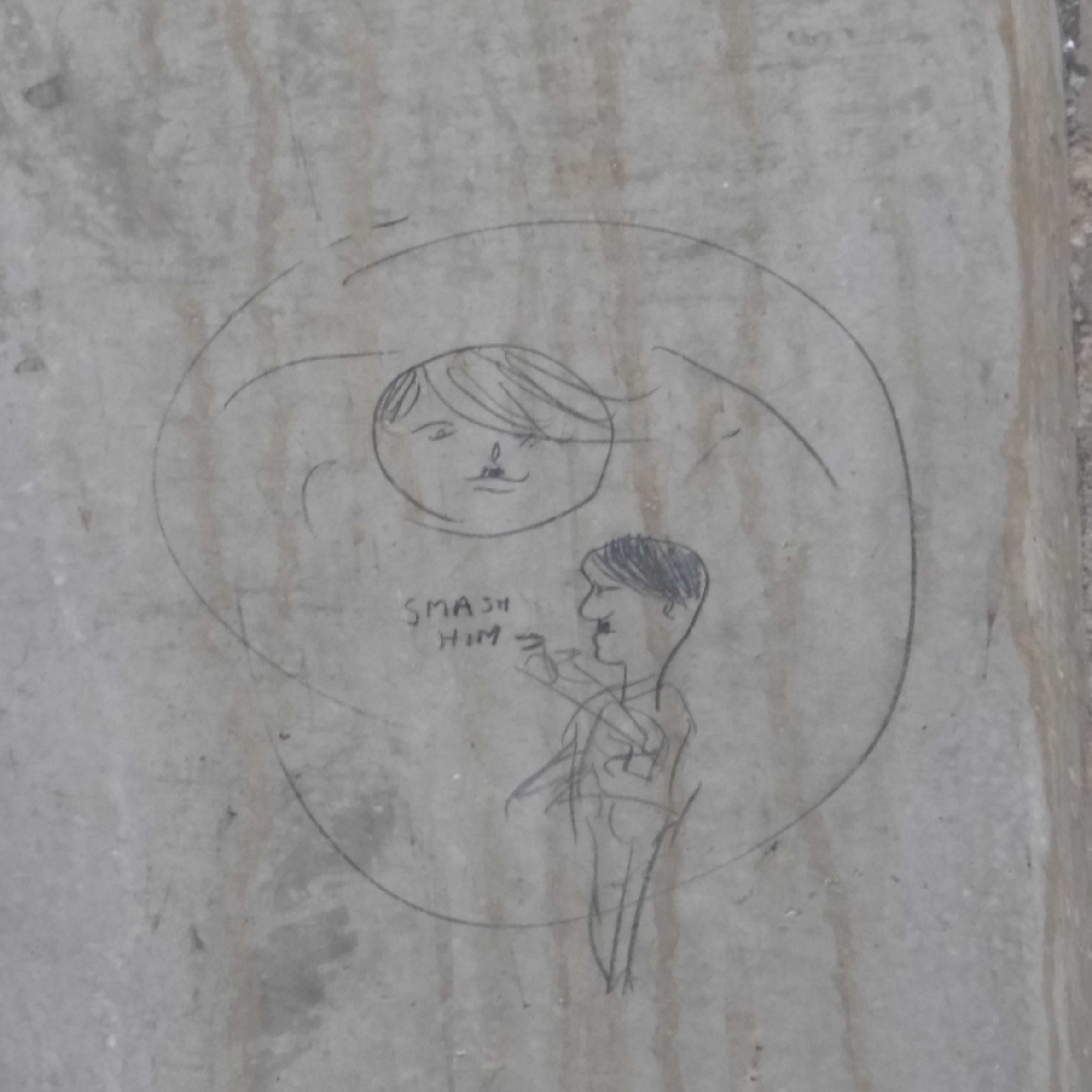
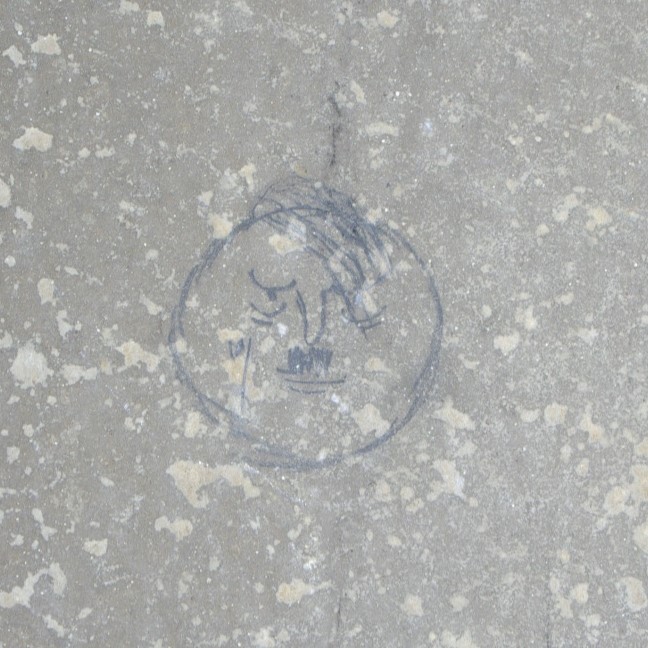
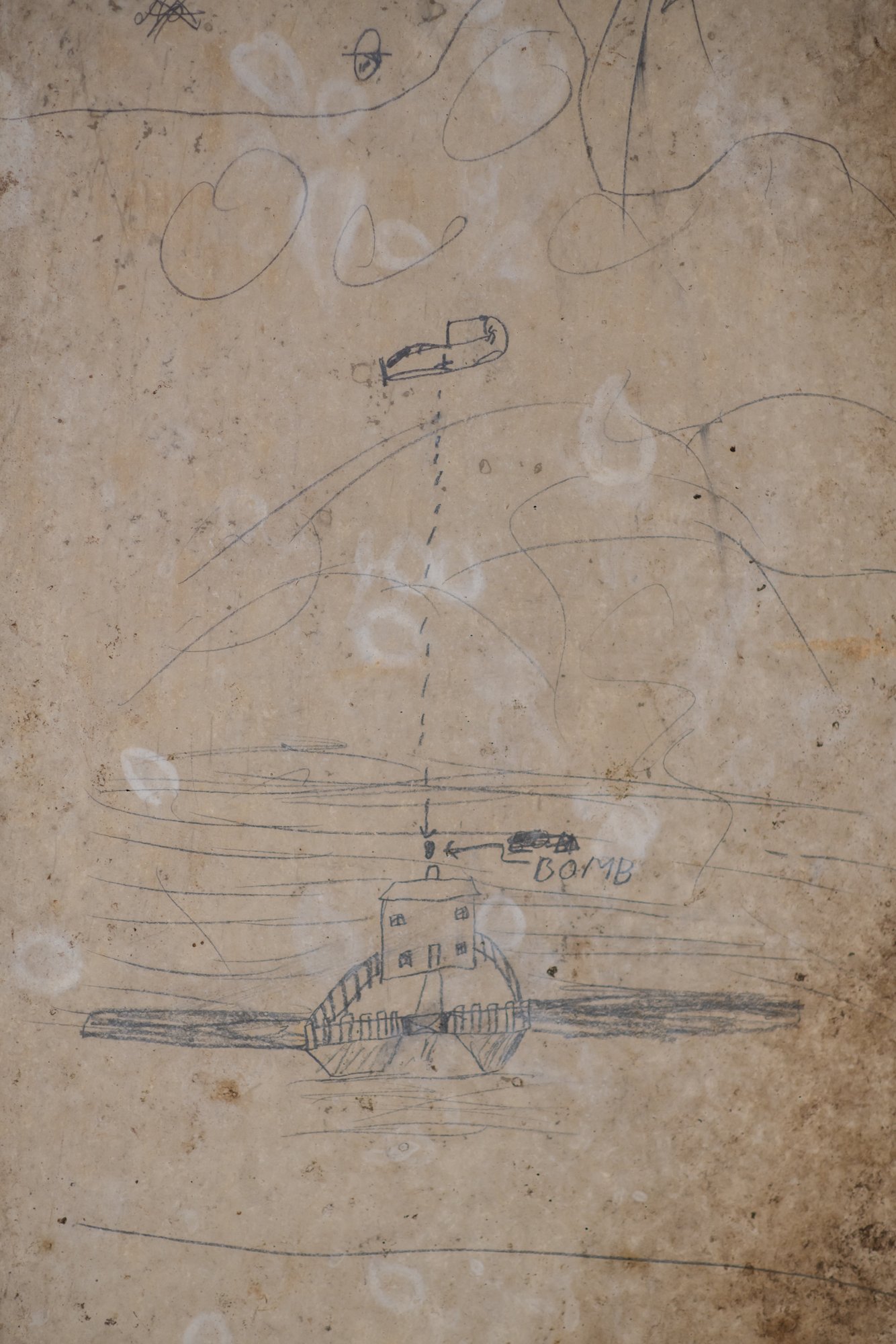
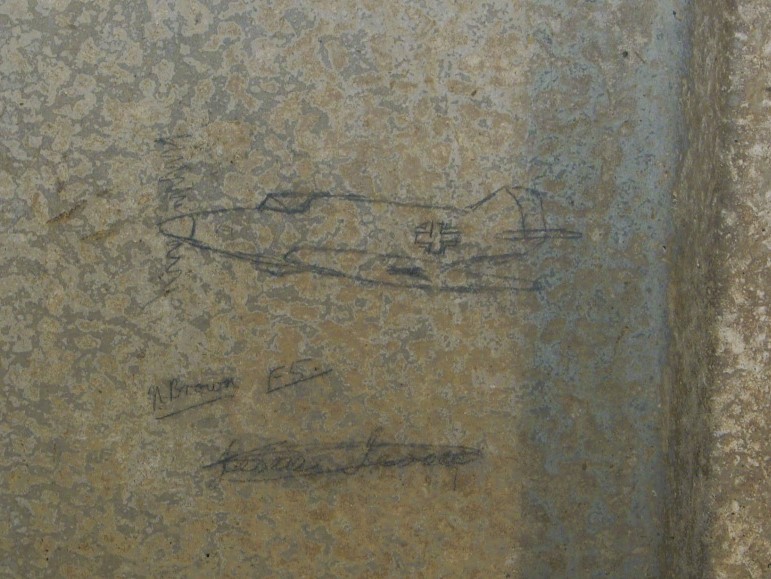
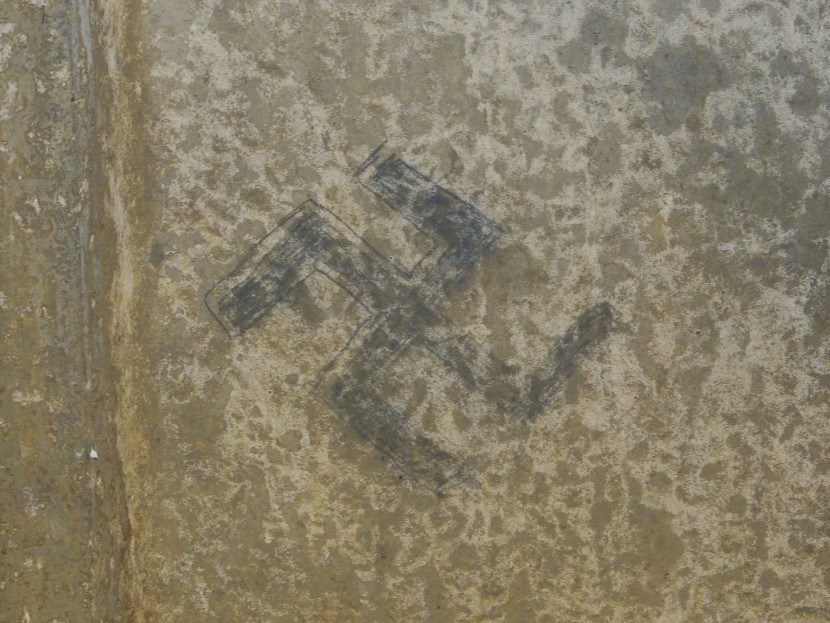
Clockwise: Caricatures of Adolf Hitler from a shelter at Southfields Drive Infants School (top) and the Wyggeston Boys School shelter (bottom), an image of the blitz from St Mary’s Field Infant and Nursery School (courtesy of Leicester Museums & Galleries), and a swastika and a German plane from the Wyggeston Boys School shelter.
Other graffiti included noughts and crosses, ‘Nany Shepard’, a cowboy, an elephant and a sailing boat. In some of the shelters, ‘schoolboy humour’ was apparent, with drawings of genitalia, crude poems and more adult-themed graffiti, including an instruction to visit “Mabel” at an address in Leicester!
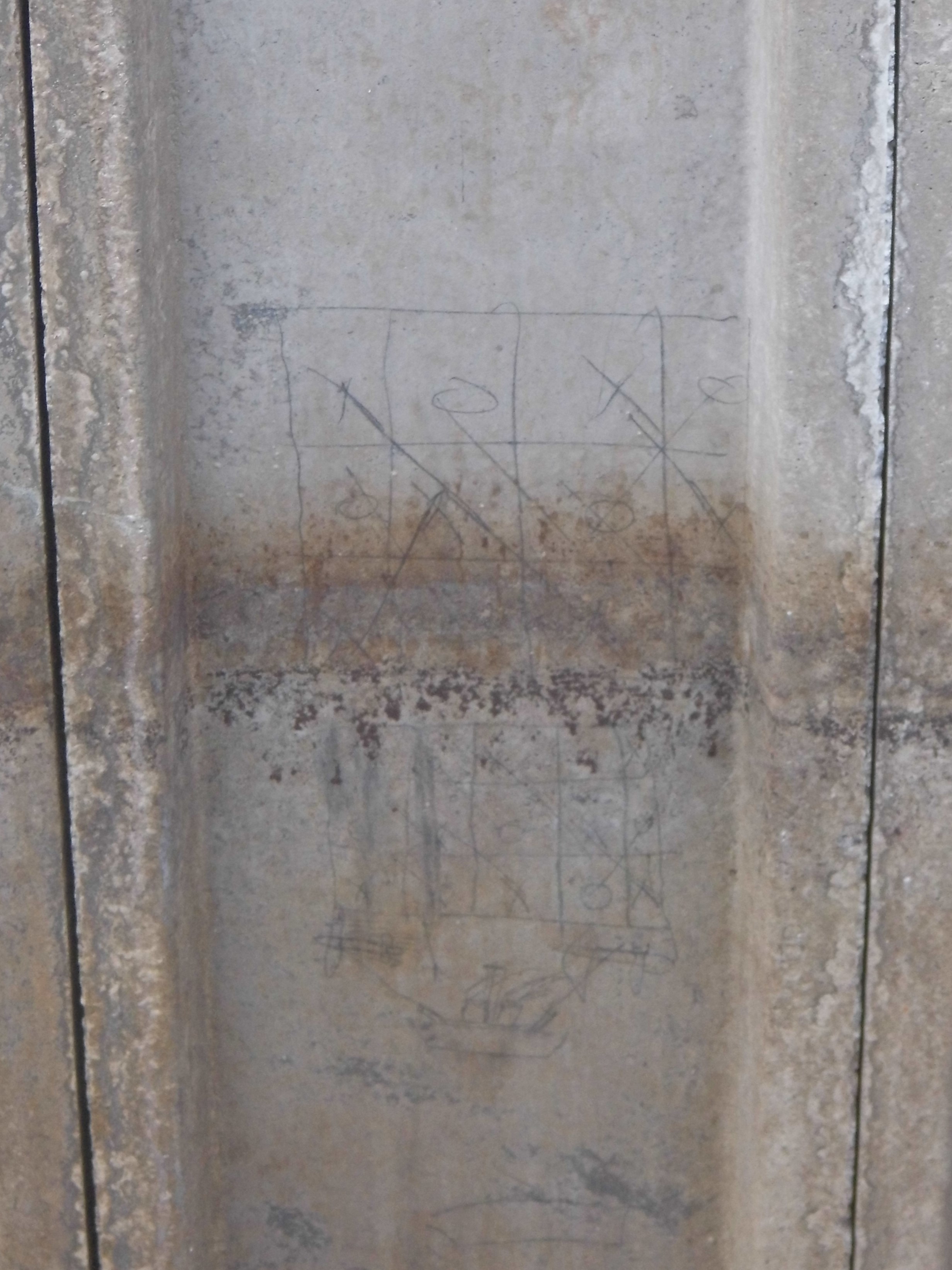
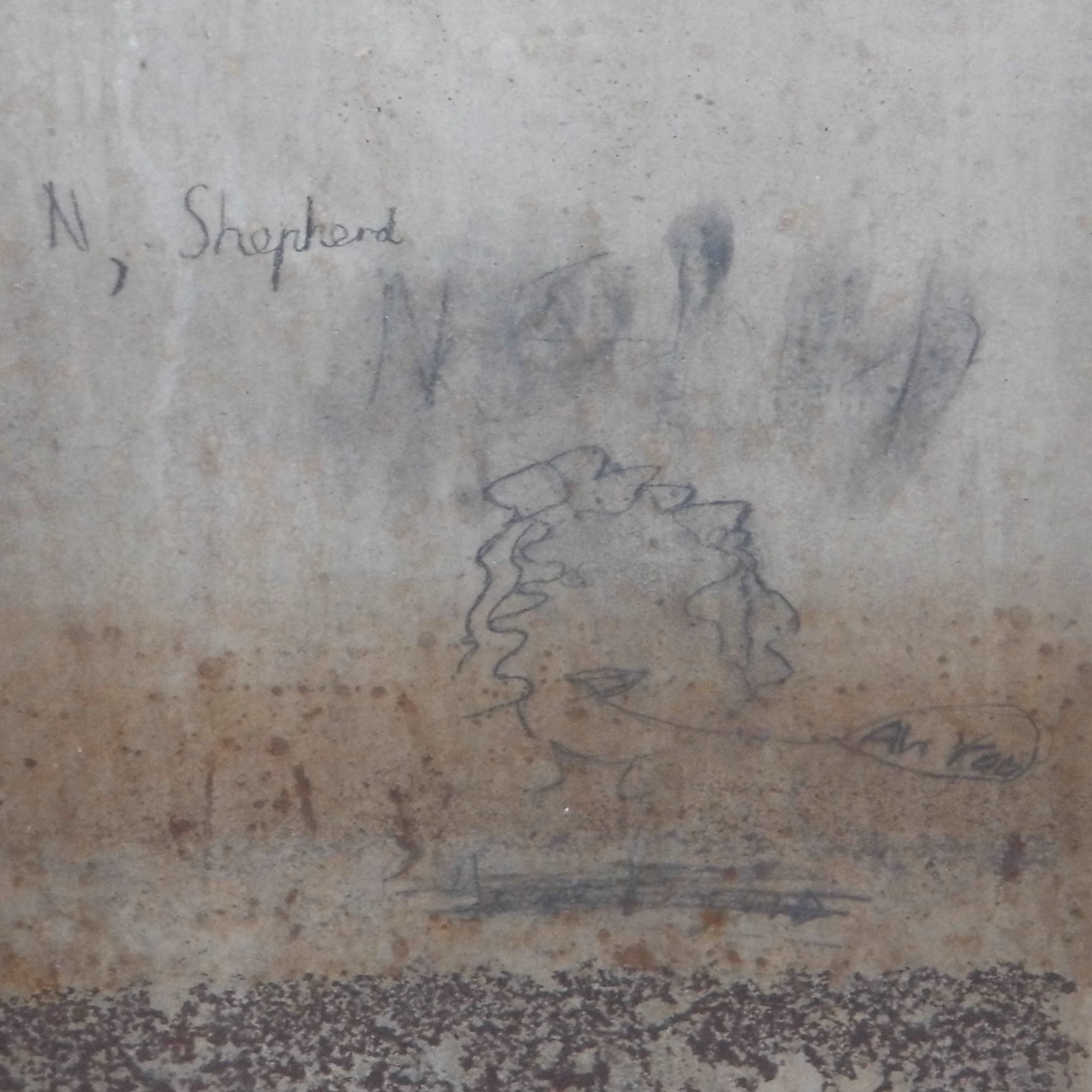
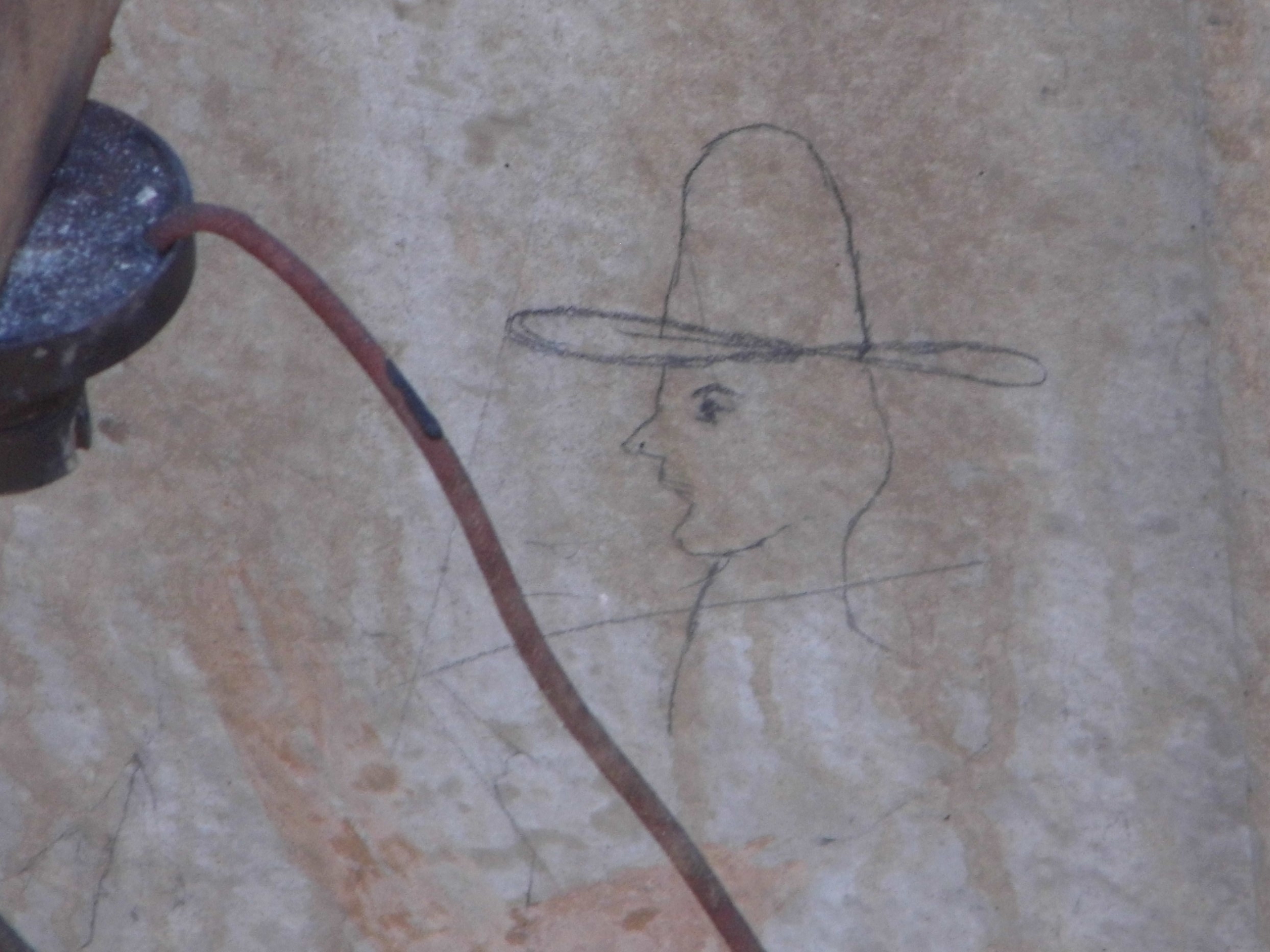
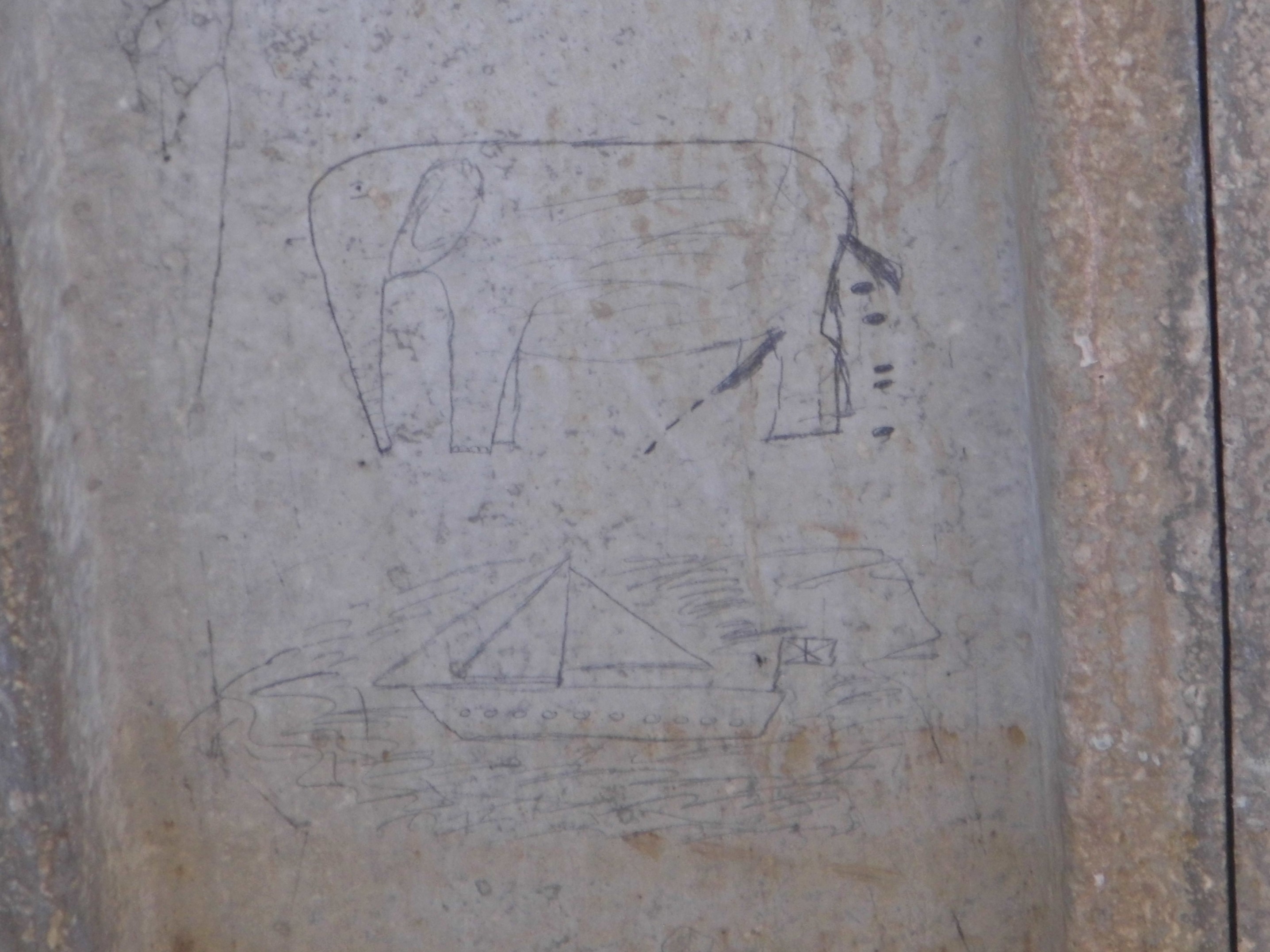
Graffiti from the shelters at Southfields Drive Infants School and The Newry Junior School.
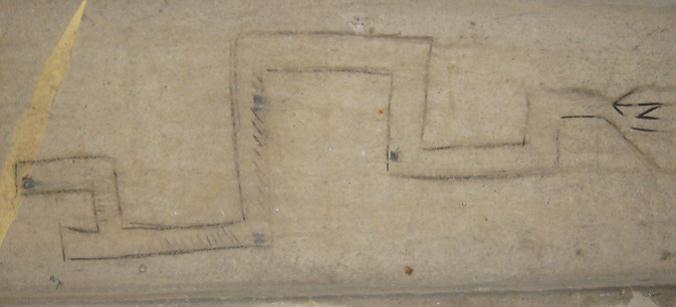
In the Wyggeston Girls shelter, wall markings were evident, with a system of crudely painted yellow lines with numbers and letters identifying each segment of tunnel. Pencil-drawn maps appeared on the walls in various places, with one appearing to show a complete length of tunnel with annotations suggesting the location of ventilator shafts and, possibly, benches.
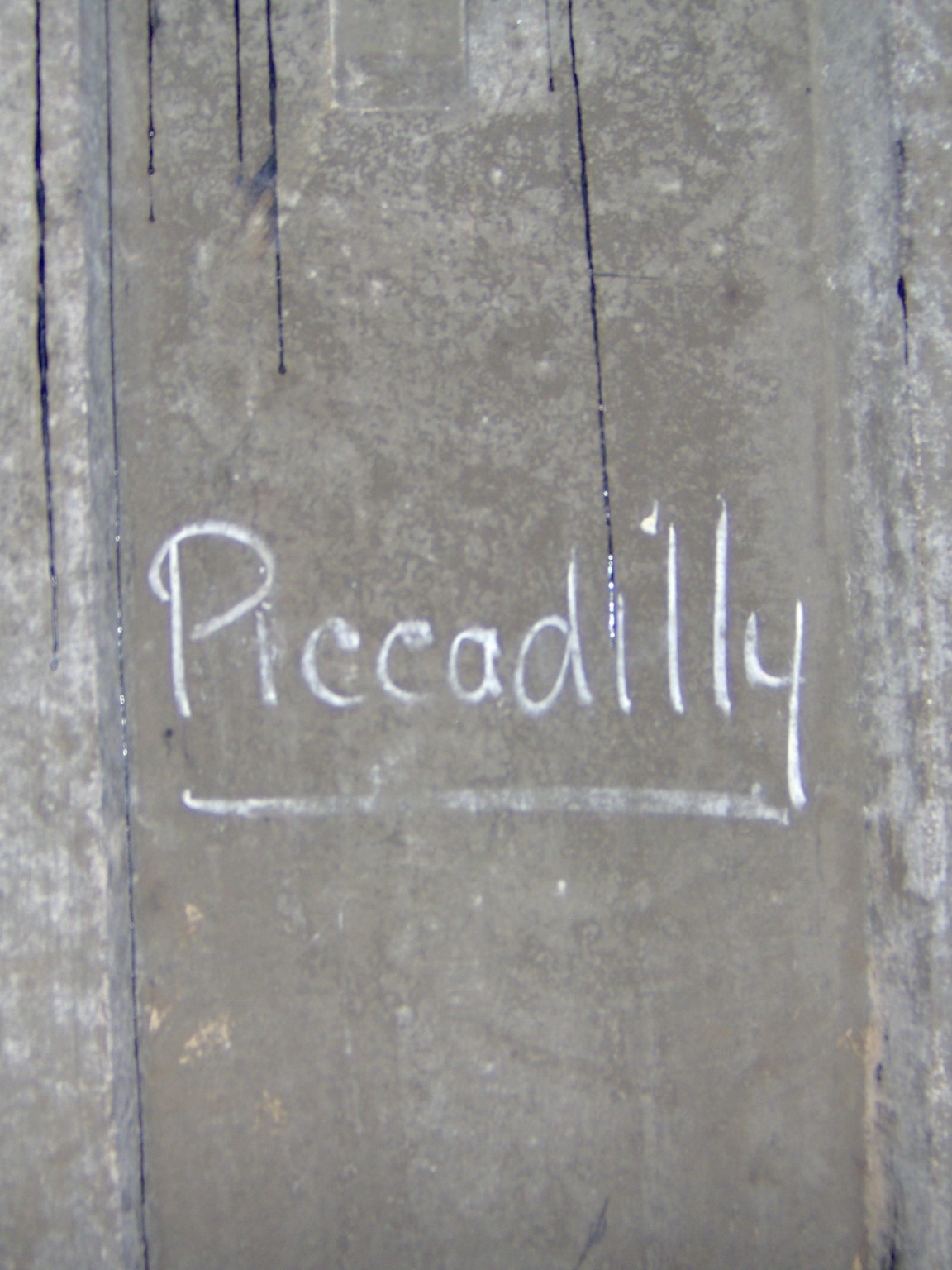
In Braunstone Park, another air raid shelter, explored in 2011, had corridors named after London streets, including Piccadilly (below), Marble Arch and The Strand; and a reminder to ‘Mind the g[h]ost] in Dead End Street!’ There was also some reasonably accomplished figurative art depicting naked women, some with hairstyles suggesting that these may date to the 1940s. Braunstone Hall was in use as a school during the Second World War and the shelter was presumably built for the pupils and staff. However, the American 82nd Airborne Division headquarters was also in the park and it is possible some of the artwork was created by American GIs.
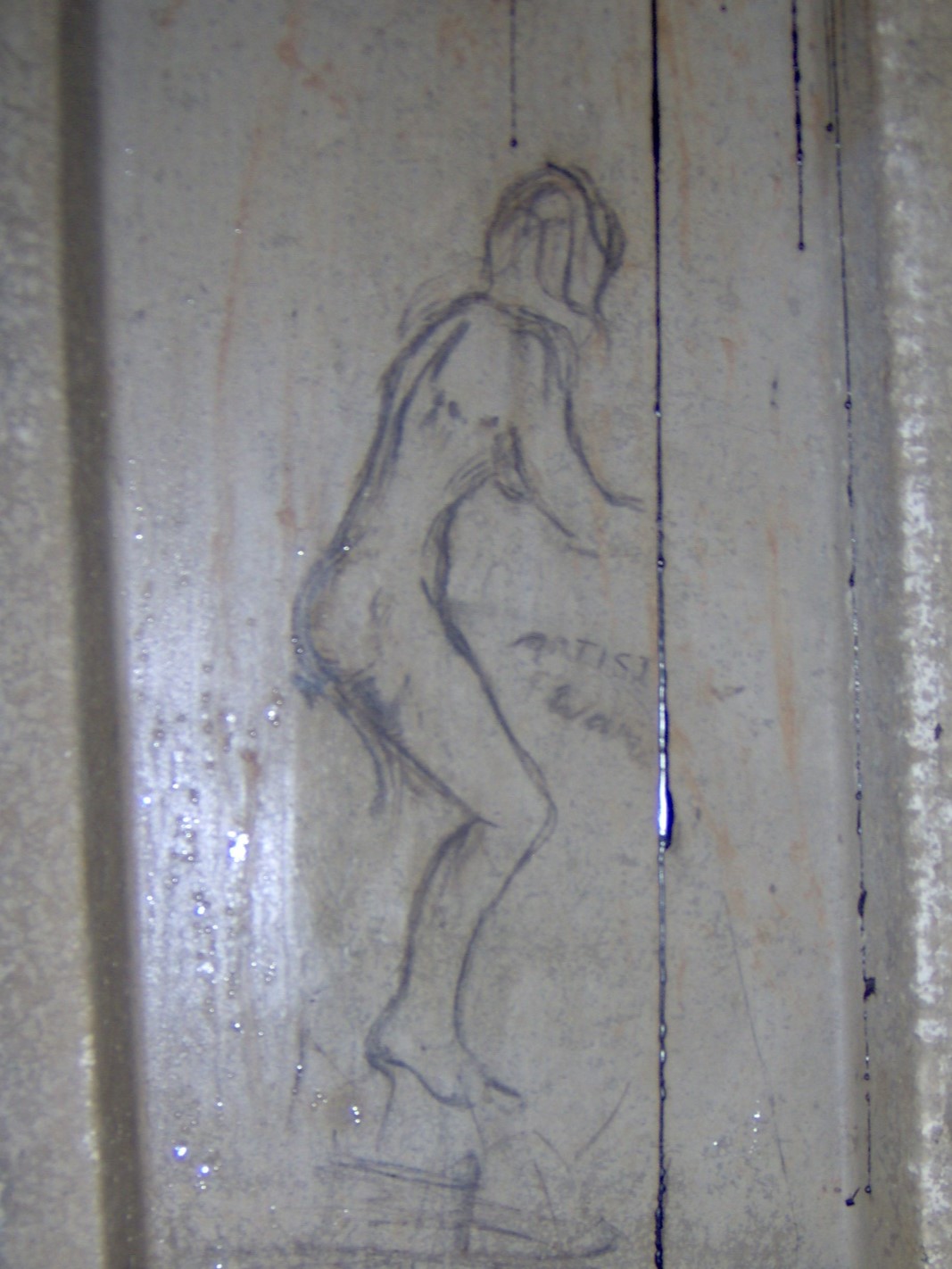
Graffiti in the Braunstone Park shelter.
These air raid shelters are good examples of a commonplace type of trench shelter constructed throughout Britain in the early years of the Second World War. The use of two common components, the pre-cast roof and wall panels, shows a high level of skill and foresight on the designer’s behalf. The use of multiple pre-cast components allowed the structures to be built quickly and relatively easily by hand whilst allowing design versatility to suit the constraints of individual locations.
By the end of the war, the need for protection from air raids had diminished and the majority of the large shelters were either demolished or abandoned and sealed up. Today, many have been lost without record, surviving only in the memories of the people who took shelter in them. Recording these structures is a stark reminder of the widespread impact of wartime bombing and showcases the resilience and ingenuity of the population at the time. These shelters also provide a unique lens through which we can witness the lived experiences of people during wartime and remember the daily realities of life during the Blitz.
With thanks to Gerwyn Richard, Andrew Hyam, Nathan Flavell and Neil Finn.
Find out more:
Find out more about VE Day in Leicester at https://www.storyofleicester.info/city-stories/ve80-victory-in-europe-day-80th-anniversary/
Or read the excavation reports for the recorded air raid shelters online via the Archaeological Data Service:
Richards, G. (2011). An Archaeological Standing Building Survey of an Air Raid Shelter within the Grounds Wyggeston and Queen Elizabeth I College, Victoria Park Road, Leicester. Leicester: University of Leicester Archaeological Services (ULAS). https://doi.org/10.5284/1038643
Hyam, A. (2014). An archaeological watching brief and building recording at the air-raid shelter, Regent College, Regent Road, Leicester. Leicester: University of Leicester Archaeological Services (ULAS). https://doi.org/10.5284/1040331
Flavell, N. (2022). A Level 2 Historic Building Survey of air raid shelters at Southfields Infant School, Southfields Drive, Leicester. Leicester: University of Leicester Archaeological Services (ULAS). https://doi.org/10.5284/1120187
 ULAS News