Blog by Jonny Graham
Our excavation at Leicester Market has revealed so much of everyday life in the city, from the Roman occupation up to the post-medieval, with finds and features ranging from the seemingly mundane to the extraordinary. One of the most significant structures we excavated on site was the remains of a post-medieval building known as the Gainsborough Chamber. This former two-storey civic building was first recorded in the 1500s, and infamous for what one occupant referred to as its ‘most vile prison’.
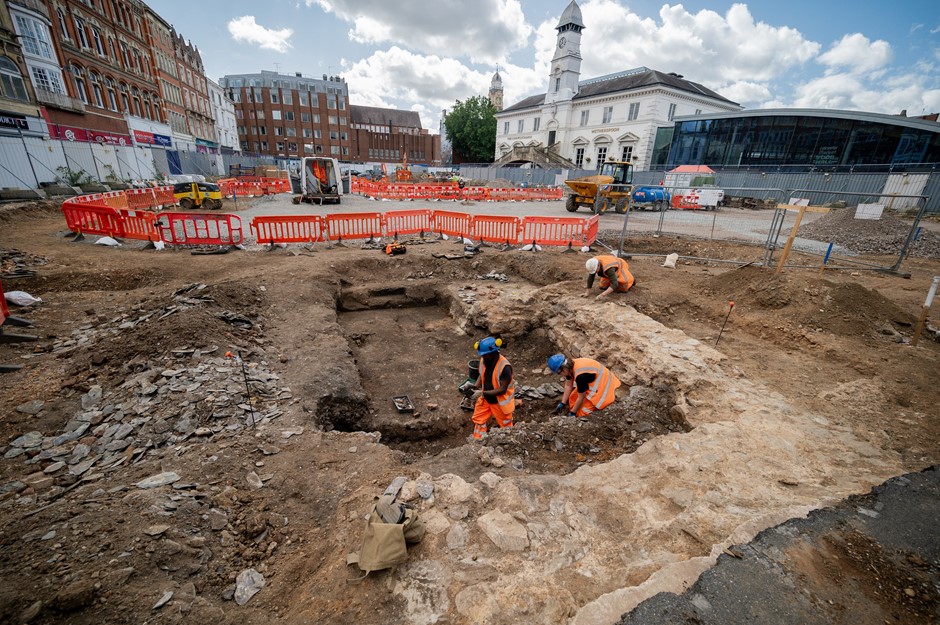
By the mid-18th century, the Gainsborough had gone out of use and its thick walls were robbed for building material. Following this robbing out, tons of clay pipes, glass bottles, animal bones, and decorated ceramics were dumped into the centre of the now dilapidated structure. Capping this midden of everyday rubbish were hundreds of slate roof tiles of various shapes, sizes, colours, and conditions. Archaeologist Jonny Graham investigates further…
Questions and answers
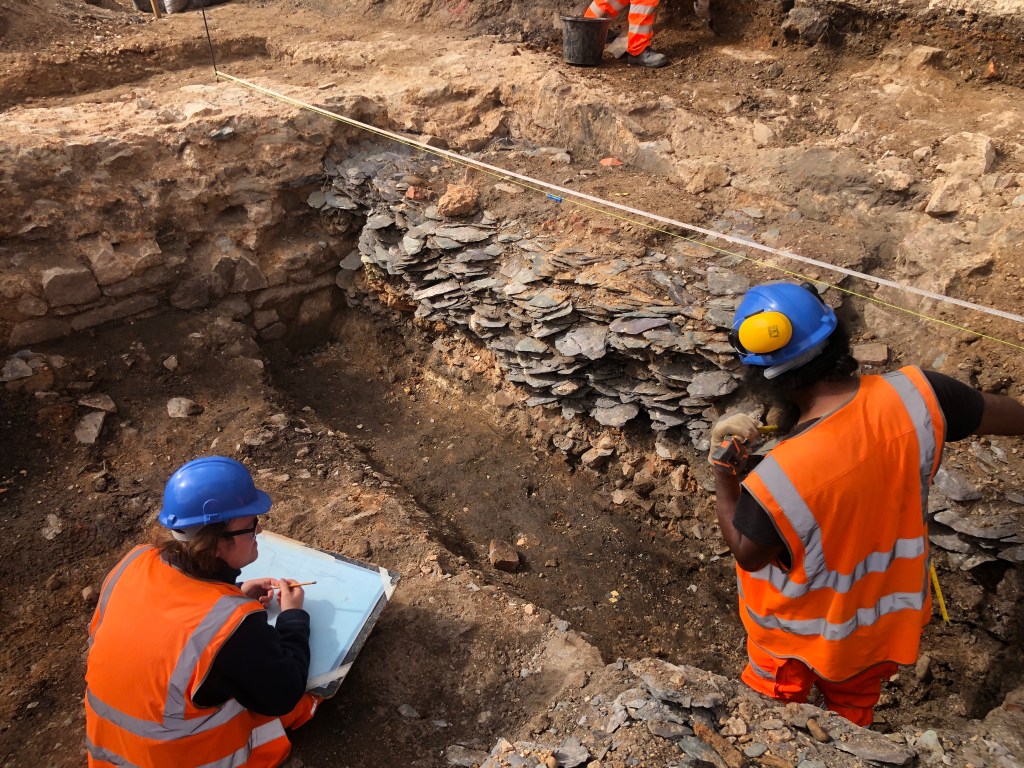
Though a dump of slate roof tiles in an abandoned building might not appear on the surface to be as exciting a find as a burial or a coin hoard, it provides a unique lens onto life in post-medieval Leicester and raises some fascinating questions. Given the careful laying out of these slates, it appears that they were not the original collapsed roof of the Gainsborough but rather a carefully placed deposit of tiles that had come from various buildings in the vicinity. As well as being the only tangible remains we have of these long-gone structures, their accumulation here suggests that parts of Leicester may have undergone reconstruction at the time of this deposit, with older buildings being pulled down to make way for newer ones.
Furthermore, why was such a large quantity of complete and perfectly reusable slate dumped here when they could be reused as tiles on buildings elsewhere, and why were they laid out so carefully rather than thrown in haphazardly?
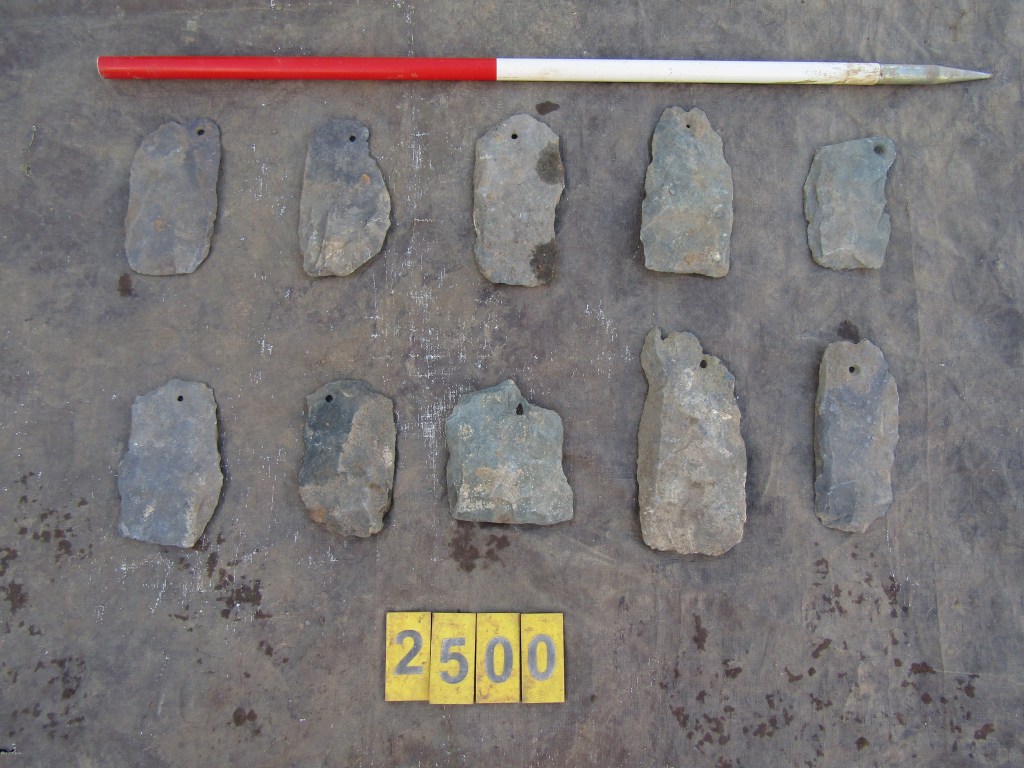
Some slates had evidence of a broken hole for fixing them to a roof, beneath which another hole was bored, showing some degree of recycling. We also have a thick build-up of mortar on several slates that are the remnants of a process called torching which fixed slates to the roof. Such a large and varied assemblage as this therefore gives us a window into different stages in the life of a post-medieval slate roof tile, from manufacture to torching to reuse to eventual abandonment.
Get your records on
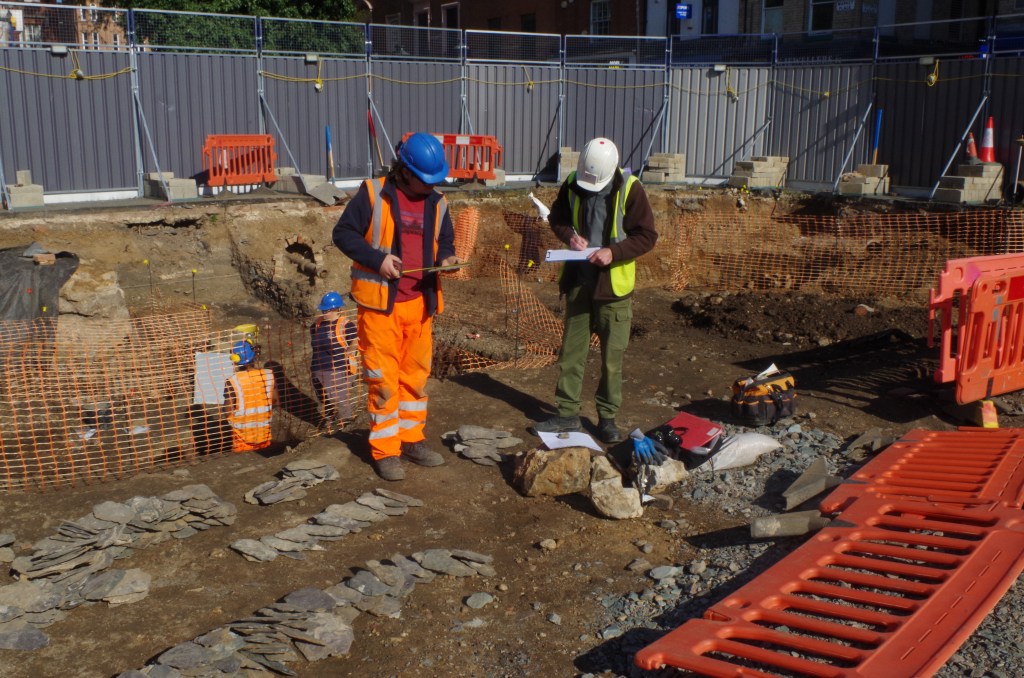
Given the sheer volume of slate roof tiles recovered here, how could we possibly record them all?
To do this, myself, and ULAS colleague Tony Gnanaratnam, and ULAS buildings specialist Andrew Hyam trialled a recording system that helped us to break the slates down into various categories based on their size, shape, completeness, method of hole manufacture, and whether mortar was preserved. Using this system, we were able determine where much of this slate was quarried from (predominantly from local quarries in Groby and Swithland), see that tiles from all parts of the roof were represented, and note any particularities each of the slates had.
Tile and error
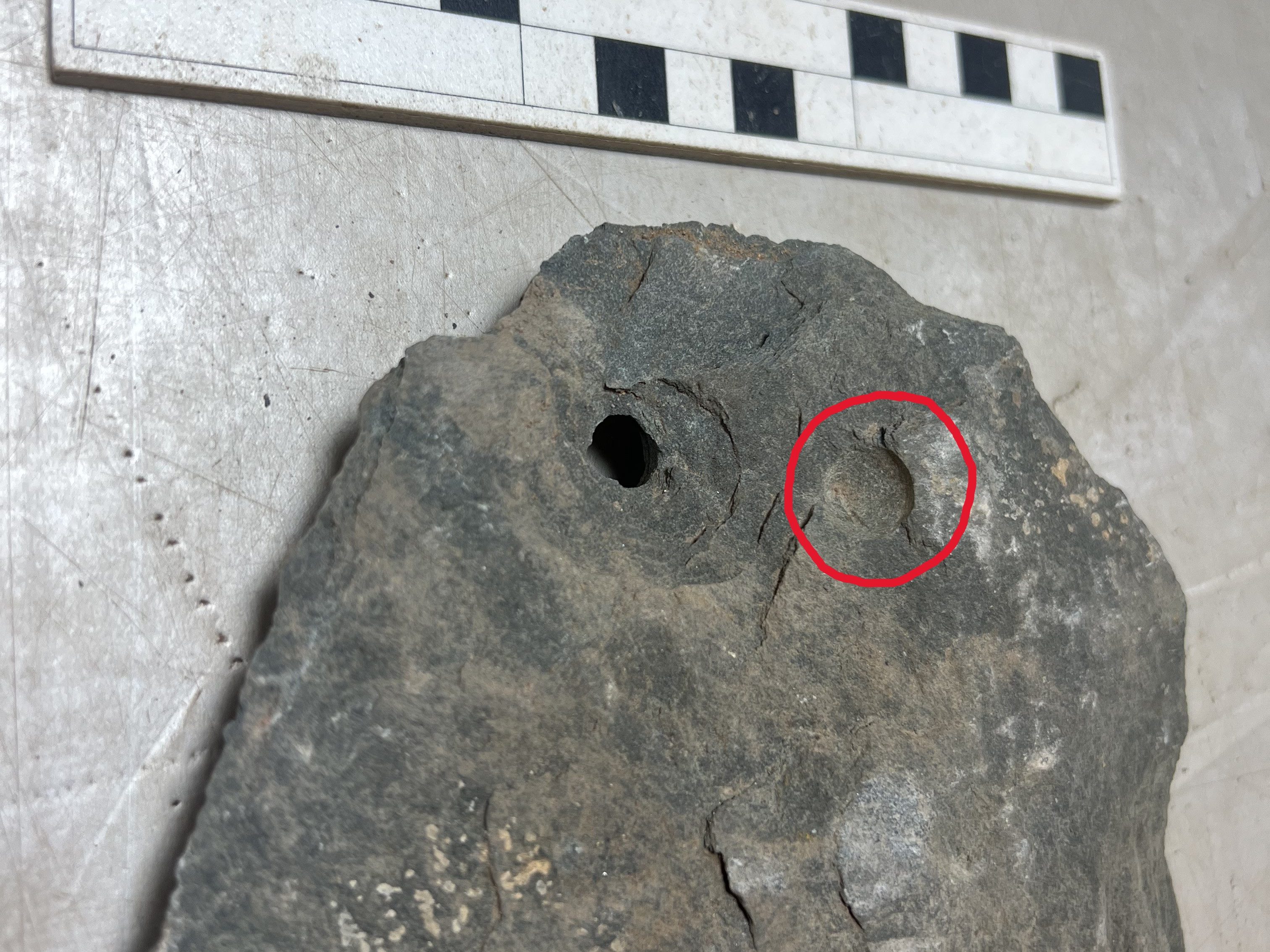
What I find so intriguing about slate roof tiles is the close connection they give us to the people who made them in the past. One tile in particular had the beginnings of a hole being bored onto one face only to be halted and a successful hole drilled from the other side. What this incomplete bore hole tells me is that someone, possibly an apprentice, was learning how to drill holes and encountered a fault in the slate that meant it would’ve fractured had they continued on. In this way, we have material evidence of someone correcting a mistake hundreds of years ago. This is just one story seemingly mundane objects like slate roof tiles can tell us, and as a quantity of the more completed slates were kept for both an archive and a handling collection, it is possible to hold a piece of post-medieval Leicester and gain similar unique perspectives onto the past.
Work going forward…
We have now largely completed our work on site and are entering the post-excavation phase of the project, and this means we have the opportunity to closely examine the range of material culture we excavated from the site spanning over 2000 years. Each object has a unique story to tell us, whether it is a sherd of stamped Roman Samian Ware from Gaul, preserved leather shoes, a lost copper key, or indeed our vast collection of slate roof tiles. Watch this space from more stories from the long, fascinating history of Market Place, Leicester.
 ULAS News
This is fascinating stuff. I always look forward to any ULAS emails.
Hi Kevin, many thanks. Its really great to hear you enjoy our blogs.