Blog by Dr Rachel Small
What did beer taste like more than 2,000 years ago?
Let us introduce the first beer in our historic brewing series: Meadow Edge.
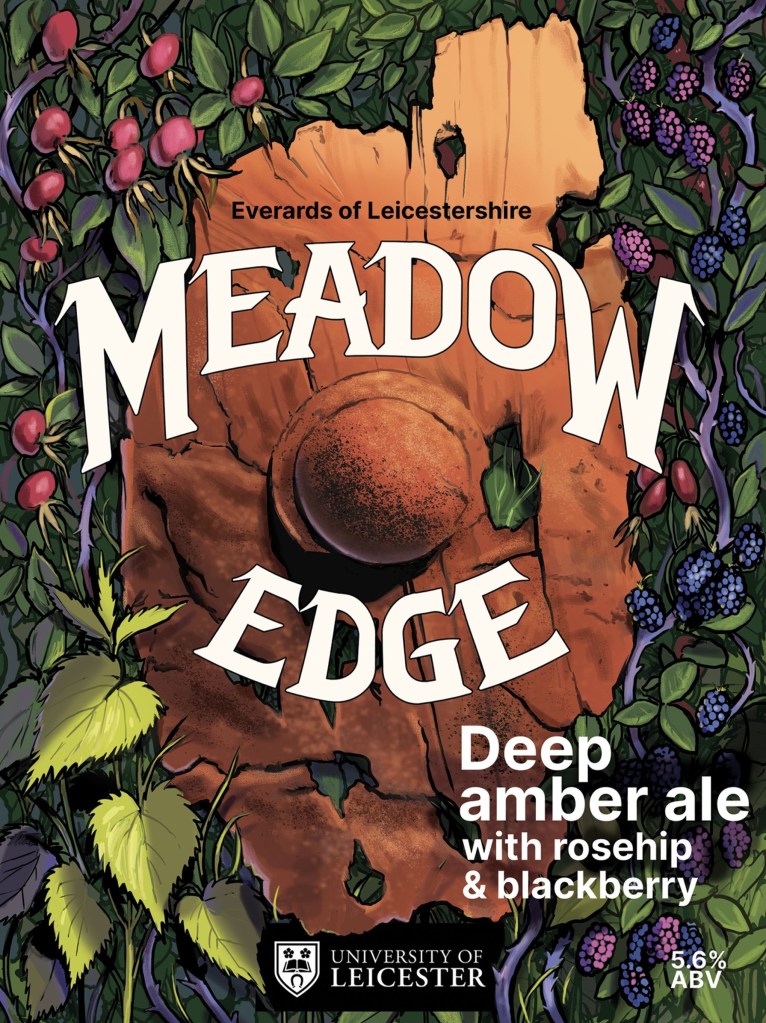
Drawing on evidence from Iron Age archaeology, environmental remains and brewing expertise, Meadow Edge reimagines what a local beer of the Iron Age might have tasted like, bringing together ancient ingredients, local landscapes and modern brewing techniques.
Local brewing inspiration
Evidence from the excavation carried out by ULAS at the Everards Meadow site in 2015 (beneath the current brewery) provided the main inspiration for this brew. The site revealed evidence for more than 600 years of activity spanning from the Middle Iron Age (4th century BC) through to the Roman period (3rd century AD).
The excavation is perhaps best known for the discovery of the remarkable Enderby Shield, a unique Iron Age bark shield unlike any other found in Britain, and arguably Europe. Preserved within the waterlogged deposits of a former watering hole, the shield was carefully placed in the ground sometime between approximately 300 and 195 BC. Its exceptional preservation provides a rare glimpse into Iron Age craftsmanship and cultural practices, and today it is on display in the British Museum.
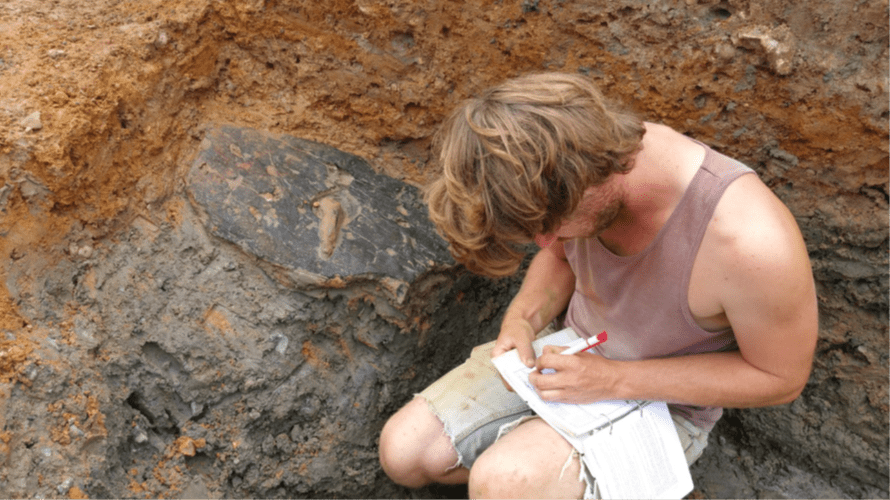
The waterlogged conditions that preserved the shield also preserved traces of the surrounding environment. Samples taken from the deposits contained plant remains including seeds of flowers and shrubs alongside cereal remains, offering a rare snapshot of the local Iron Age landscape. The evidence points to a countryside of open grassland, probably grazed by livestock, alongside wetter areas and patches of woodland-edge vegetation.
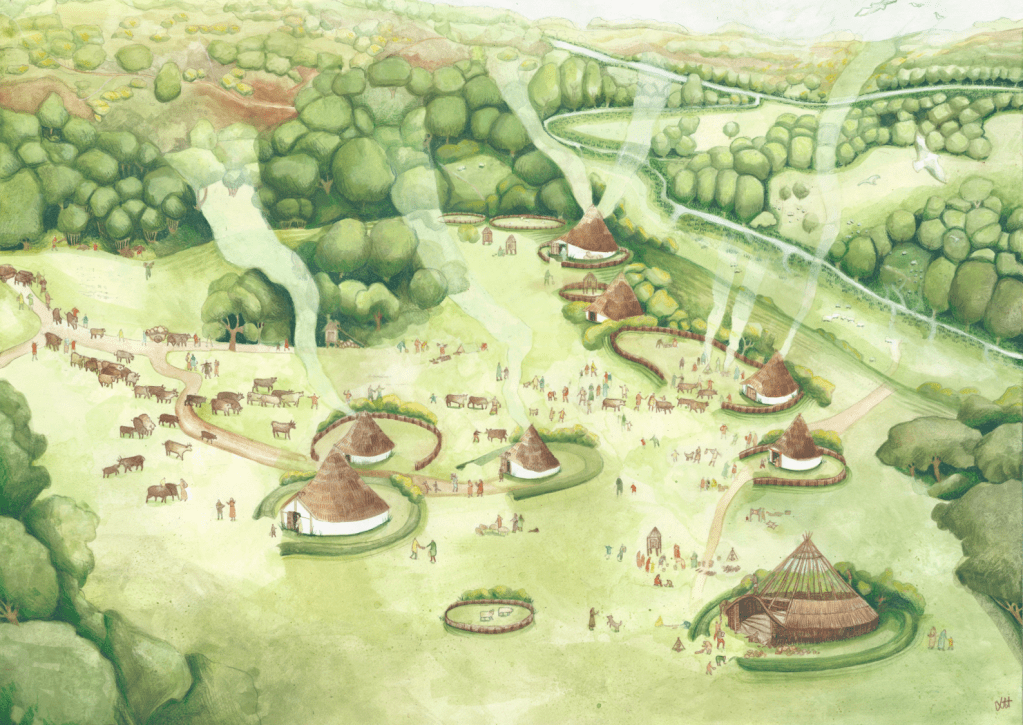
Other archaeological investigations at Enderby (e.g. Clay et al. 1992; Meek et al. 2004) and across Leicestershire have revealed that the wider landscape was shaped by farming communities, with trackways, enclosures, field systems and settlements forming part of a thriving Iron Age community. Together, these discoveries help us reconnect with the landscapes, plants and flavours that would have been familiar to the people who lived here over 2,000 years ago.
Prehistoric beer
Whilst the excavations did not uncover any direct evidence for brewing at Everards Meadow, it is more than likely that beer would have formed part of everyday life in Iron Age Britain, building on traditions that may stretch back thousands of years.
Archaeological discoveries from Neolithic (c.4000-2500 BC) sites particularly in Orkney and elsewhere in Scotland have revealed evidence for barley cultivation, grain processing and the use of large Grooved Ware pottery vessels that may have been suitable for malting and fermentation. Organic residues recovered from sites such as Barnhouse and Balfarg have contained cereal remains, and analysis at Barnhouse identified possible malt sugars. Experimental archaeology has demonstrated how barley could have been transformed into sweet, malted extracts and fermented drinks using simple prehistoric equipment. Although direct proof of beer production remains limited, these discoveries suggest that the knowledge required to produce malted and fermented beverages may have existed in Britain from the earliest days of farming, more than 5,000 years ago. Much of this archaeological and experimental evidence for Neolithic brewing has been brought together and explored by Merryn Dineley in her study Barley, Malt and Ale in the Neolithic.
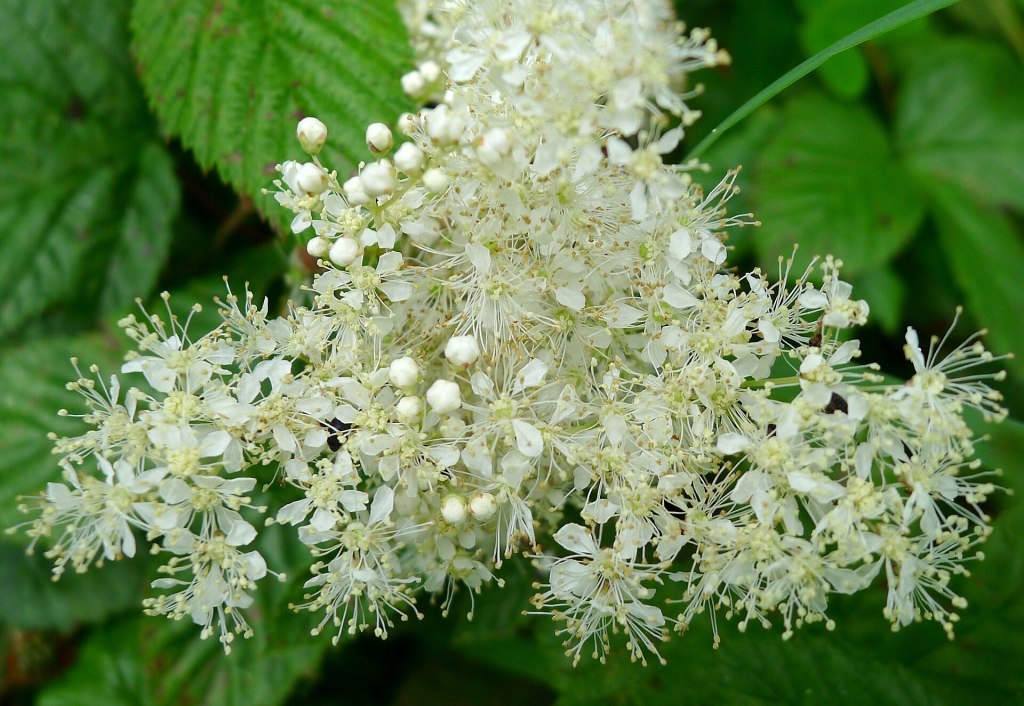
Dineley also touches on the Bronze Age (c.2500-800 BC), where evidence for fermented drinks becomes more tangible. In Scotland analysis of residues from a burial vessel at North Mains, Strathallan, revealed cereal remains alongside meadowsweet pollen and was interpreted as the probable remains of a fermented cereal-based drink. Another vessel from Ashgrove, Fife, contained evidence consistent with mead (a honey-based drink) flavoured with meadowsweet. These discoveries suggest that alcoholic beverages were already playing a role in feasting, ceremony and burial practices by the second millennium BC.
By the Iron Age (800 BC – AD 43) brewing traditions appear to have become firmly established and there is evidence from the Midlands. In Historic England’s Review of Macroscopic Plant
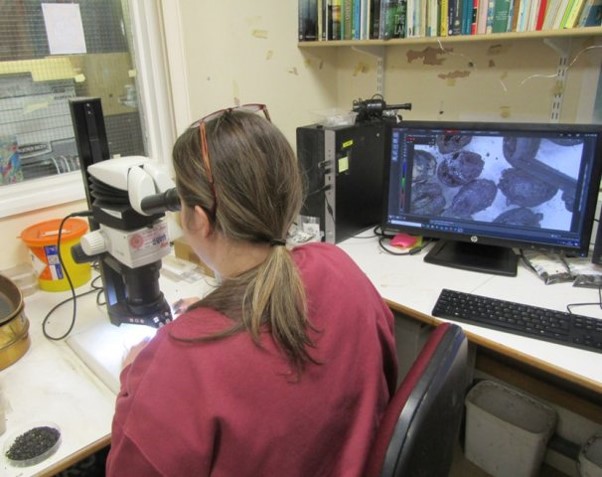
Remains from the Midland Counties (pg. 164-165), evidence from Bushmead Road, Eaton Socon, Cambridgeshire is presented. Here, archaeologists recovered a notable cereal assemblage from a middle Iron Age pit which contained numerous detached grain embryos, which is one of the clearest indicators of malting. The cereal remains included spelt wheat, possibly with some emmer and bread wheat, and a notable amount of six-row barley, demonstrating that communities possessed the knowledge needed to prepare grain for brewing.
More recently, excavations along the A14 improvement scheme between Cambridge and Huntingdon uncovered what is believed to be the earliest direct physical evidence for beer-making in Britain. Microscopic analysis of charred cereal residues revealed structural changes associated with fermentation, including air bubbles produced during boiling, mashing and brewing. The remains are believed to be dated to the Iron Age but are yet to be confirmed by scientific dating.
Evidence from excavations in Europe provide further clues about what Iron Age beer may have tasted like. Rob DeSalle and Ian Tattersall in A Natural History of Beer discuss that brewing was often based on malted barley and could be supplemented with honey, berries and other fermentable ingredients. Before the widespread adoption of hops (in England this was during the post-medieval period), brewers relied on local plants and botanicals to flavour and preserve their drinks (those with antimicrobial properties were particularly important). This produced a diverse range of beers which reflected the local landscapes.
Beer also appears to have played an important social and ceremonial role. In Leicestershire, excavations at the Late Iron Age open air shrine at Hallaton found a copper-alloy tankard handle fragment, probably from a large wooden tankard with metal fittings. This was deposited in close proximity to a large feasting deposit of pig bones. Although the exact content of the vessel is unknown, the discovery points towards large communal feasts and drinking events that formed an important part of Iron Age society.
Creating Meadow Edge
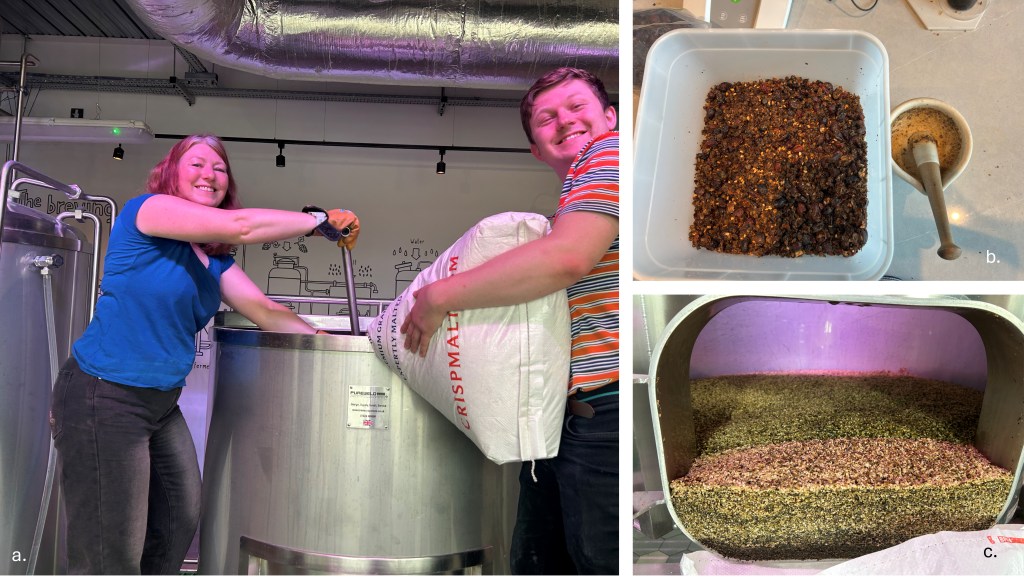
To recreate the spirit of an Iron Age brew, we started with a base of heritage barley malt. From there, we looked to the landscape itself.
While we cannot know exactly the plants used in Iron Age brewing, Meadow Edge draws inspiration from the wild species that would have been familiar within the Leicestershire landscape, and could have been gathered from local woodland margins, scrub and field boundaries:
- Juniper berries
- Rosehips
- Nettle
- Elderflower
- Blackberry
Juniper and rosehips bring a distinctive botanical character, whilst nettle and elderflower contribute subtle herbal and floral notes. Blackberry adds a deep colour and a gentle fruity tartness that cuts through these flavours. To further evoke ancient brewing traditions, the beer also incorporates roasted and smoked malts, creating a fuller body and deeper flavour profile, while farmhouse yeast adds rustic earthy notes that complement the ingredients. Together, the ingredients create a complex hedgerow inspired beer.
Click here for Everards review of the tasting notes: Beers Brewed For You! – YouTube
Bringing the past back to life
Of course, we can never know exactly what an Iron Age beer tasted like. Brewing was an everyday craft, ingredients varied from place to place, and recipes were not written down at this time.
However, by combining archaeological evidence, environmental remains and modern brewing expertise, Meadow Edge offers a fascinating glimpse into the flavours that may once have been enjoyed by Iron Age communities living on the very ground where Everards brewery stands today.
More than just a beer, Meadow Edge is a celebration of local heritage and place, connecting the landscape, people and flavours of Leicestershire across more than two millennia.
Raise a glass and taste a little piece of history!

Where to drink Meadow Edge
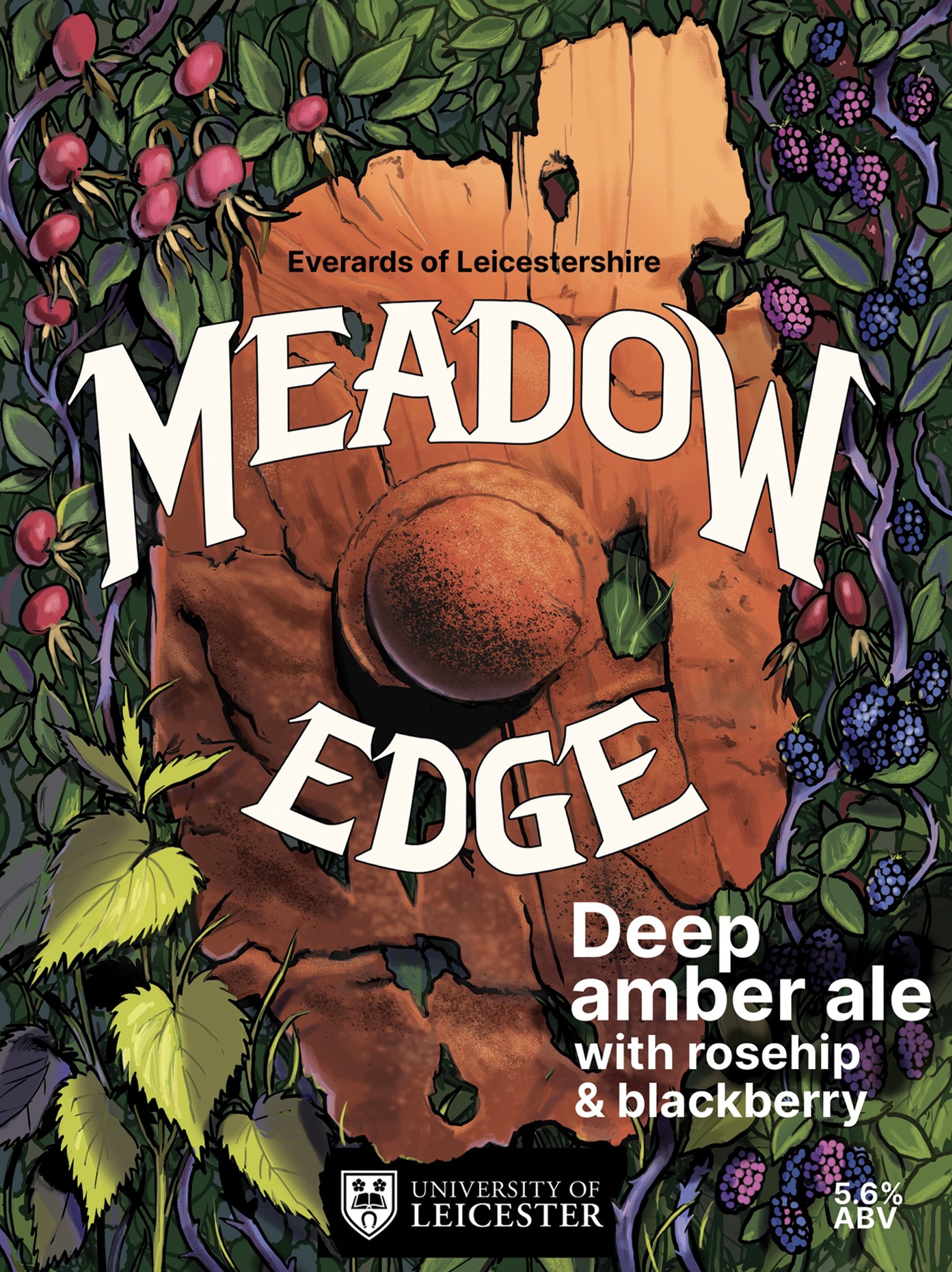
Meadow Edge will be on sale from Friday 10th at Everards Meadow. It will also be served in six local pubs including: The Globe, Leicester; Queen Vic, Syston; Stamford Arms, Groby; Dead Poets, Holbrook; Brunswisk Inn, Derby; Robin Hood and Little John, Arnold.
Please share your pictures and thoughts on the beer in the comments below!


