Blog by Dr Gavin Speed
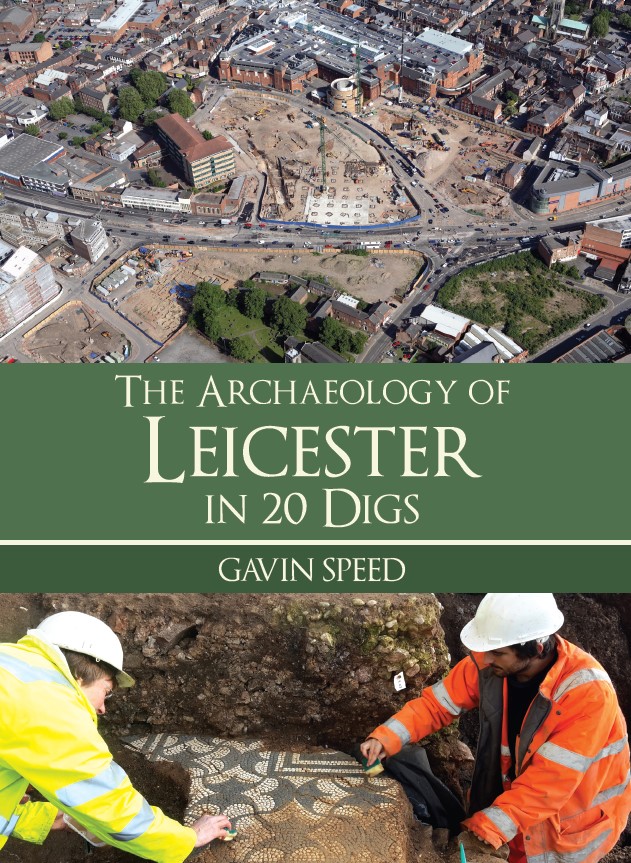
A new book has been published by ULAS Project Manager Dr Gavin Speed. Drawing on more than twenty years of digging, researching and managing archaeological projects in Leicester Gavin’s book, The Archaeology of Leicester in 20 Digs, brings together twenty excavations that have transformed our understanding of the city’s past.
Published by Amberley, the book takes readers from Kathleen Kenyon’s pioneering excavations at Jewry Wall in the 1930s to the latest work by ULAS beneath Leicester Cathedral. Along the way, it tells not only the story of Leicester, but also that of the generations of archaeologists who have spent almost a century uncovering, recording and interpreting the city beneath our feet.
Why twenty digs?
Leicester is rather unusual archaeologically. Around 25 per cent of its historic urban core has been investigated, making it one of the most intensively excavated historic cities in Britain. Modern redevelopment has repeatedly opened windows into the past, underneath the streets, shops and buildings we use today.
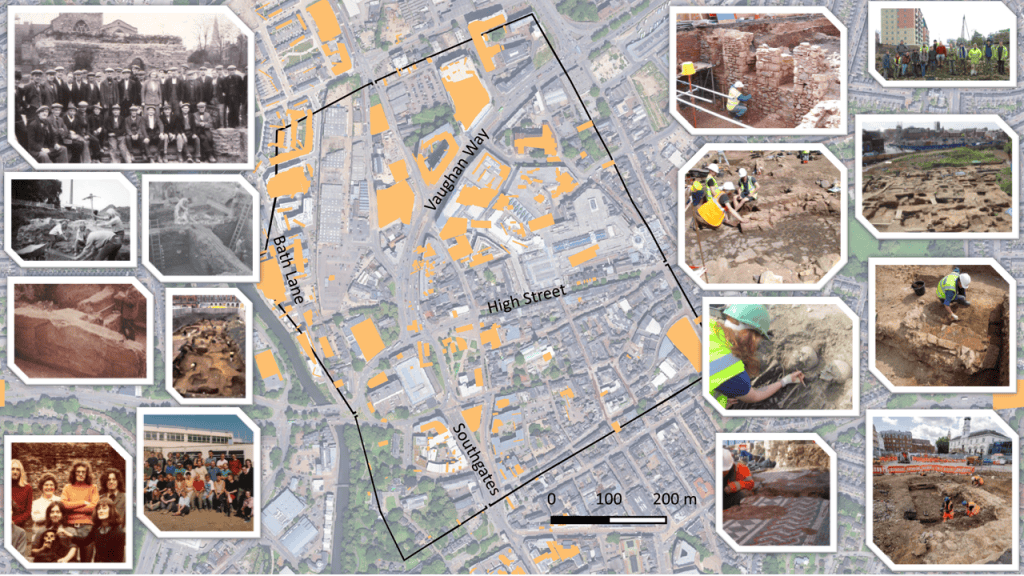
Choosing just twenty excavations was therefore not easy. I wanted the book to include the landmark digs that changed our understanding of Leicester, but also to show how archaeology itself has changed: from antiquarian investigations and early rescue archaeology, through the development of commercial archaeology, to the large, multidisciplinary excavations carried out by University of Leicester Archaeological Services (ULAS) today.
The story begins with the extraordinary excavations at Jewry Wall in 1936–39, directed by Dame Kathleen Kenyon. These were the first large-scale excavations in Leicester and revealed the remains of the town’s huge Roman public baths, now one of the city’s best-known Roman monuments and a wonderfully revamped Roman museum. From there, each chapter moves to another dig and another piece of Leicester’s story.
From Roman Leicester to medieval backyards
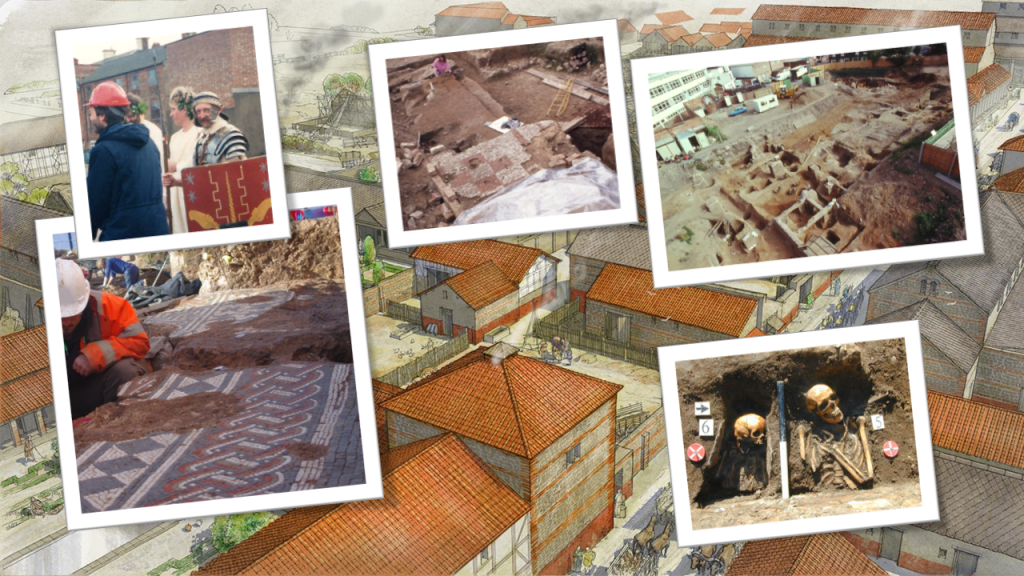
There are Roman townhouses, bathhouses, a market hall, the forum, cemeteries, town defences and evidence for the city’s Iron Age origins. But the book is deliberately not simply a story of Roman Leicester.
The medieval city is there too, sometimes in wonderfully intimate detail: a merchant’s undercroft beneath what is now BBC Radio Leicester, medieval breweries off Highcross Street, lost churches and cemeteries, a friary beside the River Soar, and evidence for the Civil War defences hastily thrown around the town in 1645.
Some discoveries give us particularly vivid glimpses of individuals. At Vine Street, for example, excavations uncovered a Roman curse tablet written by a man called Servandus, who complained that his cloak had been stolen and called upon the god Maglus to punish the culprit. Remarkably, he listed nineteen suspects. Together these people form the largest group of named inhabitants yet known from Roman Leicester.
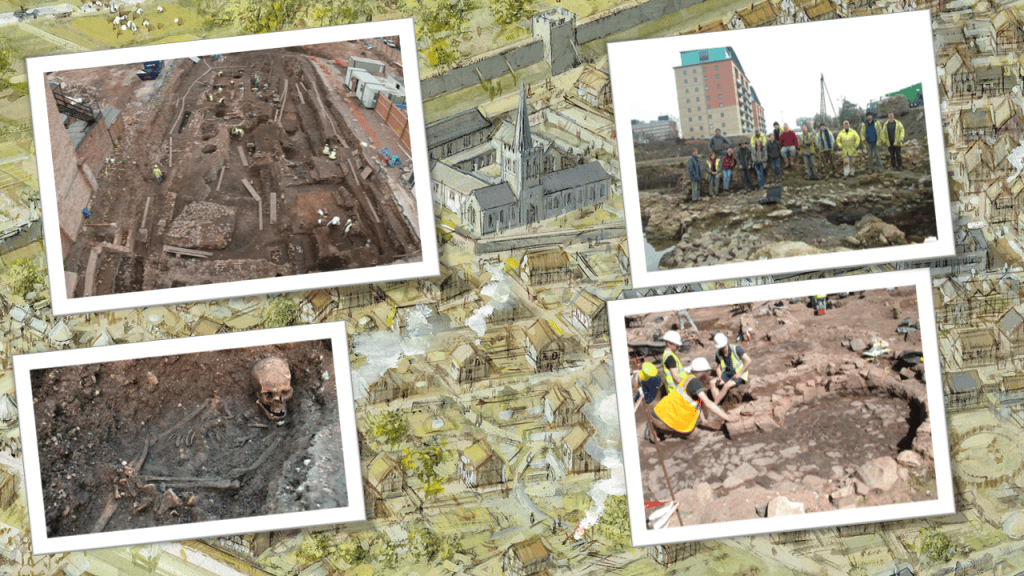
And, of course, one of the twenty digs is the excavation recognised around the world: the 2012 search for King Richard III, when the remains of the lost Greyfriars church and the king’s grave were discovered beneath a city-centre car park by ULAS, working in partnership with the Richard III Society and Leicester City Council.
Digs that changed what we know
One of the pleasures of putting the book together was being able to show how discoveries from different generations connect with one another.
At Blue Boar Lane in 1958, for example, archaeologists uncovered part of a huge Roman macellum, or market hall. Nearly half a century later, ULAS excavations at Freeschool Lane for the Highcross Shopping Centre discovered its collapsed eastern gable wall, helping us to understand the scale and architecture of a building first encountered decades earlier.
The same process is happening all across Leicester. Individual trenches may provide only a small fragment of evidence, but when we bring decades of excavation together, the Roman and medieval city starts to emerge.
That is one of the main ideas behind The Archaeology of Leicester in 20 Digs. It isn’t intended as an exhaustive academic account. Instead, I’ve tried to make the results of decades of archaeological research accessible to anyone interested in Leicester and its past.
A particularly personal dig
I have been fortunate enough to dig on numerous sites in Leicester since the early 21st century, first as a site archaeologist and later as a site director and Project Manager at ULAS. One project that inevitably makes the book particularly personal is Friars Causeway, usually known to us as the ‘Stibbe’ site, which I directed in 2016–17.
This was one of the largest excavations yet undertaken in Leicester. We uncovered Roman streets, timber buildings, large stone townhouses with mosaics, as well as a possible Roman theatre. More than 5,000 people, including over 500 schoolchildren, visited the excavation during public tours.
Among the finds was an extraordinary decorated Roman key handle. It depicts a figure grappling with a lion above four male youths and has been interpreted as possibly representing damnatio ad bestias, the Roman punishment of being thrown to wild beasts.
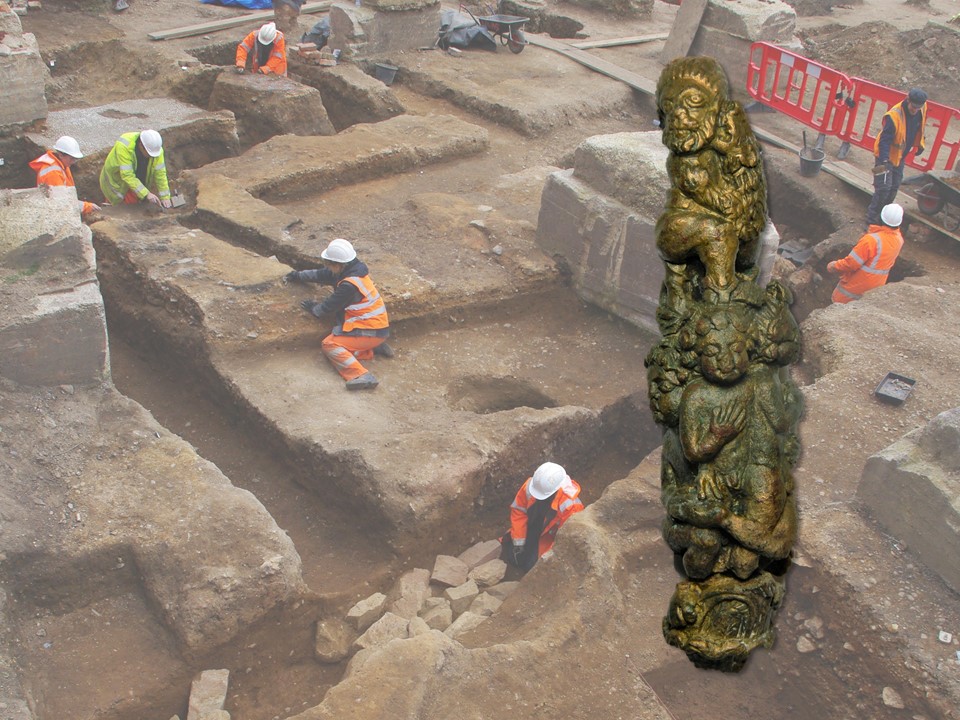
That combination of a major excavation, remarkable finds, new interpretations and thousands of people coming to see archaeology happening in the middle of their city encapsulates much of what I wanted this book to celebrate.
Thirty years of ULAS archaeology
The second half of the book has a particularly strong ULAS flavour.
ULAS was established in 1995, with Patrick Clay and Richard Buckley as its founding directors. Over the following three decades the unit has carried out most of the archaeological projects within Leicester featured in the latter half of the book. Those projects include the major Highcross excavations, the Roman cemetery at Newarke Street, the Greyfriars/Richard III project, Stibbe, Waterside and the recent excavations at Leicester Cathedral.
That continuity matters. Successive generations of archaeologists have been able to combine new discoveries with an increasingly detailed knowledge of what was found on earlier sites. The result is an extraordinary archaeological archive for the city and a constantly evolving picture of Leicester’s past.
The book is therefore as much a celebration of the people who have excavated Leicester as it is of the archaeology itself. Hundreds of archaeologists, specialists, volunteers and students contributed to the discoveries described in its pages, from the former Leicestershire Archaeological Unit to ULAS today.
And we’re still digging…
The twentieth dig takes the story right up to Leicester Cathedral in 2021–23, where a relatively small excavation revealed an astonishing 850-year sequence of burials, alongside Anglo-Saxon and Roman archaeology. More than 1,100 burials were excavated, while the Roman remains included a cellar which may once have served as a private shrine.
But archaeology does not conveniently stop when a book goes to press.
The epilogue looks at our 2025–26 excavations at the Market Place, where discoveries included Roman buildings, medieval market surfaces and stalls, and the substantial remains of the Gainsborough Chamber, an important late medieval civic building whose subterranean chamber was once described as “a most vile prison.”
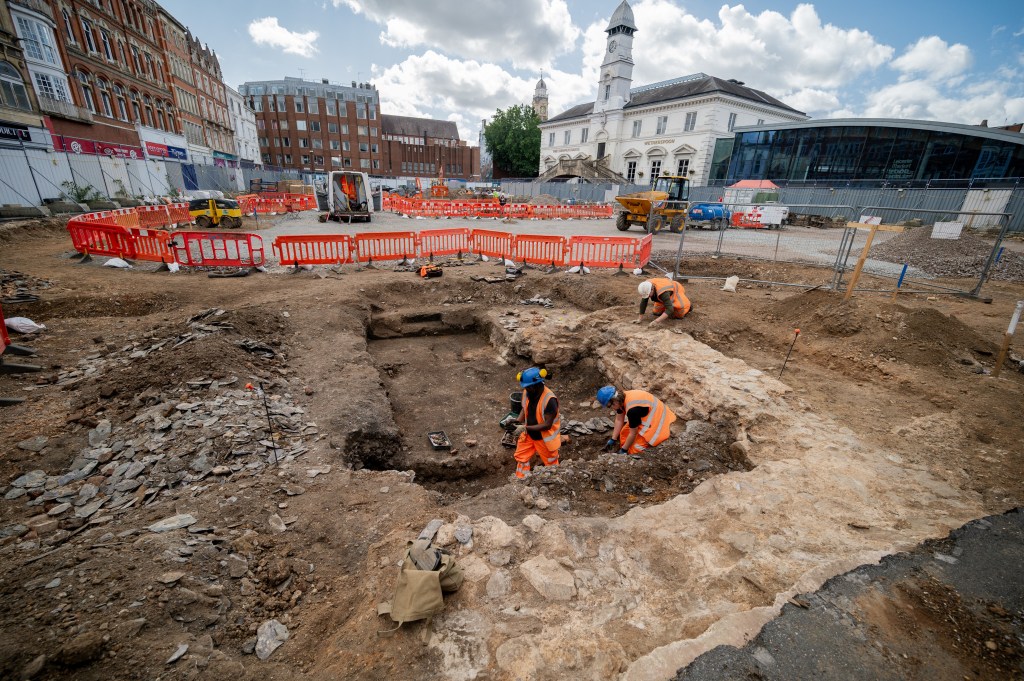
After more than twenty years of digging in Leicester myself, one thing I have learned is that the city never quite gives up all its secrets. Every excavation adds another piece to the picture and, just as often, another question.
That is the story I have tried to capture in The Archaeology of Leicester in 20 Digs. Published by Amberley Publishing in 2026, the book brings together twenty landmark excavations and the work of generations of archaeologists to tell Leicester’s story from its Iron Age origins to the discoveries being made beneath the city today.
If this blog has whetted your appetite, I hope you’ll pick up a copy and join me on a journey beneath Leicester’s streets. There are 2,000 years of archaeology down there, and plenty more still waiting to be found.
The Archaeology of Leicester in 20 Digs is available now

