Blog by Dr Rachel Small
We’re really excited to announce that the second of our four historically inspired beer collaborations with Josh Smalley and Everards of Leicestershire is now available! And this time its bottled!
Following Meadow Edge, our Iron Age-inspired brew, we are moving into Roman Britain with our second historic beer Fosse Centurion. This time we have a greater body of evidence to work with. Remarkable documents survive from Roman Britain, recording people buying, supplying and drinking beer, while archaeological excavations from our local area provide physical evidence for malting. So, what can all this tell us about the beer brewed and drunk in Roman Britain, and how did this evidence inspire Fosse Centurion?
What’s in a name?
The name Fosse Centurion brings together two strands of Roman life that run through the story of this beer: roads and the army. The Fosse Way was one of Britannia‘s great Roman roads, running from Exeter to Lincoln and straight through Leicester or Ratae Corieltauvorum as it was known in such times. Established in the late 1st century AD, during the first decades after the Roman Conquest, routes such as this allowed soldiers, supplies, people and goods to move around the newly conquered province.
Imagine travelling along the Fosse Way towards Roman Leicester, past fields of spelt wheat growing in the surrounding countryside. Following the harvest some of that grain would be malted. Centurion (a military officer) nods to the army, whose relationship with beer is wonderfully captured by the writing tablets from Vindolanda. Together, Fosse Centurion connects the road, the army, Leicestershire’s agricultural landscape and the beer itself.

What did the Romans think of beer?
When thinking of the Romans, beer doesn’t necessarily come to mind. Wine is probably more familiar, transported to Britain in huge pottery vessels known as amphora, and holding a privileged place in Roman drinking culture. However, this is only part of the story as Max Nelson discusses in his study of beer in Greco-Roman antiquity, beer remained important particular in Northern regions with their own long-established brewing traditions.
Roman writers such as Posidonius (c.135-51 BC), Pliny the Elder (c.AD 23-79) and Tacitus (c.AD 55-117) describe cereal-based beers drunk by the Gauls, Germanic peoples and communities in Egypt and Hispania. Beer could be characterised as “barbarian”, but that certainly did not mean that people were not drinking it.
Here in Britain, we have literary evidence from around AD 70, when the physician Dioscorides writes of a wheat-based beer consumed in Britain. Beer continues to have a recognised place within the wider Roman world; in Diocletian’s price edict of AD 301, Celtic beer is twice the price of Egyptian beer, suggesting it was better quality, but it was still only half the price of wine (Cool 2010, 140).
The famous writing tablets from Vindolanda bring us much closer to the people actually drinking it. Around AD 100, the decurion Masclus, serving with the Ninth Cohort of Batavians, wrote to his commanding officer Flavius Cerialis requesting instructions and added a rather more immediate problem:
“My fellow-soldiers do not have any cervesa. Please order some to be sent”
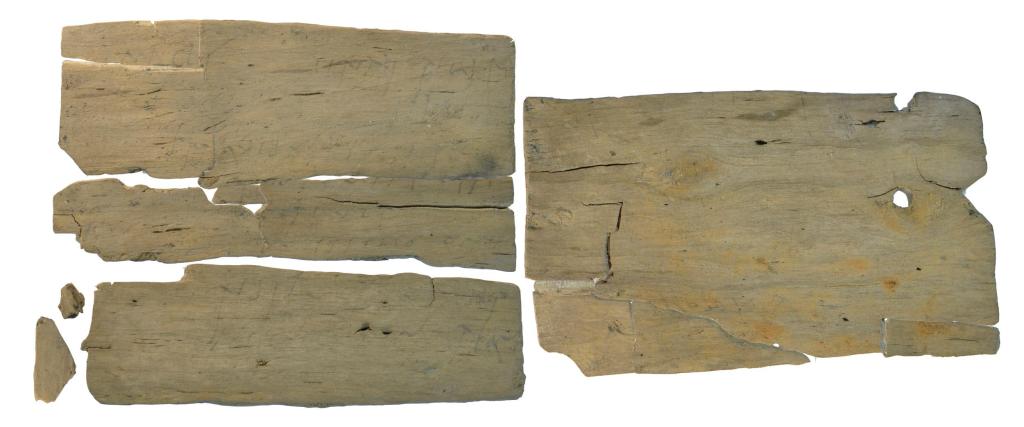
Cervesa was a Celtic term for beer, and it was certainly not restricted to the ordinary soldiers. One account from the commanding officer’s household suggests that at least 90 litres were consumed or distributed in a single week, while another, possibly associated with the centurions’ quarters, records beer arriving in containers holding around 100 pints. With hundreds of soldiers, servants and dependants to supply, brewing must have been a substantial operation; Vindolanda even had specialist maltsters and beer-makers and we even know the name of one – Atrectus.
The Vindolanda tablets provide an important glimpse beyond the attitudes expressed by elite Greek and Roman writers. Beer was being drunk at different levels of the military community, with an organised system of production and supply. Together with Dioscorides’ reference to British wheat beer, this shows that beer formed part of daily life in Roman Britain.
Unearthing Roman brewing
Whilst the written sources provide glimpses into brewing and beer drinking in Roman Britain, archaeology takes us a step further, providing much more widespread evidence for the processing of cereals and brewing. It also allows us to investigate where and when brewing may have taken place, how cereals were processed and which grains were being used. One of the most important sources of evidence comes from structures known as corn dryers, together with the charred grain and other plant remains recovered from them.
What is a corn dryer?
Corn dryers were multi-purpose structures used at different stages of cereal processing. They could be used to dry grain after harvest, before storage or further processing (such as removing chaff), and in preparation for consumption, but importantly for our story, they could also be used to dry or roast germinated grain to produce malt, an essential ingredient in brewing (Van der Veen 1989).
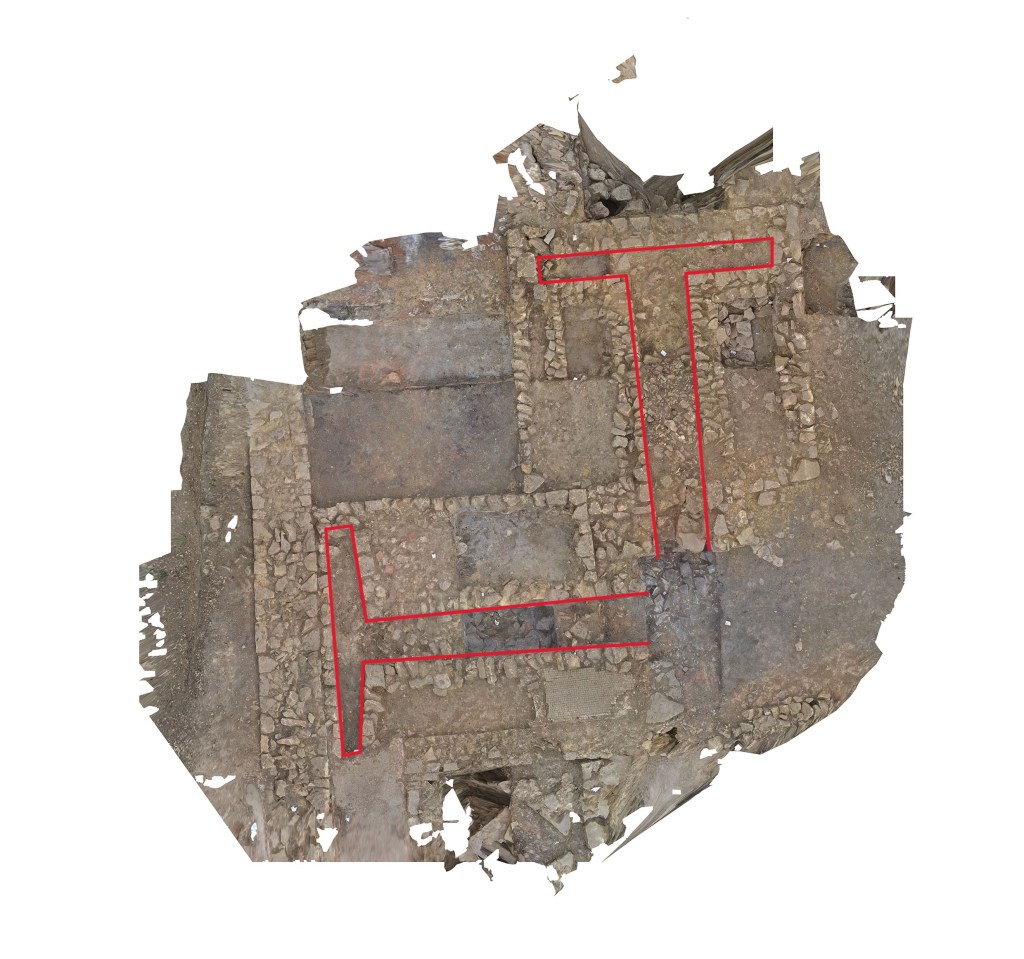
Corn dryers were variable in shape and construction but worked by directing heat from a fire in a stokehole through flues beneath a raised drying floor, allowing warm air to circulate beneath the grain spread out above (Lodwick 2017). Simple archaeological examples survive as T- or keyhole-shaped flues cut into earth, with long-vanished superstructures, often only 1-2m in length. However, at their most elaborate they were large stone-built structures, with multiple flues in differing arrangements, such as a sophisticated wheel-shaped example at Great Casterton, Rutland which measured over 10m in diameter.
Finding evidence for malting
The charred plant remains recovered from corn dryers can help us understand how they were being used. Grains could become charred through accidental overheating, the collapse of the drying floor, or the burning of discarded waste. From these remains, archaeobotanists can identify which cereals were heated, whether they had germinated, how thoroughly they had been cleaned and sometimes what was used as fuel.
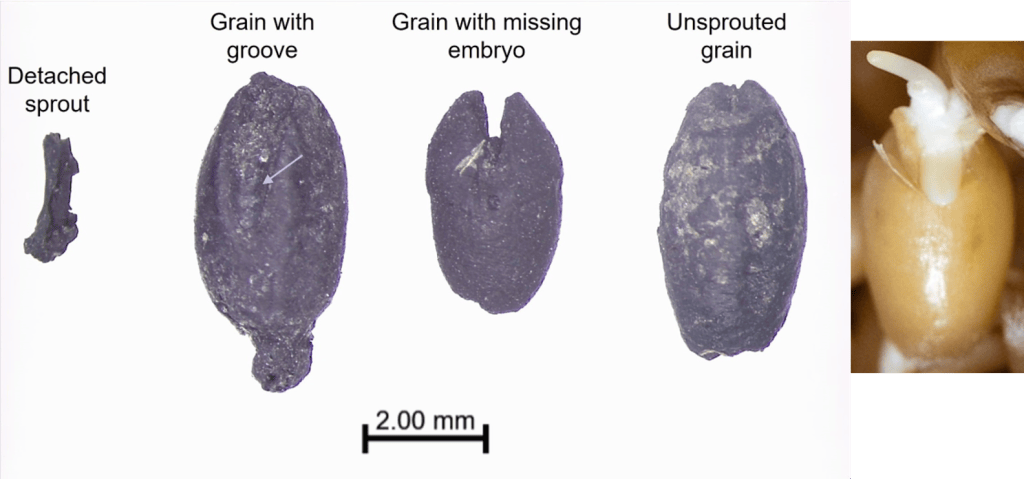
Germinated grain doesn’t automatically mean malt. Stored grain can start to sprout if it becomes damp. Archaeologists therefore look for large concentrations of germinated grain alongside other evidence, particularly numerous detached cereal sprouts, and the wider composition and context of the assemblage. Together, these provide a much stronger indication of deliberate malting.
Corn dryers and malting across Roman Britain
Lodwick’s (2017) review of archaeobotanical evidence from settlements across Roman Britain found that corn dryers first appear in Britain during the late 1st century AD and become increasingly widespread between the 2nd and 4th centuries, reaching their greatest numbers in the later Roman period. They are concentrated particularly in central and southern England and are most often found at rural settlements, with comparatively few examples from towns.
Their increasing use reflects the growing scale of cereal processing during the Roman period. Corn dryers formed part of a more organised agricultural economy, capable of processing large quantities of cereal crops beyond immediate household requirements. This dramatic shift in scale is something that distinguishes the Roman period from its Iron Age predecessor.
Some Roman corn dryers can produce deposits containing hundreds or even thousands of charred grains, chaff fragments and weed seeds, providing a much richer record than is typically encountered on many earlier sites. In the Midlands, large concentrations of almost pure spelt-processing waste become particularly characteristic of the Roman period, pointing towards cereal processing on an increasingly large-scale.
Not every corn dryer was used to produce malt. Evidence specifically for malting is much rarer, and is most commonly found at villas, farmsteads and roadside settlements. Earliest evidence is concentrated in Kent particularly around military centres and important road networks, before becoming more widespread as the Roman period progressed.
Villas are important to this story. They were not simply luxurious houses but also important producers in the later Roman period, often supplying not only their own needs but also local towns and other settlements. As agricultural estates, many had the facilities to process cereals on a substantial scale, while their connections to the Roman road network provided routes through which malt or beer could be transported to their eager customers.
Corn dryers in Leicester and Leicestershire
Corn dryers are known from Roman Leicester and the surrounding county, with increasing numbers in the later part of the Roman period. At Leicester, examples have been found outside the Roman town walls, at Norfolk Street, Grange Lane, Crown Hills and Hamilton (Buckley et al. 2021). The discovery of a corn dryer during excavations at the former Stibbe factory in 2016, now beneath the Novotel in the city centre, represents the first known corn dryer from within Leicester’s Roman town walls. Evidence for the malting process, identified through germinated cereal remains, is also present across Leicestershire and Rutland at sites including Empingham, Ridlington and Grange Lane.
Two recent sites inspire the Fosse Centurion brew; the former Stibbe factory site in Leicester and the Rutland Roman Villa at Ketton, which provide two very different examples of malting.
Stibbe: brewing in the town
Excavations at the Stibbe site in Leicester uncovered two corn dryers dating from the late 1st to early 2nd century AD. One contained an exceptionally dense concentration of charred plant remains, dominated by spelt wheat chaff, weed seeds and cereal sprouts, together with smaller quantities of grain. The composition of this assemblage is characteristic of waste produced during the de-husking of malted cereals, which was subsequently burnt as fuel.
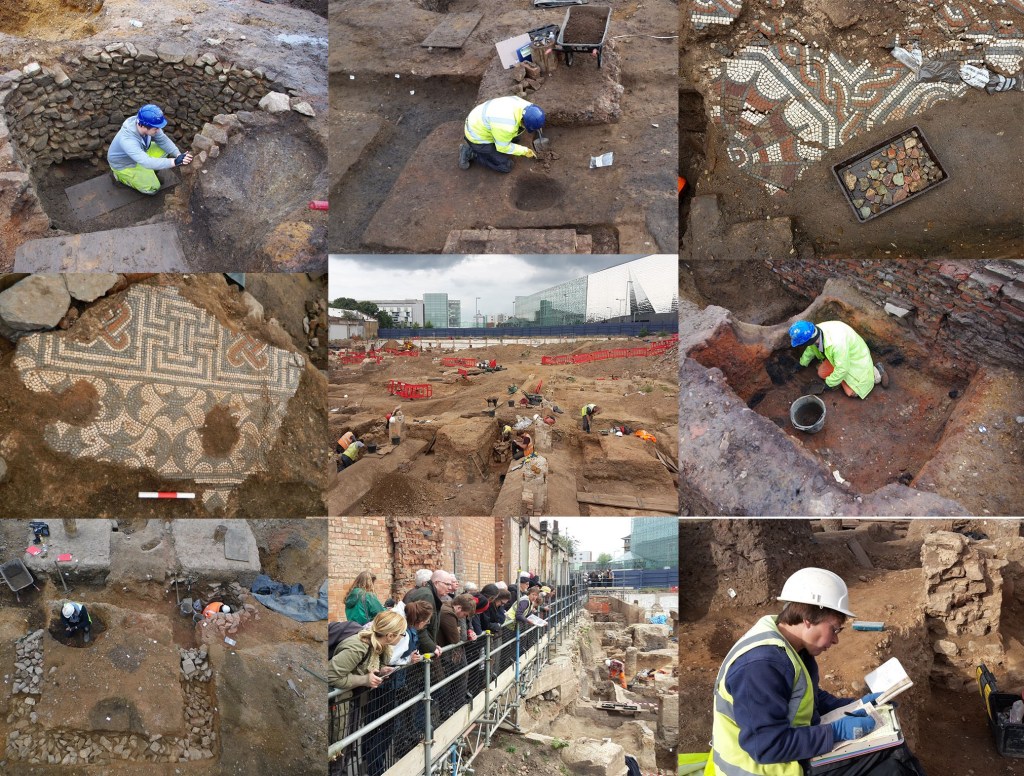
This evidence places early Roman malting within the town, where presumably the product would be sold and consumed, rather than relying on supply from the countryside. The corn dryers at Stibbe were also located amongst streets, timber buildings and other evidence for everyday urban activity, suggesting that specialised cereal processing formed part of life within the developing town.
Rutland Roman Villa: brewing in the countryside
Around 25 miles east of Leicester, excavations at a villa near Ketton, Rutland reveal a rather different picture of malting within a rural estate in the later Roman period. Here, extensive evidence for cereal processing was concentrated in the southern part of the complex, near a river, where a channelled stone corn dryer was found within a large building. Substantial deposits of charred crop-processing waste were found, comprising spelt wheat and barley grain and chaff, including numerous germinated grains and detached cereal sprouts. Their repeated occurrence across multiple deposits likely represents several episodes of malting activity.
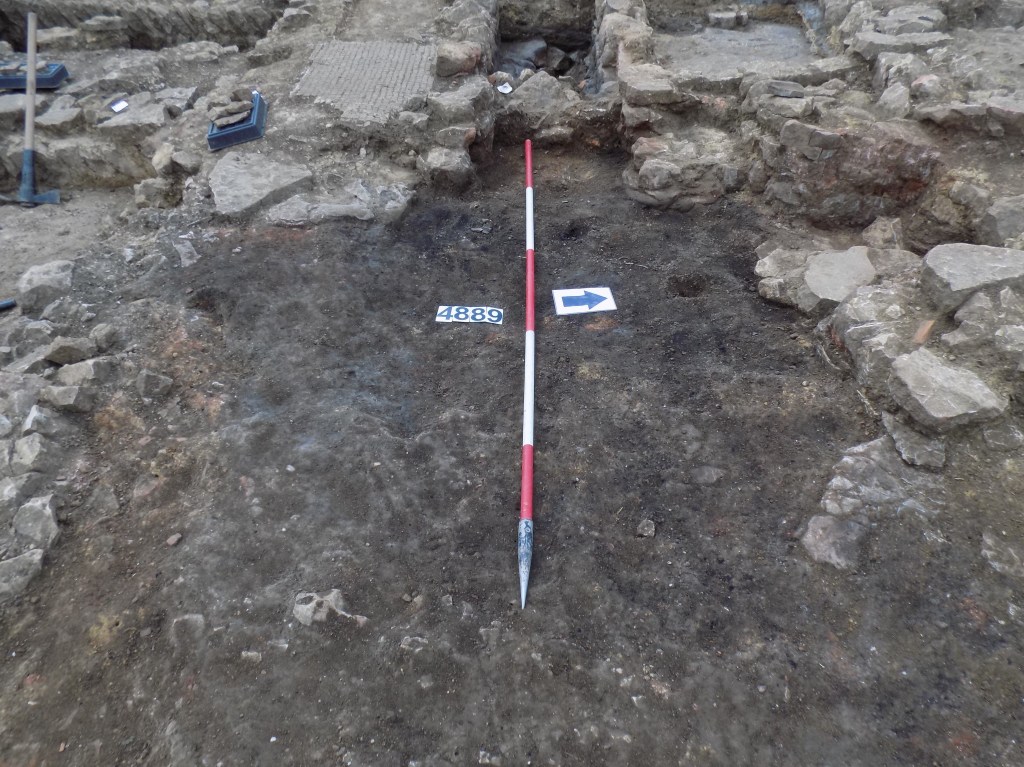
Crop-processing waste was also associated with a smaller corn dryer and ancillary buildings on a different part of the site. The post-excavation work is ongoing, but the evidence suggests that large-scale cereal processing, including malting, was an important part of the villa’s economy and probably supplied people beyond the estate.
What did Roman beer taste like?
Roman beer would have tasted quite different to what we are used to today. For a start, it would not have had the characteristic bitterness of modern hopped beer, as hops are not thought to have been routinely used in brewing until much later in history. Hops are an important preservative as well as a source of bitterness, so Roman beer was also likely to have had a relatively short shelf life.
Spelt wheat dominates the Roman archaeological evidence for malting in the Midlands, in contrast to modern beer where barley is usually preferred. But, although we know which grains would have formed the base of the drink, direct evidence for additional flavouring is rare. Ingredients added later in the brewing process, for example when the wort is boiling and fermenting, are unlikely to survive in the charred grain assemblages associated with corn dryers. However, where brewing or drinking vessels survive under suitable conditions, residues and associated plant remains can provide additional clues.
Written sources from outside Britain provide some evidence for additions to beer, including ingredients such as honey, dates, grapes and berries, alongside aromatic plants (Nelson 2001). The use of honey in fermented drinks stretches back into prehistory and links us back to Meadow Edge and the older brewing traditions explored in our previous blog. Posidonius (c.135-51 BC), writing about the Gauls, distinguishes between a wheat beer prepared with honey and a plain beer consumed by the majority.
Honey would have made the drink sweeter, but also, as another source of fermentable sugar, it could have increased the alcoholic strength of the finished drink. Archaeology provides some supporting evidence for its use: vessels found in Northern Europe dating to the Roman period contained evidence for drinks combining wheat or barley, honey and berries, suggesting that the boundaries between what we would now call beer, mead and fruit wine were not always clear-cut (Nelson 2001).
Roman beer, therefore, was probably far more varied than the word “beer” might suggest today. The cereal base, sweetness, flavourings and strength could all vary according to location, available ingredients and local brewing traditions.
Creating Fosse Centurion: Bringing Roman beer back to life
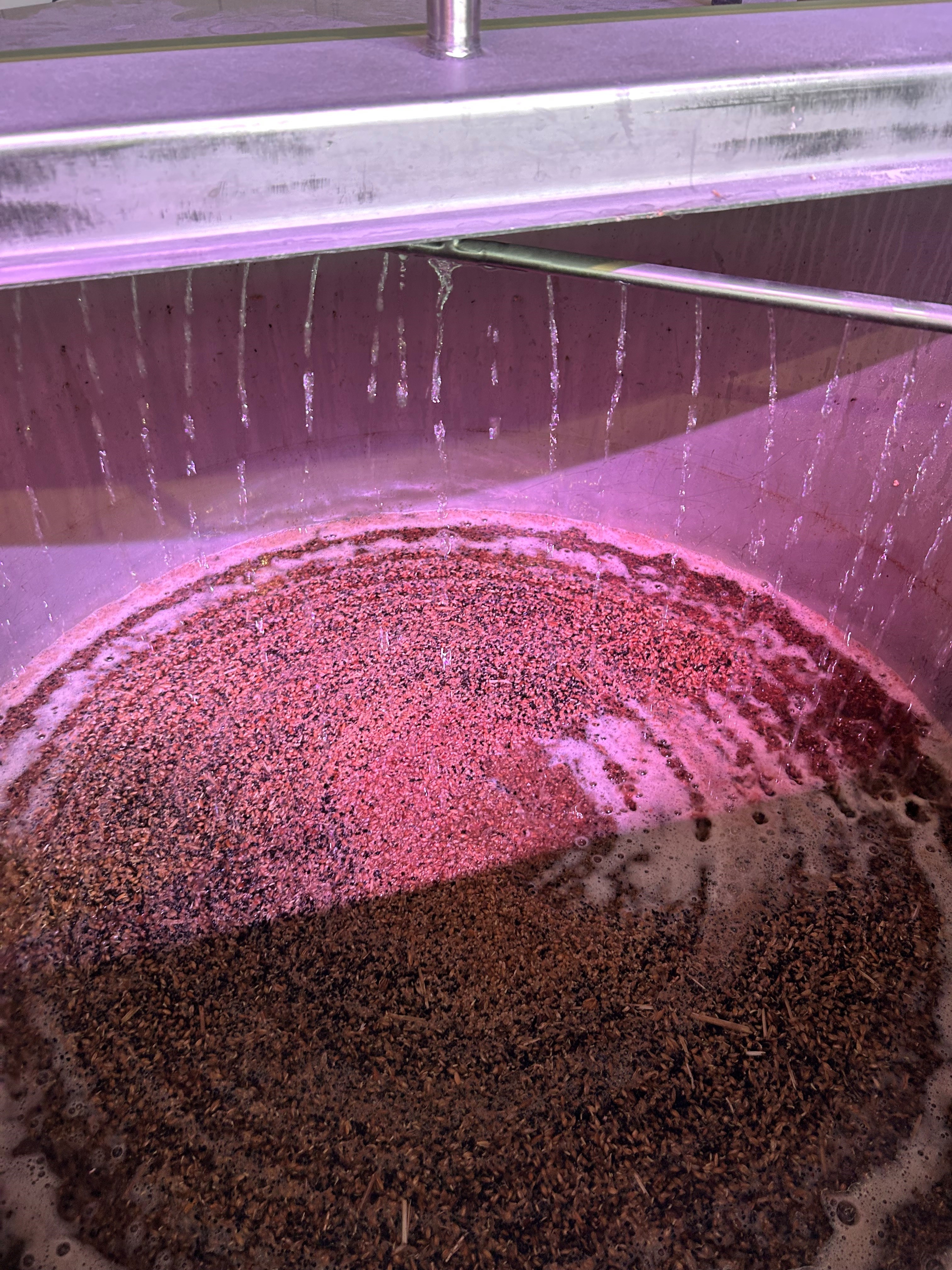
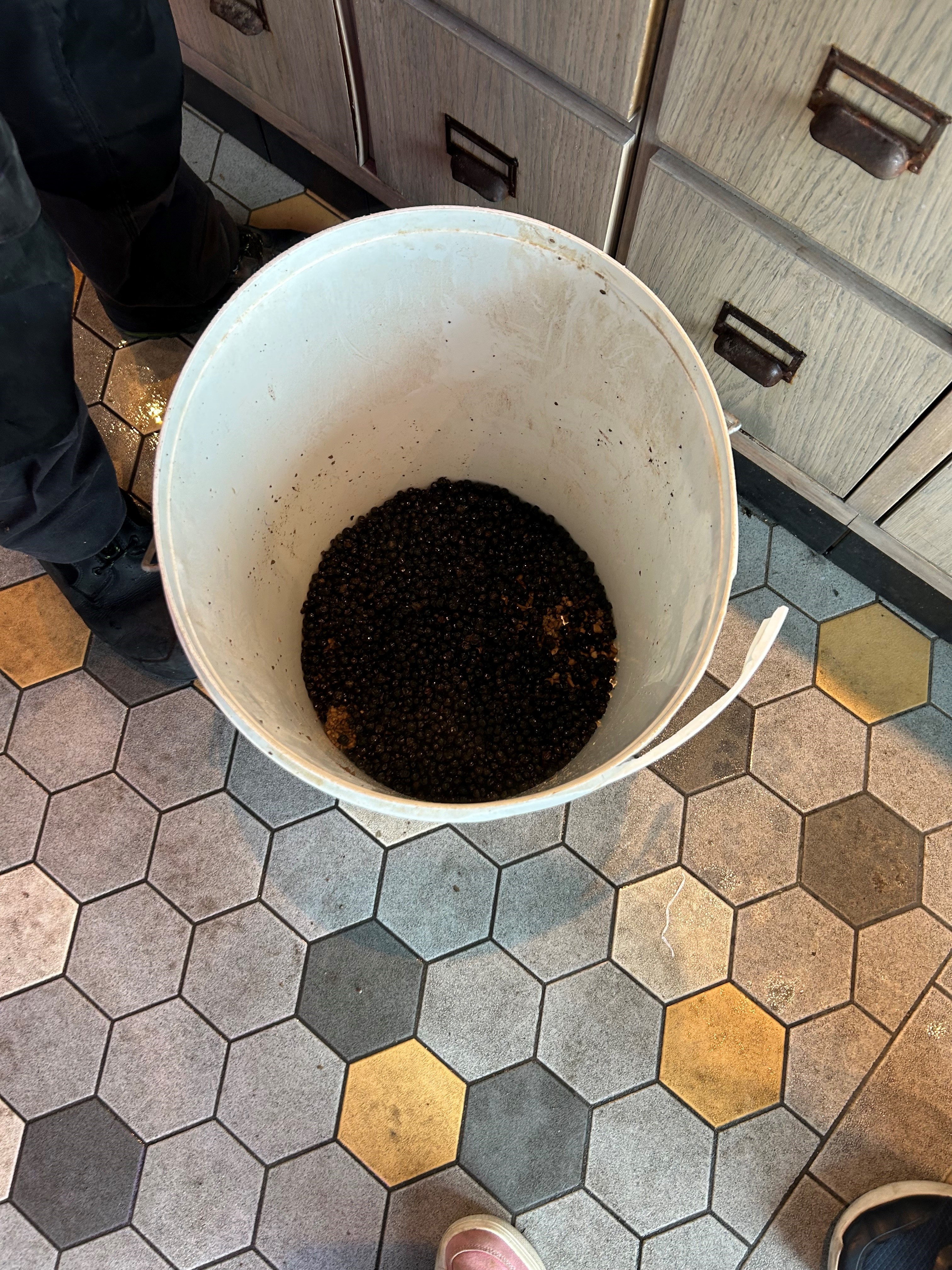
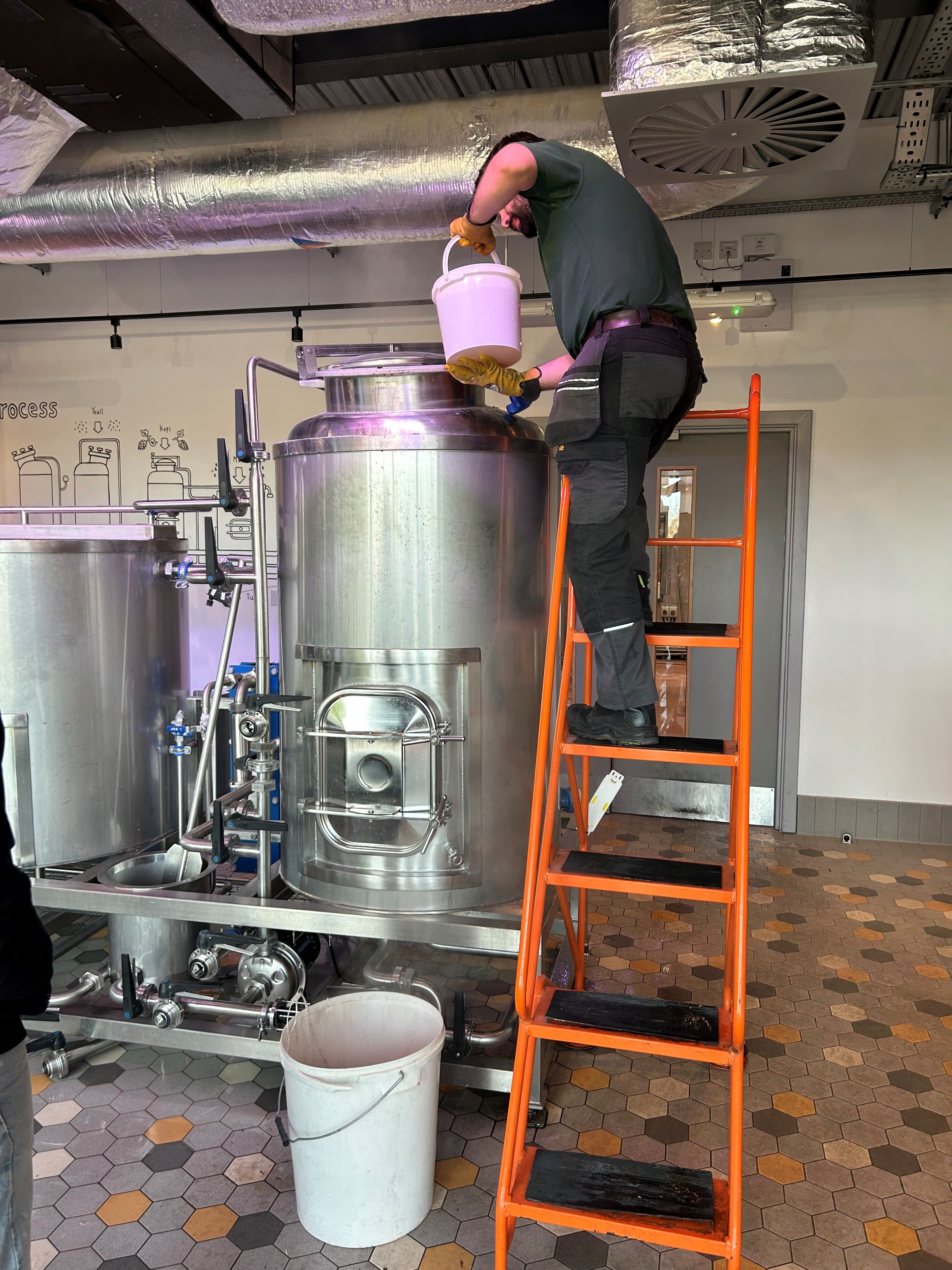
Fosse Centurion is our Roman-inspired beer, which uses archaeological evidence as the starting point. Spelt wheat forms the main cereal base, supplemented by barley, similar to the evidence from the Rutland Roman Villa. We have also included a small amount of ‘chocolate’ malt, giving the beer darker, toasted notes that evoke the heating and roasting involved in preparing malt in a corn dryer, together with a farmhouse-style yeast.
For flavouring, we chose cherry and dandelion. The addition of cherry draws us away from the hedgerow-gathered fruits of our Iron Age beer, Meadow Edge, and towards the orchards of the Romano-British landscape. The incorporation of Britain into the Roman Empire brought new foods; cherry was among a wide range of new or increasingly cultivated plants that became assimilated into the local dietary repertoire (Van der Veen et al. 2008). Cherry therefore helps us tell a wider story of the changing landscape with an increasing emphasis on horticulture and cultivated fruits providing new tastes and styles of eating.
Dandelion provides a more local, earthy element. As a native plant it would have grown readily in the surrounding landscape. Its later use in traditional fermented drinks shows that it can work as a brewing ingredient, contributing earthy, herbal and gently bitter notes to the finished beer. Rather than presenting it as a known Roman ingredient, we have used it as an experimental flavouring inspired by plants that would have been available locally.
Just as Meadow Edge took inspiration from the hedgerows of the Iron Age landscape, Fosse Centurion takes us into a world of spelt fields, orchards, roads, towns and rural estates of Roman Britain. Together, these ingredients make Fosse Centurion a Roman-inspired beer rather than a reconstruction: a reimagining rooted in the cereals identified archaeologically, but using carefully chosen flavourings to bring us closer to the taste of Roman Britain.
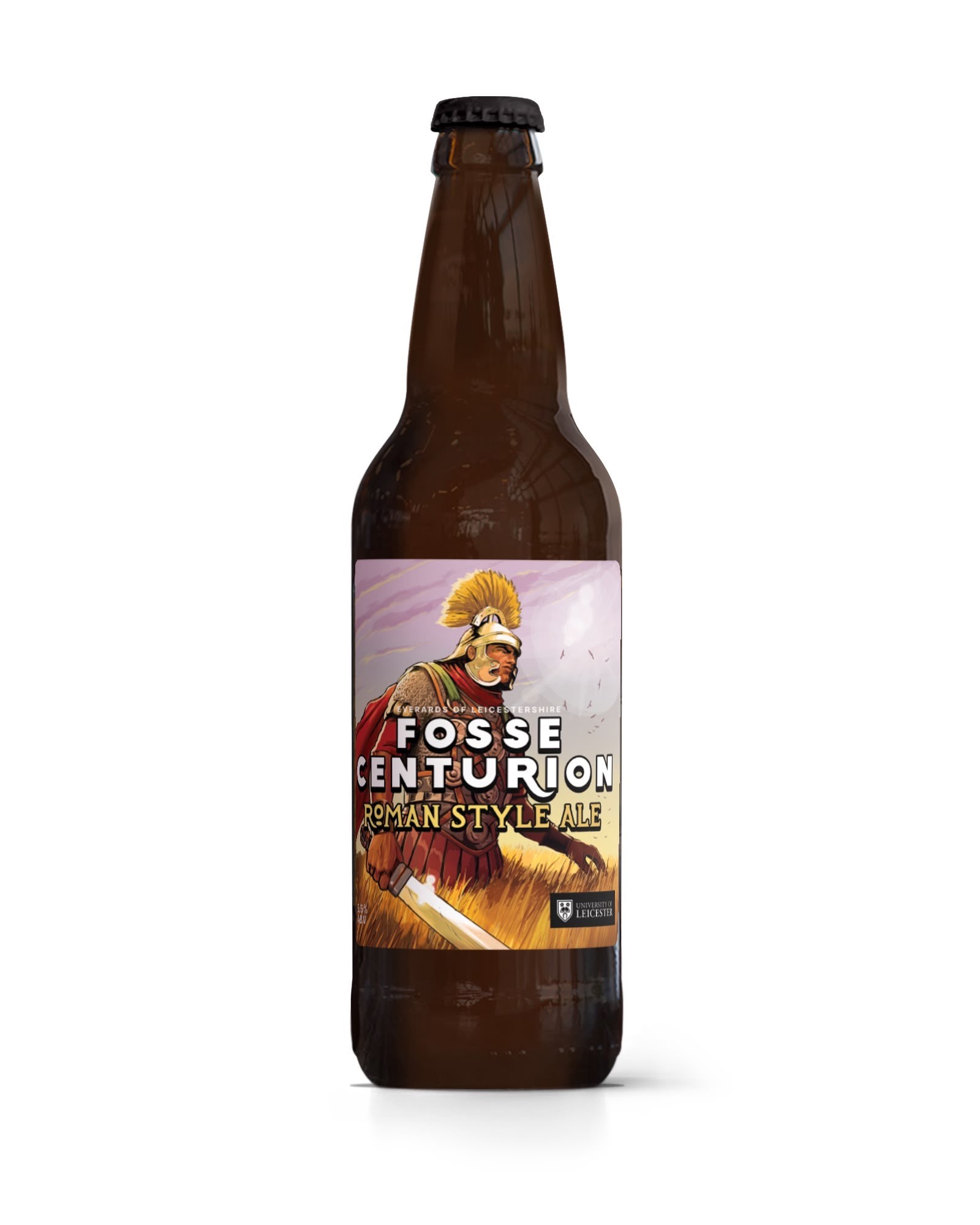
Where to drink Fosse Centurion
Fosse Centurion will be on sale from Monday 2nd November at Everards Meadow.
Please share your pictures and thoughts on the beer in the comments below!

