World Mental Health Day takes place every year on the 10th October and is a reminder of the importance of looking after and prioritising mental wellbeing. This year’s theme, ‘Lived experiences heard: real voices, real change’ calls for people with lived experience of mental health conditions to use their voices to help shape the policies, services and decisions that affect their lives.
With this in mind, our staff member Isobel Johnson-Moss, an archaeologist who works both in the field and in archiving has chosen to post this piece today to highlight her own experiences dealing with obsessive compulsive disorder (OCD) whilst at work. This is quite a sensitive topic, so if you are affected by any of the issues discussed please seek help through the links listed below.
Life, much like archaeology, is full of moments, and single moments such as a split-second decision made on where to dig can mean the difference between discovering things like Richard III’s resting place or missing it by a few inches.
Obviously, my own life has not been filled with incidents as momentous as this discovery, but it has been made and shaped by key moments, many of which happened, according to my parents, when I was seven. To be honest, they are not completely wrong. My life could have gone in a completely different direction had events panned out differently when I was this age.
I was seven when I first discovered my love for reading and fantasy, a passion that has followed me to this day. I was seven when I proudly announced to my parents that I wanted to be an archaeologist when I was older (look where you are now little Izzie). And I was seven when I nearly died from an anaphylactic shock after eating some pecan brownies.
It was that moment that changed my life forever. In talking to medical professionals, it was this event, along with probably some genetic and environmental components, that was most likely the catalyst for me developing OCD.
What even is OCD?
OCD is an often a misunderstood and trivialised mental health condition misattributed to quirky personality traits about being very clean, neat and ordered. Often online, if you see a video of someone sorting say M&Ms by colour but accidentally leave one wrong colour in a bowl you will invariably find someone in the comments saying, ‘well that’s set off my OCD’. Intrusive thoughts, another key component of OCD, have also in recent years been turned into a cute phrase on TikTok, when they are actually describing impulsive thoughts/actions; no dying your hair bubble-gum pink on a whim is not ‘letting your intrusive thoughts win’. These misconceptions of OCD can stop genuine sufferers from realising that they even have OCD and create an overall impression that it is not a serious illness or even introduce stigma. In actuality OCD is a very distressing and debilitating mental health condition which can significantly interfere with your life.
Obsessive compulsive disorder (OCD) is a mental health condition that has two main parts which are interconnected; obsessions and compulsions. It can affect anyone from all walks of life and people can start having symptoms from as early as six years old but often begins around puberty and early adulthood (NHS 2023). On average there is a delay of 12 years between the onset of OCD symptoms and treatment due to the misunderstanding of the condition as well as the extreme distress that the person may feel.
Obsessions are unwelcome, unwanted or unpleasant (intrusive) thoughts, images, feelings, urges, worries or doubts that repeatedly enter the mind and cause feelings of anxiety, disgust or distress
Everyone has intrusive thoughts. In most people these thoughts (included within the thousands of thoughts it is estimated we have in a day) just pop into their heads and then disappear without even being registered. These thoughts are random, meaningless or confusing. In a person with OCD some intrusive thoughts can become obsessions due to the weight that we put upon them and the feelings attached (Mind 2026; OCD Action 2026).
Some people with OCD find it helpful to categorise their OCD into themes such as contamination or harm etc. Doing this can help people discuss their OCD with others who have similar experiences or help them understand their own OCD (Mind 2026). However, separating OCD into types can be unhelpful as medically these aren’t recognised terms and can make it harder to notice new obsessions or compulsions if they do not fit a specific type (OCD UK 2026).
Fundamentally the themes and content of intrusive thoughts and obsessions are not a reflection of who the person with OCD is. They are ego-dystonic – meaning they are the opposite of the person’s values or actions which is why they cause the sufferer so much distress. People with OCD are exceptionally unlikely to ever act on their thoughts (OCD Action 2026).
Compulsions are repetitive behaviours or mental acts that the sufferer feels compelled to do to relieve the feelings brought on by the obsessions. Compulsions can be physical actions, mental rituals, involve numbers or involve someone else. These can be but are not limited to; washing hands, seeking reassurance, checking to see if doors or windows are locked, repeating a word or phrase in your head or out loud, counting to a certain number, trying to fix or solve intrusive thoughts by ruminating on them or avoiding situations that make you anxious (Mind 2026).
Carrying out compulsions might make you feel better at first, but it creates a cycle. The more you do a compulsion the stronger the urge to do it again. Acting upon these compulsions can increase the obsessions and distress long term and it is this cycle that needs to be addressed during treatment.
There is no cure for OCD, but it can be treated. Many people find symptoms are helped by being on medication and having talking therapies. The treatment found to be most effective in successfully treating OCD is a form of therapy called Cognitive Behavioural Therapy (CBT), which includes Exposure and Response Prevention (ERP). For more information see the link here: https://www.ocduk.org/overcoming-ocd/ocd-treatment/
My OCD
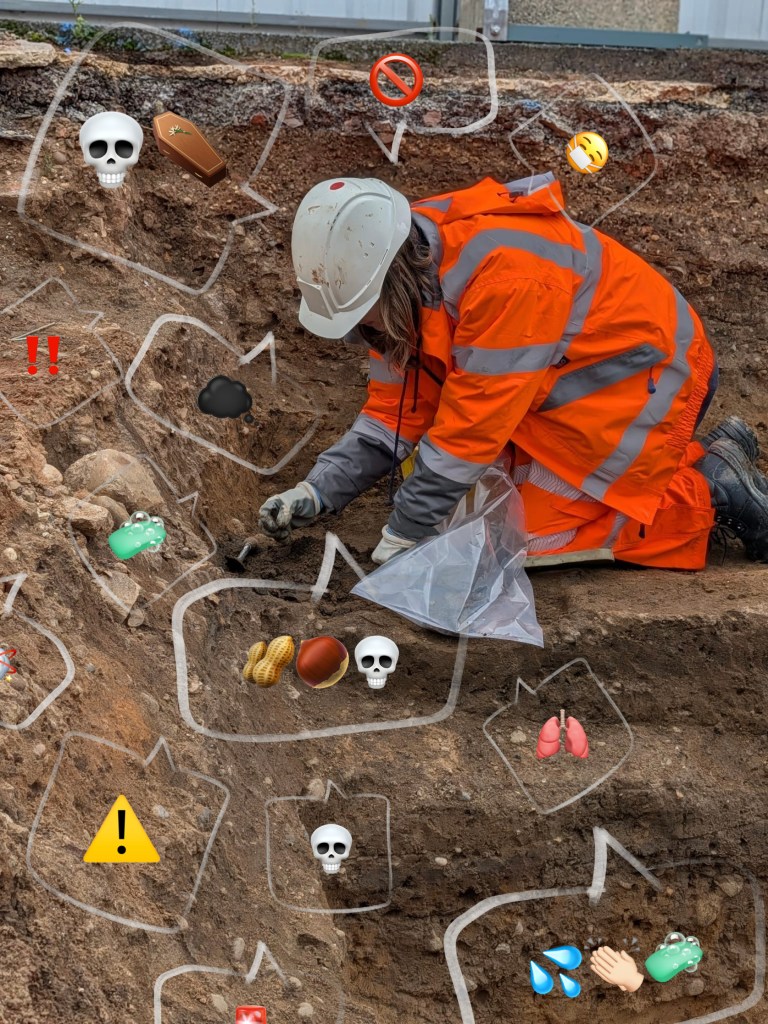
My OCD, if trying to categorise it, falls under the general theme of ‘safety’, stemming from the fear that I am the only one that can keep myself safe.
My first noticeable symptoms of OCD started when I was around the age of twelve. I became convinced that if I didn’t perform certain rituals, like holding my breath if I walked past a bag of nuts in a supermarket, then I would die. On some level I knew this was irrational, but I could not get past the doubts of ‘but what if’.
At the time mental health conditions were not an openly talked about thing and I was really fearful of being seen as different, so I did not reach out and no one understood my odd behaviours.
Since the first onset of my symptoms, my OCD has grown to encompass many different themes. It is a scary, pervasive and exhausting condition that affects every facet of my life. It targets the very things that I love or find fun and finds a way to twist them into something terrifying and unrecognisable. My main compulsions are avoidance and seeking reassurance. This means I actively avoid the things that would bring me most joy and my need for reassurance puts a lot of pressure and burden on the relationships that I have with friends and family. It means I have missed out on many opportunities that I would dearly have loved to do, such as travelling abroad.
From the outside looking in you would not really know that a lot of my anxieties are OCD driven, especially as the measures I take for certain things are based around real life dangers that everyone should take seriously. For example, food allergies are an extremely serious health condition, and it is right that people with allergies take certain precautions to make themselves safe. It is a fact that if I come into contact with nuts, I could die. However, my OCD goes overboard. When I had an allergy scare at university, I developed a compulsion to avoid ever using/eating home cooked food out of ovens. I could not even touch a bin in case it was contaminated with nuts and this eventually led to me avoiding the kitchen all together because ‘what if I die’. I would also continuously scrub my hands with loads of soap to the extent that I developed eczema as I was worried I could have come into contact with nuts. These compulsions lasted for years and kept me entirely safe, but at what cost?
I was twenty-two when I was finally able to put a name to the symptoms I was experiencing and it was not until sixteen years after my first noticeable symptoms that I received treatment through CBT and especially ERP. I am now on the long road to recovery. I will never stop having OCD, but I am able to recognise it and work towards embracing the things I love and living the life that I want to live. It is not without its setbacks, but I am so much better than I was.
Archaeology, OCD and Asbestos
As I wrote earlier, OCD loves to attack the things I love and my job is no exception. For a while it only meant that I did not feel safe eating within communal cabins in case of contamination with others who may have eaten nuts, but at some point, it mutated to find a new danger; asbestos.

Asbestos was used extensively in the UK in the early 20th century for a variety of different purposes due to its material properties, including insulation, fireproofing, roofing, and floor materials. Its use was banned in the late 1990s once its links to poor health became known. All forms of asbestos fibres are hazardous as they can induce cancer following inhalation exposure (UK Health Security Agency 2025, NATAS Training 2025).
In archaeology, you can potentially encounter asbestos due to its prolific use in the past. We can find it when working on sites where demolition has occurred in the past, through fly tipping or even through artefacts themselves. In fact, there are examples of pottery in Africa and Finland from 4000 years ago containing asbestos, Roman sources describe slaves working in asbestos mines dying young (Frank and Zandwijk, 2024) and even the roofs of the buildings within Prisoner of War Camps in the UK were made from asbestos sheeting.
You can see where this is going can’t you?
That stone looks slightly weird to me, is that fibrey? Well, you found it and you’re breathing around it, that must mean you’ve breathed in asbestos. Hold your breath if you don’t, you’ll breathe in more fibres. When you get home you need to take a long shower because you’re covered in it. I need to wash my hands, it feels like it’s on my hands. My clothes and shoes have got asbestos on I can’t ever wear them again. I’m going to die. I’m going to die. I’m going to die.
As with my first OCD obsession (my nut allergy), my anxiety is fixed on a real present actual risk and danger that people within the construction industry take extremely seriously. Asbestos is the second most regulated industry in the country and is controlled by the Health and Safety at Work Act 1974, Control of Asbestos at Work Regulations 2012, Management of Health and Safety at Work Regulations, Regulations 1999 and CDM Regulations 2015 (ULAS, 2024). Archaeology companies take asbestos incredibly seriously and we are given regular awareness training about the dangers of asbestos and the procedures that need to be followed.
But OCD is not rational. Even with all of these regulations and procedures in place my OCD still thinks that I am the only one who can keep myself safe and that any potential is a threat, it cannot deal with doubts or ‘what ifs’.
This is an obsession that I still struggle with to this day. It has caused me incredible distress and at times has meant that I have felt unable to go out onto certain sites, just in case. I am, even whilst writing this blog starting to feel overwhelmed and hyper aware of my breathing, because ‘what if’ I have asbestosis.
I have, however, got so much better at working through my OCD panics whilst I am at work. I now almost always give opportunities a try and if I ever engage in some compulsions, I make sure that they are brief and do not let them spiral or take hold over my brain. I have also become more adept at understanding if there is a real risk or a perceived one and trusting myself and others of my team. Disclosing my condition with close colleagues, current supervisors and management was also an important step in navigating working with OCD and they have all been incredibly supportive and accommodating especially when it comes to facilitating my continued treatment.
OCD Awareness
One of the biggest passions I have in my life is the de-stigmatisation of often-taboo topics, especially in relation to conditions which are outside of your control. For example, I am very vocal about how menstruation affects me in my everyday life, I think that death needs to be discussed more openly to equip people with tools to deal with grief and phobias, and I also think that mental health conditions should continue being discussed and those that have them treated with kindness and understanding.
My aim with this blog post was to allow for greater awareness of OCD as a condition and how it can affect someone in their daily life and to show that even if you have it, it does not have to limit you, it can be treated and managed. I was inspired by those who have recently spoken about OCD, such as those featured in the BBC article titled ‘OCD made me think I was a monster’. My reason for speaking out is the same as theirs, it is vital to raise awareness of OCD because people still do not know they are suffering from it and the period of being undiagnosed with this condition is unbearable (Lawson, 2026).
The changes in attitudes towards mental health throughout my life have been eye-opening. In the late 2000s and early 2010s many people were still ignorant of these conditions and often kept these issues quiet. When my parents tried to get me some help as a teenager the only things I associated with mental health problems were asylums which I found utterly terrifying and therefore I refused to seek help. However, with the birth of the internet and social media it has become so much easier to realise that you are not alone and be able to put a name to the symptoms you have been experiencing.
Workplaces also have been gradually adapting and are accommodating more needs from their staff members in recent years not only mental health conditions, but neurodivergent conditions which is a massive plus. One initiative by Mind is especially helpful. They have created Wellness Action Plans (Mind 2026) which are an easy, practical way of helping to support your own mental health at work and can be shared with your employers.
So, to finish off, I love being an archaeologist, it is my passion and my OCD, no matter how hard it tries, cannot take that away from me.
If any of the experiences I have shared within this blog have affected you, if you are concerned that you may have symptoms of OCD or are struggling to manage your condition, please get in touch with your local health teams or visit the NHS website.
https://www.nhs.uk/mental-health/conditions/obsessive-compulsive-disorder-ocd/overview
For more information about OCD visit these charity websites:
OCD Action: https://ocdaction.org.uk/
OCD UK: https://www.ocduk.org/
Wellness Action Plans: https://www.mind.org.uk/workplace/my-mental-health-at-work/wellness-action-plans/
Bibliography
Frank, A., and Zandwijk, N., (2024) Asbestos history and use, Lung Cancer 193: 107828.
Lawson, E. (2026) OCD made me think I was a monster. Available at: https://www.bbc.co.uk/news/articles/cn4vjn84gyjo (accessed 18/09/2026)
Mental Health Foundation (2026) World Mental Health Day. Available at: https://www.mentalhealth.org.uk/our-work/campaigns/world-mental-health-day (accessed 14/09/2026)
Mind (2026) OCD and stigma. Available at: https://www.mind.org.uk/information-support/types-of-mental-health-problems/obsessive-compulsive-disorder-ocd/ocd-and-stigma/ (accessed 14/09/2026)
Mind (2026) What are obsessions? Available at: https://www.mind.org.uk/information-support/types-of-mental-health-problems/obsessive-compulsive-disorder-ocd/symptoms-of-ocd/#WhatAreObsessions (accessed 14/09/2026)
Mind (2026) What is OCD? Available at: https://www.mind.org.uk/information-support/types-of-mental-health-problems/obsessive-compulsive-disorder-ocd/about-ocd/ (accessed 18/09/2026)
NATAS Training (2025) Is asbestos still found in UK buildings? Available at: https://www.natas.co.uk/information-centre/is-asbestos-still-found-in-uk-buildings/ (accessed 17/09/2026)
NHS (2023) Overview – Obsessive compulsive disorder (OCD). Available at: https://www.nhs.uk/mental-health/conditions/obsessive-compulsive-disorder-ocd/overview/ (accessed 18/09/2026)
OCD Action (2026) Obsessive-compulsive disorder. Available at: https://ocdaction.org.uk/resources/ocd/ (accessed 18/09/2026)
OCD Action (2026) OCD is a severe disorder; but it is treatable. Available at: https://ocdaction.org.uk/learn-about-ocd/ (accessed 18/09/2026)
OCD UK (2025) OCD Treatment – An Overview. Available at: https://www.ocduk.org/overcoming-ocd/ocd-treatment/ (accessed 14/09/2026)
OCD UK (2025) What are compulsions? Available at: https://www.ocduk.org/ocd/compulsions/ (accessed 14/09/2026)
UK Health Security Agency (2025) Guidance Asbestos: general information. Available at: https://www.gov.uk/government/publications/asbestos-properties-incident-management-and-toxicology/asbestos-general-information (accessed 17/09/2026)
ULAS (2024) Asbestos Awareness Training (accessed 17/09/2026)
World Health Organisation (2023) Obsessive-compulsive disorder (OCD). Available at: https://iris.who.int/server/api/core/bitstreams/6f5127c9-f5e5-4938-a7e6-5004de39b218/content (accessed 14/09/2026)
World Health Organisation (2026) World Mental Health Day 10th October 2026. Available at: https://www.who.int/campaigns/world-mental-health-day/2026 (accessed 14/09/2026)

